The Deep Freeze: Earth's Transformation into a Snowball Planet 717 Million Years Ago.

Earth's Ancient Ice Age
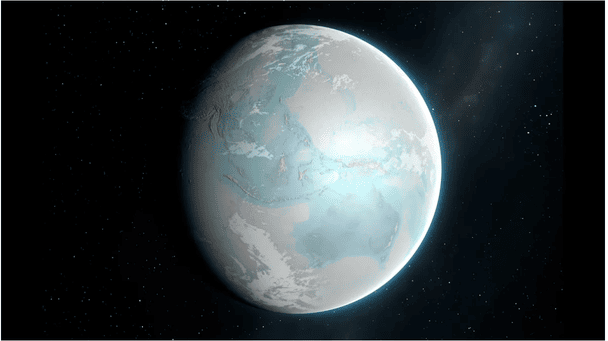
According to TSN.ua: Approximately 717 million years ago, our planet underwent a dramatic global glaciation event known as the Sturtian glaciation. Research indicates that ocean temperatures plummeted to around -15°C, triggering the formation of an ice sheet that encased nearly the entire Earth. This profound 'Snowball Earth' episode, which lasted for roughly 57 million years, stands as one of the most significant geological events in our planet's history.
The ice sheet generated by the Sturtian glaciation was remarkably thick, reaching up to one kilometer in places. Its immense mass dramatically reshaped the planet's landscape, creating vast, barren ice deserts. Concurrently, the salinity of the ocean water during this period may have been up to four times higher than it is today, pointing to major shifts in the chemical composition of seawater.
Geochemical Processes and Their Significance
Iron-rich rocks formed during this era possess a distinct 'heavy' isotopic signature. This serves as evidence of the unique geochemical processes that occurred throughout the Sturtian glaciation. Studying these rocks can provide crucial insights into the extreme conditions Earth endured and the evolution of life during this challenging period.
Consequently, the Sturtian glaciation played a pivotal role in shaping Earth's modern appearance and its ecosystems.
Investigating the Sturtian glaciation is vital for contemporary science, as it helps us understand not only Earth's distant past but also the mechanisms that can drive profound climate shifts. This period offers a natural laboratory for studying a planet under extreme stress. Analyzing the geochemical processes from this deep freeze can yield valuable clues for predicting future climate scenarios and understanding how ecosystems adapt to harsh conditions, knowledge that is increasingly relevant in the context of modern global warming and climate change.
Read also
- Over 63,000 Ukrainian Soldiers Trained in the Netherlands as Interflex Mission Reaches New Phase
- NATO Jet Downs Drone Over Latvia, Fighter Jets Put on High Alert
- Ukraine Struck 111 Russian Military Sites in May—Moscow Lost Seven Times More Land Than It Gained
- Iran Launches First Direct Strike on Israel Since Ceasefire as Conflict Reaches 100-Day Mark
- Global Nuclear Stockpiles on the Rise: SIPRI Reveals Warhead Count
- Strike on Russia’s Baltic Fleet in Kronstadt: Expert Calls It an Unprecedented Moment in the War