A Harvard Physicist's Vision of Heaven: Could Another World Exist Beyond the Universe?.

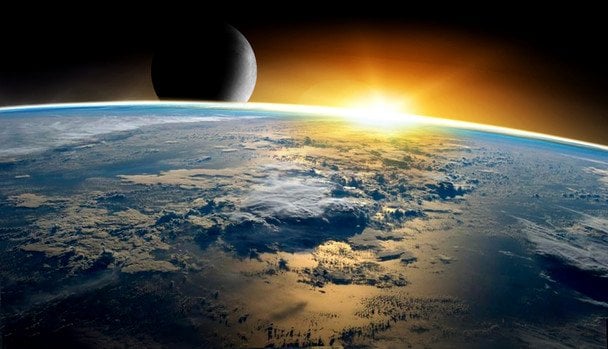
The 'Heaven' Hypothesis in Cosmology
According to TSN.ua: Physicist Michael Guillen has proposed a hypothesis suggesting that 'heaven' could be a real physical location in the universe, potentially situated beyond the cosmic horizon. Guillen estimates the distance to this boundary to be approximately 439 billion trillion kilometers. He posits that
"heaven could lie on the other side of the cosmic horizon"and might be a realm where time does not exist. However, astronomers remain skeptical of this theory. They emphasize that the cosmic horizon is not a physical place but rather a boundary beyond which we cannot see or gather information, as astronomer Alex Gianninas pointed out.
Scientific Response to the Proposal
Michael Guillen holds a Ph.D. and is a former physics instructor at Harvard University. The universe is approximately 13.8 billion years old, and light travels at a speed of about 300,000 kilometers per second. It's important to note that Hubble's Law, established by astronomer Edwin Hubble, also plays a crucial role in understanding the cosmic horizon and the expansion of the universe. Guillen's work bridges theoretical physics and questions that have long been the domain of philosophy and theology.
Guillen's hypothesis about a possible 'heaven' has elicited mixed reactions within the scientific community. While his theory may seem provocative, scientists focus on the inherent limitations of our perception of the universe. They stress that, despite the intriguing nature of the topic, there is currently insufficient evidence to either confirm or refute his ideas. Such speculative concepts highlight the frontier nature of cosmology, where data is often scarce.
The challenges associated with observing the cosmic horizon remain significant, and this area of science continues to be a subject of active research. The hypothesis of a 'heaven' beyond the cosmic horizon underscores the complexity and multifaceted nature of modern cosmology. It opens new questions for exploration and sparks interest among both scientists and the general public.
However, as experts note, it is crucial for scientific discourse to maintain a critical approach and rely on empirical data, which remains the cornerstone of our understanding of the universe and its boundaries.
Read also
- Ukraine Strikes Russian Munitions Depots in Belgorod Region and Command Centers in Donbas: Key Details
- Ukraine’s Intelligence Reveals Top Target: Disrupting Russian Logistics in Crimea and Transnistria
- Ukraine War Set to Outlast World War I: A Key Date Emerges
- Russian Army Imposes Artillery Shell Limits: What This Means for the Frontline
- Bosnia and Herzegovina Joins Coalition for the Return of Ukrainian Children, Says Foreign Minister Sybiha
- Ukraine Launches Hungarian-Language YouTube Channel: 340,000 Views in Just Days