How an Elephant's Gut Microbes Create the World's Rarest Coffee.

How an Elephant's Gut Microbes Create the World's Rarest Coffee
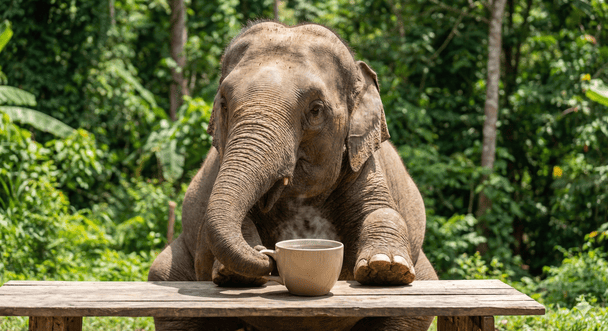
According to TSN.ua: Black Ivory coffee, produced exclusively at a single sanctuary in Thailand, is a unique beverage created through a special process involving elephants. This method reduces the coffee's bitterness thanks to the unique microbiome formed by microbes in the elephant's stomach.
Research into the Elephant Microbiome
Geneticist Takuji Yamada and his team conducted research on the elephant microbiome. The study involved six elephants, three of which were fed coffee cherries and three a regular diet. The results showed that microbes in the elephant's stomach actively break down pectin and cellulose before roasting, which affects the flavor qualities of the resulting beans.
Black Ivory coffee beans contain significantly less of the compound 2-furfurylfuran, a key factor determining the bitterness of the drink. This process gives the elephant-derived coffee a smoother, more pleasant taste, making it one of the rarest in the world. This exotic coffee is part of a niche luxury market, often compared to other animal-processed coffees like Kopi Luwak.
Thus, the specific characteristics of the elephant microbiome are key to producing this unique product, which combines tradition and innovation in the coffee industry.
Black Ivory coffee not only attracts attention for its rarity but also demonstrates a unique production approach that combines natural processes with modern technology. This beverage could become an important element in developing eco-tourism and conserving elephants in their natural habitat, as its production contributes to the preservation of these animal populations. Given the growing interest in unique gastronomic products, Black Ivory could find its place on the global coffee market, opening new opportunities for farmers and local residents.
Read also
- Thunderstorms and Temperatures up to +29°C Forecast for Ukraine on June 10
- Which Japanese Motorcycles Last Hundreds of Thousands of Kilometers? The Most Reliable Models from Honda, Suzuki, and Yamaha
- Quick Cheese and Kefir Pancakes: A Fast Breakfast Recipe
- Career Success by End of June: Tarot Predictions for These Zodiac Signs
- Luxury Makes a Comeback in Spring-Summer 2026: Draping Emerges as the Season’s Defining Trend
- Butter and Yogurt Cookies: A Foolproof Recipe from Gospodynka