The Unveiled Secrets of EMI: How Sex, Drugs, and Rock 'n' Roll Destroyed the Legendary Label.


According to The Sun: EMI was once a symbol of the music cult, where instead of business suits and analytics, drugs, sex, and rock 'n' roll prevailed.
EMI became home to musical legends: The Beatles, Rolling Stones, Tina Turner, Queen, and Spice Girls — this is just part of a long list of artists.
Keith Richards, Tina Turner, and David Bowie, who were signed with EMI GettyThe Beatles became EMI's main financial backbone, producing music that defined an era and captivated the world.
 Alamy
Alamy
In 1977, EMI terminated its contract with The Sex Pistols due to loud scandals.
The company also knew luxury: they had a 'shag pad', a 'sex lift', and reportedly a budget of 200,000 pounds a year for 'drugs and prostitutes'.
These incredible expenses became the theme of a new six-part podcast 'Music, Money, and Chaos', created in collaboration with Novel and BBC Studios.
Host Chris Atkins notes: “Choose your favorite bands — most of them are signed with EMI. The company had the golden touch and magic. They gave us music that defined our culture for many generations.”
The biggest rock bands were accustomed to luxury. Every year, hundreds of staff would head to Glastonbury at the company's expense, and EMI had one of the largest corporate car fleets for transporting employees to concerts and parties.
Chris emphasizes: “Such corporate luxury, which now seems incredible, was the norm in the industry, demonstrating how much money they could spend.”
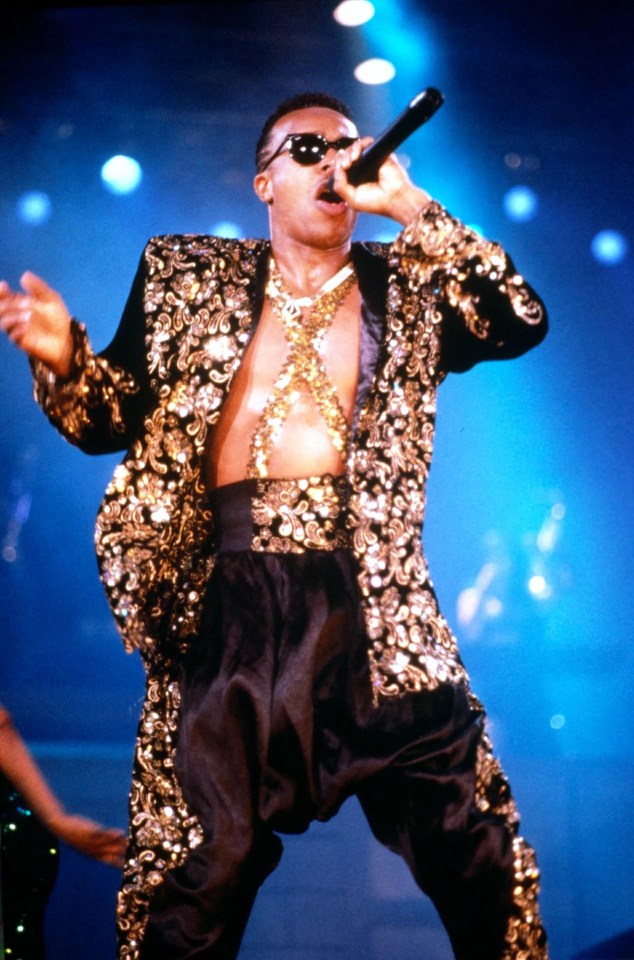
Although such a lifestyle, along with inflated egos, created certain problems, even EMI struggled with the case of MC Hammer, who in 1990 released the album “Please Hammer, Don’t Hurt ’Em,” which became a hit in the USA.
It was a great tragedy when EMI fell apart and was bought by multinational companies.
Chris Atkins
The company was already losing millions due to illegal music sharing on Napster and had only a 10% success rate with new artists.
CEO Guy Hands, who bought EMI in 2007 hoping to stop the decline, chose data as the main way of working, moving away from the previous method of simply 'throwing mud at the wall and seeing what sticks'.
However, this strategy resulted in a loss of 60% of his personal fortune, and in 2011, Citigroup became the owner of EMI when the debts were unpaid.
MC Hammer once summoned everyone into a dark room to force them to respect him, sitting on a throne
Rex Features
The tragedy is that EMI's successes were not a celebration, and its decline was not properly mourned. I mourn that it is gone,” says Chris.
When Guy became CEO in 2007, his 'army of smart people' focused on data instead of risking new talents. While this approach yielded some results, it also discovered true musical gems like Coldplay, Kate Bush, Mariah Carey, and David Bowie.
‘SEX, GOODS, AND VODKA’
EMI's management was not always justified: in 1977, the company terminated its contract with the punk band The Sex Pistols due to public protests.
However, usually managing things, EMI signed a contract with a band originally called On A Friday and suggested they change their name to Radiohead.
Much looked like a car crash,” says Chris. “This whole crazy situation was seen by rock stars as betrayal.
Chris Atkins
The need for savings led to conflicts. For example, when EMI refused to cancel a 'small debt' of the indie band The Verve, their manager threw a CD at Guy's head.
‘ABSOLUTE SACRILEGE’
During one session, Joss Stone came with a poodle to a meeting with Guy, and the dog 'did what prisoners call a 'dirty protest''.
However, even Guy sometimes had successes: the re-release of the Beatles catalog in 2009 sold 20 million copies in a few months.
The temperamental sales approach was perceived by traditional EMI representatives as an insult.
“It was disgraceful,” says Chris. “Some artists laughed at using data, but Snoop Dogg loved those charts.”
Unfortunately, these successes proved insufficient, and as a result, the company disappeared.
 Getty - Contributor
Guy Hands led EMI in 2007.
Musicians like Lily Allen were outraged, and she even changed the lyrics of her 2008 song “F*** You” to “F*** you, EMI” during one of her concerts.
“When you have musicians like Robbie Williams on one side, and bankers on the other, you will always be saying: 'Poor Robbie',” notes Chris.
Guy faced immense pressure, leading to a psychological breakdown and an unusual addiction to fried potatoes.
Citigroup acquired EMI in 2011 due to unpaid debts, and soon split the company into parts and sold them.
While Chris does not blame Guy entirely, he notes that the investor “fails to acknowledge all his mistakes” and lost billions.
'It was a clash of money and art that are irreconcilable,” adds Chris. “Cutting back, reducing expenses, and caution are the antitheses of rock 'n' roll.”
- Music, Money, and Chaos, by Novel in partnership with BBC Studios, is available on all podcast platforms.
The story of EMI is an example of how luxury and excess can play a role in the downfall of even a huge music empire. Many artists who created legends faced challenges not only on stage but also in the business realm. Falling behind on new technologies, adapting to new strategies, and the battle between art and commerce have all been factors that led to the company's collapse. The podcast 'Music, Money, and Chaos' attempts to summarize this unforgettable epic, recreating the dynamics of past years in the industry and its impact on modern music.
Read also
- Tina Karol’s Flawless Red Lipstick: Expert Tricks for Long-Lasting Wear
- Kylie Jenner and Timothée Chalamet: Rumors, Publicity, and Notable Details
- Spielberg’s Dinosaurs Roar on Netflix: 165-Million-Year Evolution Story Unfolds in New Docuseries
- How Actors Are Cast in Films: Types of Auditions and How to Get In
- Five Films That Capture Love in All Its Forms – From Eternal Sunshine to Titanic
- Ashton Kutcher's Movies: The Most Famous Roles and Popular Films of the Actor