Two-Billion-Year-Old Microbes Discovered in Bushveld: A Clue to Life on Earth and Mars.

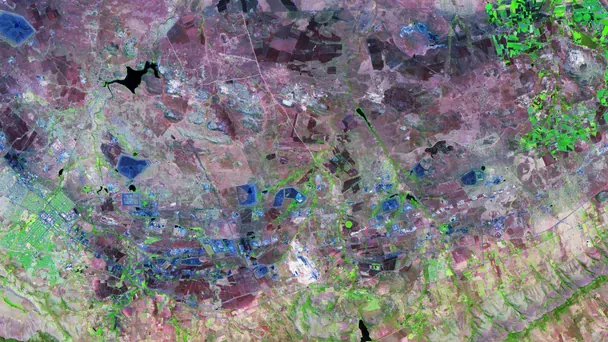
Microbial Structures Found in the Bushveld Igneous Complex
According to TSN.ua: Researchers have uncovered microbial structures within South Africa's Bushveld Igneous Complex, a finding that could illuminate Earth's evolution and the potential for organisms on other planets. This massive geological formation, spanning roughly 66,000 square kilometers, took shape over two billion years ago. Its formation process was geologically rapid, completing in under 10 million years, making it a crucial site for studying the ancient biosphere. Such extreme environments on Earth are key testing grounds for theories about life elsewhere.
In 2024, a team from the University of Tokyo conducted an analysis of rock cores extracted from the Bushveld. The microbes they detected may exist in a state of extremely slow metabolic activity, which complicates their identification. One specific bacterium, Candidatus Desulforudis audaxviator, shows remarkably few evolutionary changes over tens of millions of years. Discoveries like these not only deepen our grasp of evolutionary processes on our own planet but also open new avenues for the search for life on others.
Research Implications
'These microorganisms are associated with clay minerals, which shielded them from contamination during the drilling process.' Yohey Suzuki
This is a critical observation that helps confirm the authenticity of the samples. Suzuki also expressed excitement about the implications for extraterrestrial research:
'The detection of microbial life in two-billion-year-old Earth samples, and our ability to definitively confirm their authenticity, fills me with anticipation for what we might now find in samples from Mars.' Yohey Suzuki
The investigation of the Bushveld Complex not only expands scientific horizons in understanding Earth's history but could also provide a key to discovering life on other celestial bodies. This is particularly relevant for Mars, where the Perseverance rover explored sedimentary rocks of the 'Bright Angel' formation in 2024. The studied microbial structures reveal new possibilities for future research into the evolution of life in the universe.
This discovery holds significant potential for astrobiology, offering scientists a better understanding of how life can be preserved under extreme conditions. The research results could inform new missions to Mars, where the search for microbial life is a primary goal. Finding such ancient microbes on Earth underscores the importance of studying primordial ecosystems to comprehend the possibilities for life elsewhere in the cosmos.
Read also
- Ukraine Launches Hungarian-Language YouTube Channel: 340,000 Views in Just Days
- Russia Intensifies Terror Against Civilians, Ukraine’s Foreign Minister Warns After New Casualties
- Russian Army Imposes Shell Restrictions: What It Means for the Frontline
- Ukraine Charges 10 Russian Soldiers for Drone Strikes Targeting Civilians in Kherson
- New Warhead for Russian Kalibr Missiles: What Ukraine’s Defense Ministry Uncovered
- Russian Forces Intensify Pressure on Kostiantynivka as Ukraine’s Defense Eliminates Southern Threat