Perga: the ancient guardian of truth from Alpine legends and her winter promises.

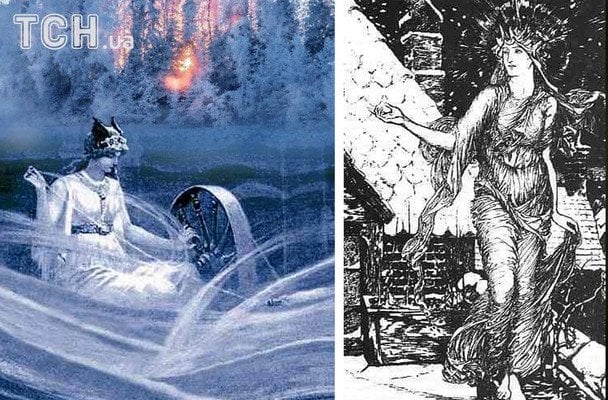
The image of Perga in Ukrainian folklore
According to ТСН: Perga (Perchta, Bertha) is a character of ancient European folklore, particularly prevalent in Alpine regions. In ancient legends, she appears as a guardian of the liminal time, that is, the period between holidays when the old year comes to an end and the new one is only preparing to come. On such days, according to the beliefs of the mountain people, the world becomes more sensitive to truth and falsehood, honest actions and laziness.
On the night of her visits, laziness was forbidden. Women tried to finish spinning, and teenagers, who could barely hold their spoons, tried to demonstrate that dinner was eaten down to the last crumb, for Perga tolerated no waste. She checked the order in the house and adherence to truth.
It is said that if Perga entered a home and saw that someone was living honestly, she would leave a small gift: smoothing the thread of destiny, bringing good dreams, and in the pantry, the grain seemed to never run out in winter. But if someone lied, was lazy, or wronged others — Perga would pass her spindle over them, as if dividing life into “before” and “after”. Such people became restless, their paths became confused, and their dreams turned heavy and murky.
Perga especially had a weakness for children. It was said that she could sit by the cradle so quietly that even the fire in the stove would stop crackling. For honest and brave children, she would leave a thin white thread on the windowsill in the morning — a sign of protection for the whole year.
Faith in Perga also served as a way to discipline both children and adults during the darkest times of the year.
Perga in contemporary culture
In contemporary folklore, Perga has become an important element of 'creepy' winter traditions of Europe.
Recall that earlier we mentioned Lady Metelica from the children's fairy tale, the mistress of the underworld and the echo of the great Goddess of ancient Europe.
Astrology, tarology, numerology, fortune-telling, prophecy, molfarism, and extrasensory perception are not sciences, and forecasts do not always come true 100%. This information is most often for entertainment purposes, so it should not be taken seriously, but only as the probability of events that each person can create, if they have the spirit and inspiration to change their life for the better.
The image of Perga continues to live in our traditions and culture, recreating ancient beliefs and notions of justice and discipline. Her stories remind us of the importance of honesty and good deeds in our daily lives.
Read also
- June 15 New Moon in Gemini: Which Zodiac Sign Gets a Chance for Transformation
- Your Ultimate Guide to Choosing the Perfect Summer T-Shirt: Fabric and Neckline Tips
- Egg-Free Kefir Pancakes: A Simple Recipe with a Dough Secret
- White Acacia Kvass: A Step-by-Step Guide from Klopotenko
- A 30-Minute No-Bake Lemon Dessert: Easy Recipe with Everyday Ingredients
- Easy Pickled Tomatoes for Winter: The Perfect Brine Recipe Using 1 Liter of Water