Palms that bloom only once in a lifetime have blossomed in Rio de Janeiro: a rare sight.

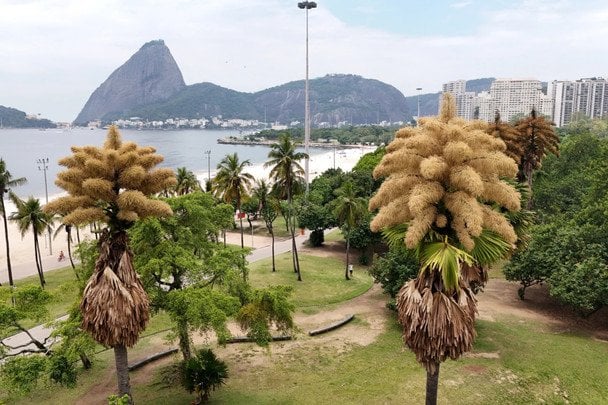
According to ТСН: A unique natural phenomenon occurred in the Brazilian city of Rio de Janeiro: the tall talipot palms bloomed simultaneously. These plants bloom only once in their lifetime, after which they die.
The palms grow in the famous Flamengo Park and the Botanical Garden. They were brought to Brazil in the 1960s by landscape architect Roberto Burle Marx. The lifespan of these palms ranges from 40 to 80 years.
What is a talipot palm
This species of palm originates from southern India and Sri Lanka and can reach a height of up to 30 meters. The blooming is the culmination of their life. The palm forms a central trunk that rises above the fan-like leaves. The inflorescence is filled with millions of tiny cream-white flowers, which can number up to 25 million. After pollination, the flowers will produce fruits, the seeds of which can be used for planting the next generation.
Biologist Aline Saavedra from the State University of Rio de Janeiro explained why the blooming occurs synchronously: 'palms that were imported at the same time have the same metabolism and have been subject to the same Brazilian rhythm of daylight.'
Hopes for the future
This event sparked great interest among the community. For example, 42-year-old civil engineer Vinicius Vanni expressed hope to collect seeds so that future generations could also see the talipot palms.
'I probably won’t see them bloom, but they will be there for future generations,' said a resident.
Although these palms are not invasive due to their slow growth, Brazilian laws strictly control the transport of species that originate from other continents.
It is worth noting that in Rio de Janeiro, a wave flooded the beaches, reaching a height of 3.5 meters and reaching parked cars.
The blooming of talipot palms has become a true event for local residents. Observing this natural phenomenon is not only a source of pride but also a unique opportunity to preserve this beauty for descendants. Rio de Janeiro will continue to face new challenges, including natural disasters, which only emphasizes the importance of preserving the ecosystem and caring for nature.Read also
- Egg-Free Kefir Pancakes: A Simple Recipe with a Dough Secret
- White Acacia Kvass: A Step-by-Step Guide from Klopotenko
- A 30-Minute No-Bake Lemon Dessert: Easy Recipe with Everyday Ingredients
- Easy Pickled Tomatoes for Winter: The Perfect Brine Recipe Using 1 Liter of Water
- A 15-Minute Dinner That Feels Like a Feast: Carbonara-Style Potatoes with Bacon and Cream Sauce
- A Quick 5-Minute Homemade Gravy: Simple Ingredients, Big Flavor