The Secret of the Eternal Temple of Venus: How the Romans Built for 2000 Years.

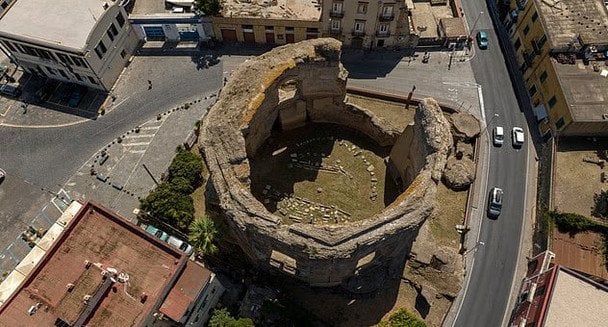
According to ТСН: The Temple of Venus in Italy, despite its nearly 2000-year history and location in a geologically unstable region, impresses with its resilience. Recent studies have shown that Roman builders intentionally added volcanic elements to their construction materials, which increased the strength of the temple.
This massive octagonal structure was erected in the 2nd century on the orders of Emperor Hadrian in Baiae, near Naples, and became part of a large thermal complex. Thanks to its location in the area of the Phlegraean Fields, where gradual rises and falls of the earth's surface occur, the temple has always captivated with its durability.
The Smart Approach of the Romans
Scientists from the University of Naples Federico II analyzed samples based on the temple and found that Roman builders demonstrated outstanding engineering skills. They deliberately combined a limestone base with volcanic materials to ensure the stability of the structure.
“The temple has survived because its geomaterials behave almost like natural rock,” said Dr. Concetta Rispoli, the author of the study.
“Instead of weakening, the materials continue to 'bond' and consolidate with age,” she added.
Unique Materials
One of the key elements was the use of local volcanic ash known as pozzolana. When mixed with lime, a chemical reaction occurred that created new minerals, strengthening the overall structural integrity. This provided the temple with protection from water, moisture, and ground movements that lowered its level by about six meters from the modern surface.
Researchers also found that different volcanic rocks were used for various parts of the 24-meter building. Strong volcanic tuffs and lavas were employed in the support zones, while lightweight ash from Vesuvius was used in the upper section to reduce weight, indicating a careful selection of materials.
This meticulously thought-out approach is undoubtedly a key reason why the monument continues to stand today.
Thus, the study of the Temple of Venus not only confirms the genius of Roman architects and engineers but also highlights the importance of using natural resources in construction. The studied materials and technologies may be beneficial for modern architects and engineers who strive to create durable structures that meet ecological requirements.
Read also
- Your Ultimate Guide to Choosing the Perfect Summer T-Shirt: Fabric and Neckline Tips
- Egg-Free Kefir Pancakes: A Simple Recipe with a Dough Secret
- White Acacia Kvass: A Step-by-Step Guide from Klopotenko
- A 30-Minute No-Bake Lemon Dessert: Easy Recipe with Everyday Ingredients
- Easy Pickled Tomatoes for Winter: The Perfect Brine Recipe Using 1 Liter of Water
- A 15-Minute Dinner That Feels Like a Feast: Carbonara-Style Potatoes with Bacon and Cream Sauce