Cleaners Warn: How to Properly Remove Grease from Kitchen Cabinets Without Damaging Them.

According to ТСН: Even in the cleanest homes, an imperceptible but serious problem arises over time — greasy deposits on top kitchen cabinets. During cooking, hot air, steam, and microscopic droplets of oil rise and settle on the furniture. The upper facades suffer the most, as they are rarely reached during cleaning.
Cleaning specialists warn: attempts to quickly get rid of grease with aggressive agents can have the opposite effect. Strong chemical compounds often leave stains, streaks, or damage the protective coating of the facades.
Especially vulnerable are painted surfaces, gloss, laminate, and natural wood. Therefore, it is important to choose cleaning methods based on the material of the kitchen furniture.
Effective Cleaning Methods
One of the most universal options remains regular dish soap. It is designed to combat grease and is quite gentle on most surfaces. A few drops in warm water and microfiber will help remove fresh deposits without damage.
If the grease has already had time to 'set in', specialists recommend vinegar solution, which must be diluted with water. It is applied to a cloth or with a spray bottle, left for a few minutes, and then gently wipes away the dirt.
For delicate furniture, oil soap is suitable. It not only cleans but also creates a thin protective layer that slows down the re-accumulation of grease.
Baking soda can cope with old stains, but it works as a mild abrasive. Therefore, it is not recommended for glossy and lacquered facades. Baking soda can be used spot-wise, without strong pressure, and only after testing in an inconspicuous area.
How to Prevent the Reappearance of Grease
Cleaners advise not to wait until the deposit becomes thick. Regular maintenance cleaning significantly simplifies kitchen care. Universal solutions or homemade mixtures of water, a few drops of detergent, and vinegar will work for this.
It's better to apply the agent not directly to the furniture but onto a cloth, and then wipe the surface and dry it. This approach helps maintain cleanliness without stickiness, streaks, or damage.
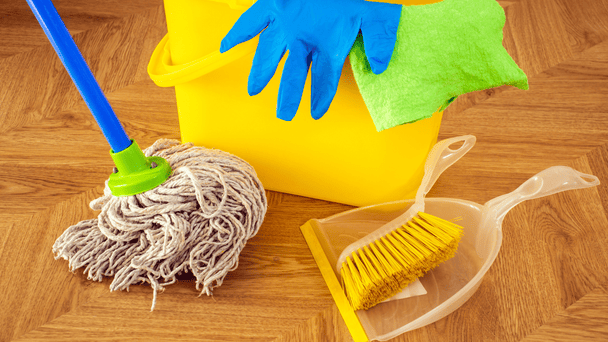
It is worth noting that cleaning specialists recommend washing the floor only with warm water at a temperature of about 40–50°C. Hot water can deform the covering, especially linoleum, and leave a sticky layer, while cold water does not cope with stubborn dirt.
For disinfection, instead of aggressive 'chlorine', it is recommended to use regular table vinegar, which effectively kills bacteria and is safe for children and pets.
Thus, by following simple recommendations, it is easy to keep the kitchen clean and avoid grease accumulation on the facades. It is important not only to know what to clean with but also how often to do it. Regular care helps maintain the appearance of the furniture and creates comfortable cooking conditions.
Read also
- Ukrainian Star Pavlo Zibrov Celebrates First Strawberry Harvest from His Kyiv-Area Garden
- Beat the Heat on the Subway: A Train Operator Reveals the Coolest Spot in the Car
- Summer’s Hottest Micro-Trends: Balloon Skirts, Capri Pants, and Fringe Make a Comeback
- Tarot Warns of Challenges Until June 15: Which Zodiac Signs Are Most at Risk
- The Cloud Cut: Summer 2026’s Most Versatile Hair Trend That Suits Almost Everyone
- Evergreen Charm All Year Round: Why Golden Euonymus Fortunei Shines in Any Garden