Alain Delon: the best films of the legendary actor of French cinema.

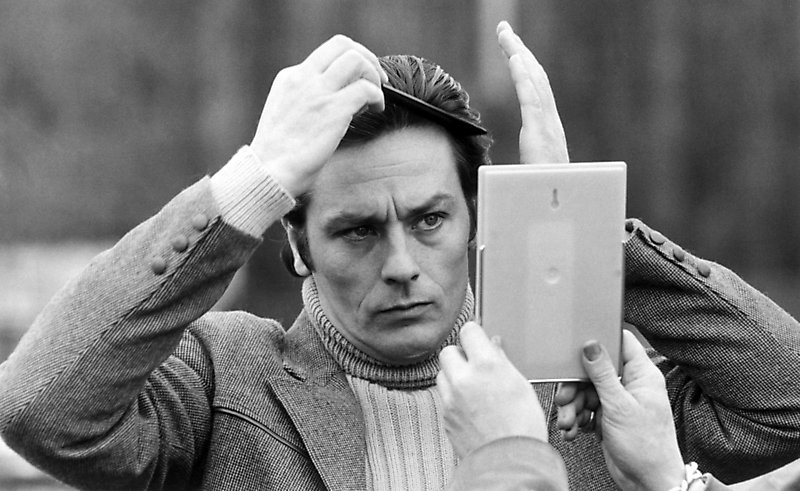
It is difficult to find a movie enthusiast from any generation who does not know who Alain Delon is. He is not only an extraordinarily famous actor but also an epitome of beauty. That is how viewers remember him.
That is why the topic of Alain Delon’s best films is quite interesting and diverse. Especially his early filmography.
The best films with Alain Delon and European dramas
Alain Delon will forever remain a symbol of French cinema in the second half of the twentieth century - an actor whose aristocratic appearance was combined with rare dramatic depth. The artist's career spanned over six decades during which he collaborated with the most outstanding directors in Europe, including Jean-Pierre Melville, Luchino Visconti, and Michelangelo Antonioni. His creative work includes over eighty films, but it is a certain selection of films that formed his status as a legend of world cinema and defined the aesthetics of the European crime genre for decades to come.
Delon’s creative path developed in two directions simultaneously: on one hand, he became the face of French noir and genre films about the criminal world, while on the other hand, he actively starred in complex psychological dramas of Italian and French authors. This duality allowed him to avoid the archetype of an exclusively charismatic beauty and reveal himself as a dramatic performer capable of conveying the inner emptiness, alienation, and moral ambiguity of his characters.
The Samurai (Le Samouraï, 1967)
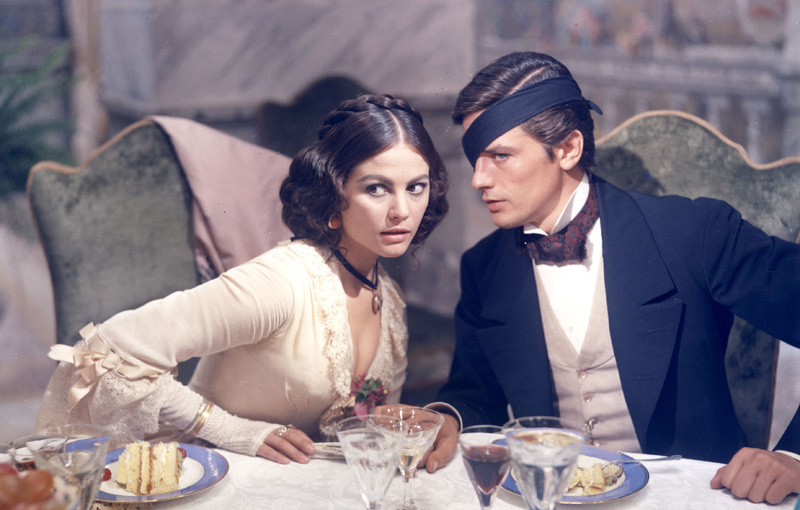
The film by director Jean-Pierre Melville is considered a benchmark of French noir and had a huge impact on the development of the crime thriller genre worldwide. Delon played Jeff Costello - a hired killer who lives by a strict code of honor, resembling a medieval samurai. The character is practically devoid of emotional expressions: minimal words, precise mechanical movements, a cold look from beneath the brim of his felt hat.
The director built the narrative on the contrast between the hero’s external restraint and the internal tension of the hunt that unfolds after a botched assassination. The visual language of the film is distinguished by an ascetic color palette - gray, blue, and beige shades dominate, emphasizing the character's alienation from the surrounding world. The scene of Costello's pursuit in the Paris metro without any dialogue is considered one of the best episodes in the actor's entire career due to his ability to convey tension solely through body language.
The film became an inspiration for many directors, including John Woo and Quentin Tarantino, who have repeatedly acknowledged the influence of Jeff Costello’s image on their own creative work.
On Dangerous Ground (Purple Noon, 1960)
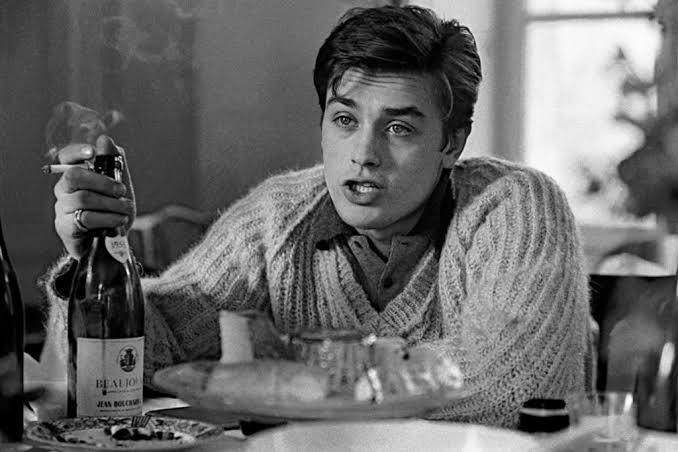
An adaptation of Patricia Highsmith's novel “The Talented Mr. Ripley” became Delon’s first significant dramatic role, instantly making him a star of European scale. The actor portrayed Tom Ripley - an adventurer who, under the guise of friendship, accompanies wealthy American Philip Greenleaf to Italy, planning to appropriate his wealth and identity.
Director René Clément built the film on the contrast between the sunny idyll of the Italian coast and the gradual increase of psychological tension culminated by a crime. Delon masterfully conveyed the character's transformation: from charming companion to cold-blooded manipulator capable of murder for his own comfort. The scene of forging a signature and imitating the victim's voice over the phone became a textbook example of acting skill in creating a dual character.
The film brought Delon international recognition and opened doors for collaboration with leading European directors of that time, finally consolidating his reputation as an actor capable of playing not only attractive heroes but also morally complex characters.
The Sicilian Clan (Le Clan des Siciliens, 1969)
The crime drama by director Henri Verneuil united on screen three of the greatest stars of French cinema of that period: Alain Delon, Jean Gabin, and Lino Ventura. Delon played Roger Sartet - a dangerous escapee from prison who joins a Sicilian mafia clan led by patriarch Vittorio Manalese, played by Gabin, to carry out a major diamond heist during an air transport.
The confrontation between Delon's character and detective Le Goff, portrayed by Ventura, forms a tense detective line in the film, built on a psychological duel between the criminal and the investigator. The film is distinguished by a complex multi-plan composition that combines elements of gangster cinema, police procedural, and family drama about mafia traditions.
Particular attention should be paid to the scene of the airplane heist, which was innovative for European cinema at the time due to its level of technical complexity in staging. Delon in this film demonstrated his ability to work in an ensemble with older actors, without losing his own charisma and screen presence.
The Red Circle (Le Cercle Rouge, 1970)
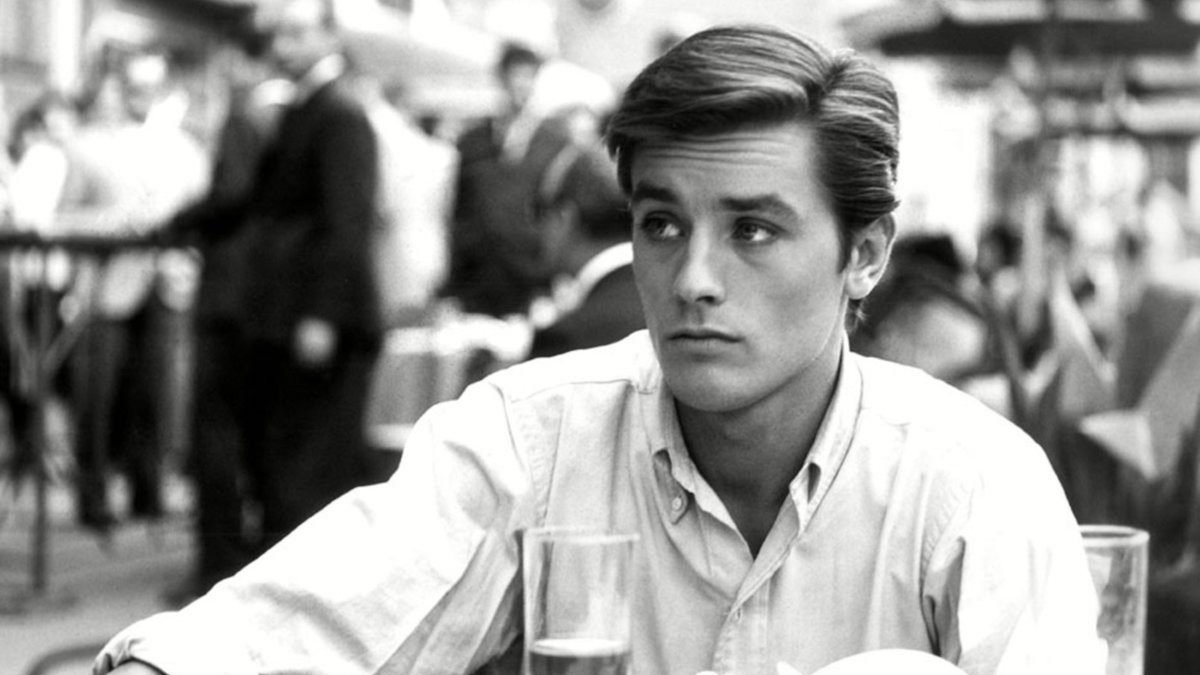
Delon's second significant collaboration with Jean-Pierre Melville became one of the most perfect examples of the heist genre in world cinema. The actor played Corey - a recently released prisoner who plans a large-scale jewel store heist, teaming up with fugitive Vogel and a former alcoholic police officer Jansen.
The director built the central heist scene as an almost silent twenty-five-minute episode, which required the actors maximum concentration and precision of movement without relying on dialogues. Delon in this film created the image of a professional in the criminal world, for whom there exists a personal code of honor that contradicts accepted morality but remains internally coherent.
The philosophical concept of the film, articulated in the opening credits about the Buddhist legend regarding the circle that inevitably brings people together regardless of their desires, adds an additional metaphorical dimension of the characters' doom. The film is considered one of the high points of both the director's and the lead actor's works.
Borsalino (1970)
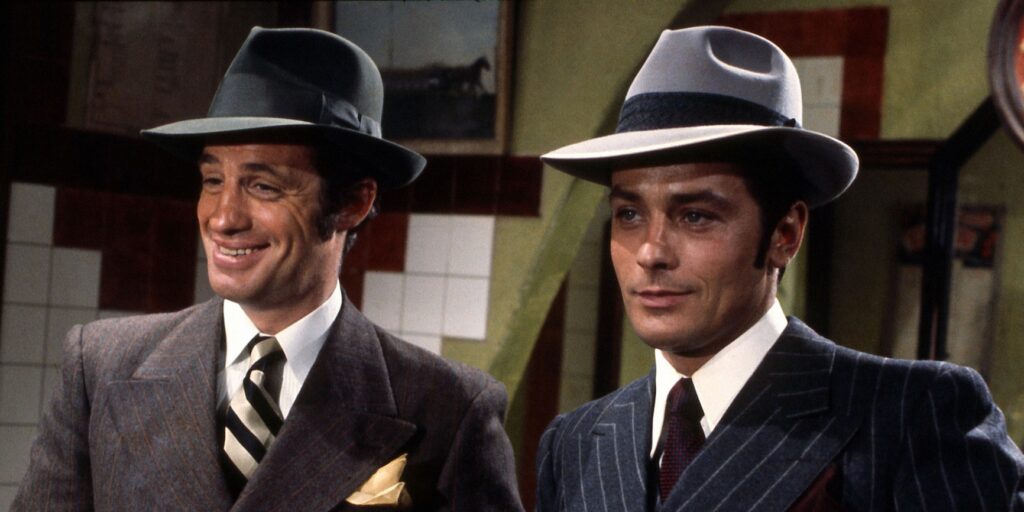
The gangster comedy-drama by director Jacques Deray transported the viewer to Marseille in the 1930s, where two small-time crooks - Delon's and Jean-Paul Belmondo's characters - gradually rise through the criminal ranks, seeking to establish control over the port city. The union of two of the biggest stars in French cinema of that decade in one film was itself a cultural event.
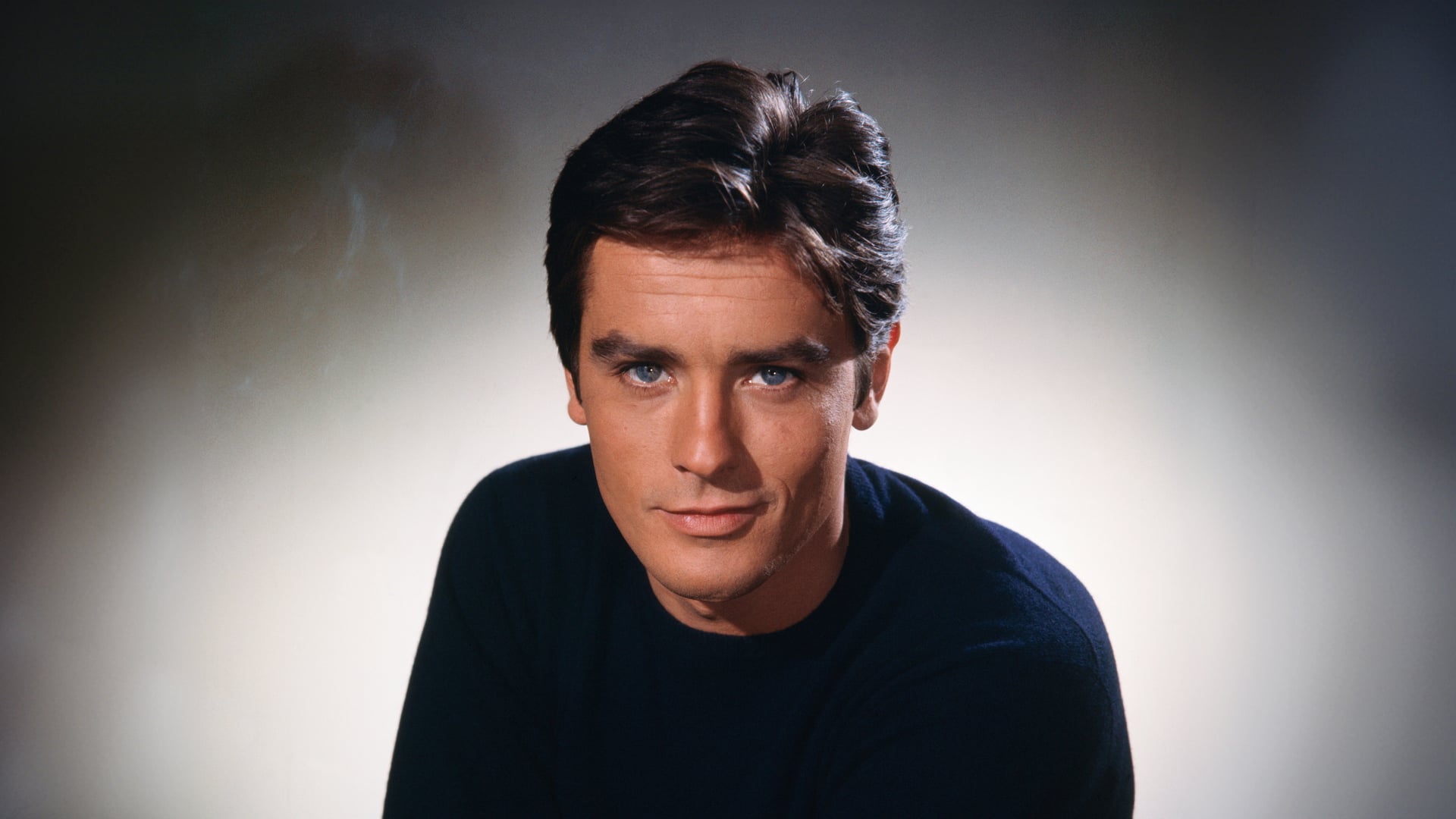
Delon, who also served as a producer for the film through his own company, played Roch Siffredi - an ambitious and prudent partner of the impulsive François Capella, played by Belmondo. The duo of actors created a convincing chemistry on screen that combined rivalry, friendship, and mutual respect between two completely different characters in temperament.
The visual style of the film, recreated by the production designers with attention to detail of the era, including the signature Borsalino hats that gave the film its name, made it a model of retro aesthetics in genre cinema. The success of the film led to a sequel being made, although it did not reach the level of the original.
The Leopard (Il Gattopardo, 1963)
The historical drama by Luchino Visconti based on the novel by Giuseppe Tomasi di Lampedusa is considered one of the greatest costume films in the history of Italian cinema. Delon played Tancredi Falconeri - an ambitious young aristocrat, the nephew of Prince Salina, a role played by Burt Lancaster, set against the backdrop of the unification of Italy in the second half of the nineteenth century.
Delon's character embodies a generation that pragmatically adapts to social changes to preserve influence and status, unlike the older generation of aristocracy represented by the prince, who is aware of the inevitable decline of his class. The character Tancredi's famous phrase about the necessity of change so that everything remains unchanged became an aphoristic reflection of the central theme of the film.
The grand ball scene lasting over forty minutes, filmed at the end of the film, is considered one of the most significant episodes in the history of cinema due to its scale of staging and cinematography. Delon in this role demonstrated the ability to organically exist in the context of serious Italian authorial drama alongside recognized masters of acting.
Rocco and His Brothers (Rocco e i suoi fratelli, 1960)
Another significant collaboration with Luchino Visconti brought Delon the role of Rocco Parondi - the youngest of the brothers from a peasant family that moves from the poor southern region of Italy to industrial Milan in search of a better life. The film explores themes of family loyalty, moral degradation in urban poverty, and the tragic rivalry between brothers for the love of one woman, played by Annie Girardot.
Delon created the image of a character whose kindness and self-sacrifice border on passivity, ultimately leading to tragic consequences for the whole family. The dramatic climax associated with the confrontation between Rocco and his brother Simone is considered one of the most powerful scenes in the actor's body of work due to the emotional authenticity of the performance.
The neorealistic aesthetic of the film, combined with elements of operatic dramaturgy characteristic of Visconti, made the film an important milestone in the transition of Italian cinema from classical neorealism to more complex psychological narratives of the sixties.
The Pool (La Piscine, 1969)
The psychological drama by director Jacques Deray unfolds at a villa on the French Riviera, where a relaxing atmosphere gradually transforms into an arena of hidden passions, jealousy, and betrayal. Delon played Jean-Paul, whose idyllic vacation with his beloved Marianne, played by Romy Schneider, is disrupted by the arrival of an old friend Harry accompanied by his daughter.
The film is characterized by a leisurely pace of storytelling, allowing the viewer to gradually immerse themselves in the psychological tension between the four characters, whose relationships are filled with unspoken tensions and hidden rivalries. The visual composition built around the pool as the central symbol of the film creates an atmosphere of sensual danger hidden behind the external luxury of summer relaxation.
The real-life relationship between Delon and Romy Schneider, who were previously engaged in life, added an additional level of authenticity to the film, as the tension between the characters felt completely natural to the audiences. The film gained cult status as a classic of European erotic thrillers due to its successful combination of aesthetics and psychological depth.
Eclipse (L'Eclisse, 1962)
The concluding part of Michelangelo Antonioni's trilogy on alienation in the modern world brought Delon together with Monica Vitti in a story of a short-lived, doomed romance between stockbroker Piero and young translator Vittoria. The film explores themes of emotional emptiness and the impossibility of genuine human connection in the accelerated and materialistic living conditions of society.
Delon as Piero created an image of a character completely immersed in the dynamics of the financial world, whose capacity for deep feelings seems limited by a constant focus on material success. The director employs the architectural spaces of Rome, particularly scenes on the stock exchange and in newly developed areas of the city, as a visual metaphor for the modern person's alienation from their own emotions.
The film's famous ending, consisting solely of shots of empty streets and architectural objects without the presence of the main characters, is considered one of the boldest experimental decisions in the history of arthouse cinema, and Delon's participation added commercial success to the film despite the complexity of the author's intention.
Mr. Klein (Monsieur Klein, 1976)
The drama directed by Joseph Losey, set in Nazi-occupied Paris, became one of the deepest dramatic works of Delon’s later period. The actor played Robert Klein - a wealthy art dealer who profits from the forced sale of property by Jewish families until he discovers that there exists his namesake of Jewish descent who is being sought by the police.
The film explores themes of identity, collective responsibility, and moral ambiguity in the context of a totalitarian regime through the prism of the character's personal obsession with proving his own innocence. Delon masterfully conveyed the gradual transformation of an indifferent merchant to the sufferings of others into a person who finds himself trapped within a system he had previously exploited for his own gain.
The final scene of deportation, where the character consciously joins a group of Jews being sent to a concentration camp, is considered one of the most powerful and tragic scenes in the entire career of the actor. The film received recognition as one of the most important French films about the Nazi occupation and became a testimony to Delon’s dramatic maturation in his later period.
The actor's filmography will no longer be supplemented by new films, but one can find new and interesting works for themselves within it. These have made Alain Delon a true legend.
Read also
- Christina Aguilera Secretly Marries After 12-Year Engagement: Ceremony Details Revealed
- Sharon Stone Opens Up About Stroke Recovery: Quitting Medication and Returning to the Runway
- Ostapchuk’s Son Starts Preschool in Canada: What the TV Host Pays for Education
- Kateryna Kuznetsova's Spanish Getaway: Fresh Yacht Photos from Barcelona Coastline
- Tonia Matvienko and Arsen Mirzoian Take a Family Trip to Transcarpathia: How They Spend Their Vacation
- Jessie J Confirms Split from Her Child's Father: Inside the Breakup