The Sun Witnessed a Powerful M5.1 Flare: How It Affected Communication.

According to ТСН: The Sun has once again become active at the end of the year, announcing itself on December 27. Observation instruments recorded a significant spike in radiation.
This event was confirmed by experts from the NOAA Space Weather Prediction Center (SWPC).
The Strongest in Three Weeks
This flare became the most powerful recently, reaching a peak around 04:00 Kyiv time and receiving a classification of M5.1.
The last time such high-power activity was observed was on December 8, when the Sun emitted an extreme flare classified as X1.1. At that time, it led to temporary disruptions in radio communication in Australia and Southeast Asia. The current surge, while weaker (class M – 'moderate'), has an intensity of about 50% of the threshold for the highest class X.
The Return of the ‘Old’ Spot
Astronomers have determined that the source of the flare was a new active region near the group of spots AR 4323.
This zone is essentially a 'successor' to previous active regions (AR 4294/4296) that caused concern in early December. The spot has completed a full orbit around the Sun and reappeared on its eastern edge, ready for new eruptions.
Consequences: Radio Blackout and New Year's Forecast
The flare has already caused a number of consequences for Earth:
A level R2 radio blackout (moderate) was recorded.
This could lead to reduced or lost high-frequency radio communication on the illuminated side of the Earth for tens of minutes.
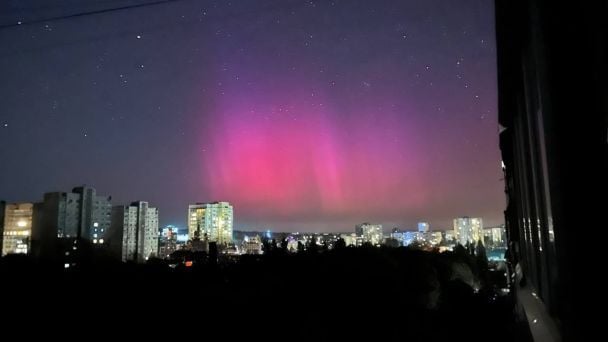
As for magnetic storms on New Year's Eve, the forecast is encouraging. According to Sansa Space Weather, geomagnetic conditions between December 28-30 are expected to be at a 'calm' level. Since the flare was not directed directly at Earth, the chances of seeing the aurora borealis on the night of January 1 remain low.
During the record close encounter of the solar probe Parker Solar Probe with the star, unusual behavior of the Sun was recorded. Images showed how part of the magnetic material returned to the Sun after a powerful eruption.
Currently, the Sun's activity is attracting interest among scientists, as it can affect communication and navigation technologies on Earth. Observing such eruptions helps to better understand how solar activity can influence our planet. At the same time, the relatively calm forecast for the New Year's days creates an optimistic mood for celebrations while allowing time to prepare for possible changes in space weather in the future.
Read also
- Ukrainian Drones Stall Russian Army's Advance on Kupiansk Front: No Positions Lost
- IAEA Demands Iran Report on Uranium Stockpiles, Backed by U.S. and European Powers
- Germany’s Admiral Explains Why Ukraine Now Leads the World in Defense Innovation
- Ukraine Faces Record Night Attack: 221 Drones and Iskander Missiles Launched
- Zaporizhzhia and Sumy Under Russian Attack: Eight Wounded, Hundreds of Structures Damaged
- China Deploys HIMARS for the First Time Toward the Taiwan Strait: Exercise Breakdown