Father Christmas vs. Santa: the true story of a symbol that has been forgotten.

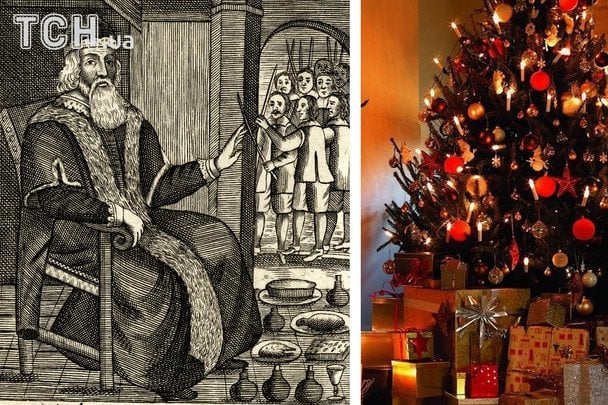
According to ТСН: The image of Father Christmas emerged in Europe long before Santa Claus took to the stage. He did not bring gifts to children and was not part of the Christmas 'tale' in the usual sense. Instead, Father Christmas symbolized the spirit of the winter holiday - abundance, hospitality, entertainment, and the summation of the year.
Who is Father Christmas
Father Christmas (Father Christmas) is a traditional figure of English folklore, references to which can be found from the 15th-16th centuries. In early sources, he appears not as a specific person, but as an allegorical symbol of the festive period at the end of the year.
This character is a bearded man in a long cloak, usually green, red, or brown, who embodied abundance, plentiful tables, wine, songs, and communal celebration. Father Christmas was rather envisioned as the 'spirit of Christmas' than as the main character of the holiday.
Not about gifts and not about children
Unlike Santa Claus, Father Christmas originally had no connection to children or Christmas gifts. His purpose was to remind adults of the right to joy, rest, and communal celebration after a hard year.
In medieval England, Christmas was celebrated with loud festivities that lasted several days. Father Christmas embodied this 'allowed luxury' when social restrictions were relaxed, and the community came together.
Symbol of resistance to the Puritans
In the 17th century, the image of Father Christmas took on a political undertone. During the English Reformation and the rule of the Puritans, Christmas celebrations became undesirable and, in some cases, even forbidden. Festive rites were considered 'pagan' and excessive.
During this period, Father Christmas became a symbol of resistance. In pamphlets and folk texts, he was depicted as an old man lamenting the destruction of Christmas and forgotten traditions. Thus, he became the embodiment of 'Old England' and the popular memory of the holiday.
Influence of literature and Dickens
In the 19th century, the image of Father Christmas began to change, significantly influenced by literature, especially the Christmas works of Charles Dickens. This shaped the idea of Christmas as a family, warm, and morally significant holiday.
Father Christmas became less 'loud' and more of a domestic character—a symbol of coziness, kindness, and humanity. At the same time, during this period, the American image of Santa Claus, based on Saint Nicholas, made its way to Europe.
Why Father Christmas is confused with Santa Claus
In the 20th century, with the development of advertising and mass culture, these two images merged significantly. The red suit, white beard, and festive elements became universal. For many people, the difference between Father Christmas and Santa Claus gradually disappeared.
However, historically, there is a fundamental difference between them. Santa Claus is a child-oriented character centered around gifts, while Father Christmas is a symbol of festive time, atmosphere, and the cyclical nature of the year.
Why he is mentioned today
In the modern world, interest in Father Christmas is growing alongside a general attention to local traditions and non-mass cultural images. For many, he becomes an alternative to the commercialized Santa—more restrained and symbolically representative of Christmas.
This image reminds us that the holiday is not just about shopping and gifts, but also about shared time, reflecting on the year, and feeling warmth in winter.
Father Christmas is one of the oldest Christmas symbols in Europe, having survived bans, transformations, and cultural changes. His history illustrates how the understanding of Christmas has changed—from loud feasts to family warmth and internal reflections on the year.
Read also
- Fight Dust with Liquid Glycerin: A Simple Pharmacy Find That Transforms Your Cleaning Routine
- Kyiv Region Braces for a Warm June 11: Temperatures Set to Reach +28°C
- A Simple Zucchini and Eggplant Stew Recipe from 'Tasty Bites'
- A Festive Drink Made from Tea Rose Petals: An Easy Recipe for Your Holiday Table
- A Surprising Twist on Crab Stick Salad: One Unlikely Ingredient Transforms the Flavor
- Unique Venus-Jupiter Conjunction: One Zodiac Sign Gets a Rare Opportunity Until June 14