Salt versus the garden: how to safely replace it on icy surfaces.

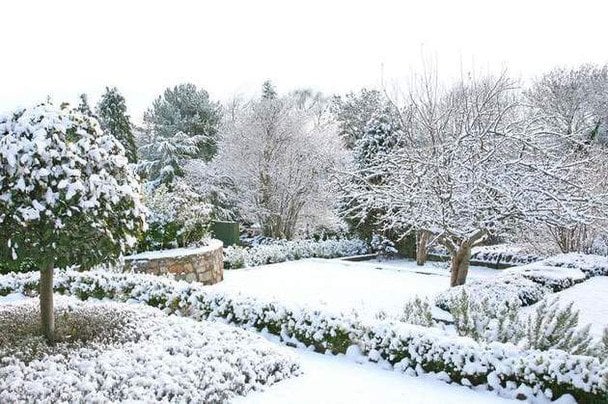
According to ТСН: Winter ice on garden paths not only threatens safety but also creates serious problems for the ecosystem of your plot. The use of traditional ice control methods, such as salt and sand, can have unnoticed negative consequences that manifest in spring in the form of dry patches and depleted soil.
Below we will explore the negative impact of salt on your garden and alternative methods offered by modern agro-technologies.
Hidden threat: why salt and sand are not a solution
Although traditional methods may seem economically beneficial, they actually harm your garden's ecosystem and recovery will require significant costs.
Sodium chloride (salt) acts as a chemical "displacer". When it enters the soil, sodium displaces calcium and magnesium—elements that are responsible for soil structure. As a result, the soil becomes compacted and unsuitable for plant root growth.
Salt causes a "saline-drought" effect. When the concentration of salt in the soil is too high, plants lose moisture. In spring, trees may appear wet but still dry out, as salt draws moisture from their tissues.
Sand does not solve the ice problem; it only masks it. Over time, it can clog drainage systems and damage flooring.
Smart alternative: urea
Urea is an effective and safe alternative to technical salt. This concentrated nitrogen fertilizer, when coming into contact with ice, actively releases heat, breaking the ice from within.
This method is particularly advantageous, as in spring the remnants of urea serve as fertilizer, promoting faster plant growth.
How to use urea for pathways
First, urea granules should be evenly distributed over the frozen surface in a thin layer. Then wait for the activation time, which lasts about 45 minutes to an hour. During this time, the granules penetrate the structure of the ice, making it soft.
Finish the process with simple cleaning—the softened ice can be easily removed with a broom or shovel. The resulting mass can be used in the garden, providing the plants with necessary elements.
Important nuances and limitations
Despite its effectiveness, using urea has a few nuances.
Weather conditions matter, as urea works better at temperatures up to -10 to -12 degrees Celsius. At lower temperatures, its action is slowed down.
Urea is safe for household use and pets, unlike salt, which leaves stains on shoes and can irritate animal paws.
Although urea may seem more expensive than regular salt, in the long run, it is a worthwhile investment in the well-being of your garden.
Read also
- A Simple Zucchini and Eggplant Stew Recipe from 'Tasty Bites'
- A Festive Drink Made from Tea Rose Petals: An Easy Recipe for Your Holiday Table
- A Surprising Twist on Crab Stick Salad: One Unlikely Ingredient Transforms the Flavor
- Unique Venus-Jupiter Conjunction: One Zodiac Sign Gets a Rare Opportunity Until June 14
- Short Nails Look Longer with the Italian Manicure: How This New Beauty Trend Works
- Ukrainian Star Pavlo Zibrov Celebrates First Strawberry Harvest from His Kyiv-Area Garden