Movies about World War II 1941–45: Famous Films and Historical Dramas.


Movies about World War II have always been interesting, though in recent years this is an extremely complex topic, especially for Ukrainians. Thus, each film about World War II or any other war is perceived differently.
However, there are quite a few of these films and they all have their own audience. Some tell stories of severity and cruelty, while others speak of bravery and courage. Together, all deserve special attention.
Movies about World War II
World War II remains one of the most dramatic and tragic chapters in human history, inspiring filmmakers for decades to create deep and emotionally charged films. Cinema about this period not only serves an entertainment function but also serves as an important reminder of the horrors of war, the heroism of ordinary people, and the value of peace.
Over different times, directors have turned to this theme, offering viewers various perspectives on the events of 1941-1945: from epic battle scenes to intimate dramas focusing on human destinies. Each of these films offers a unique viewpoint, highlighting different aspects of war: the heroism of soldiers, the tragedies of civilians, moral dilemmas, or political intrigues. It should be noted that the best of these films do not simply recreate historical events but also pose difficult questions about the nature of evil, the cost of victory, and the strength of the human spirit.
The genre of movies about World War II is extremely diverse, encompassing both large-scale battlefield epics and intimate psychological dramas. For decades, directors from various countries have addressed this topic, offering their own vision of events and characters caught in the whirlwind of war. Among the most well-known films are those focusing on the heroism of soldiers on the battlefield, while others emphasize the tragedies of civilians, genocide, or moral choices. American, British, European, and Asian filmmakers have significantly influenced the development of this genre, each contributing their own cultural perspective. It is also worth noting films that combine documentary accuracy with artistic fiction, creating a convincing atmosphere of the past. In recent decades, films have emerged that use unconventional narrative techniques, including non-linear storytelling, providing a fresh perspective on familiar events. Thus, cinema about World War II remains an important cultural phenomenon that continually evolves.
Schindler's List (1993)
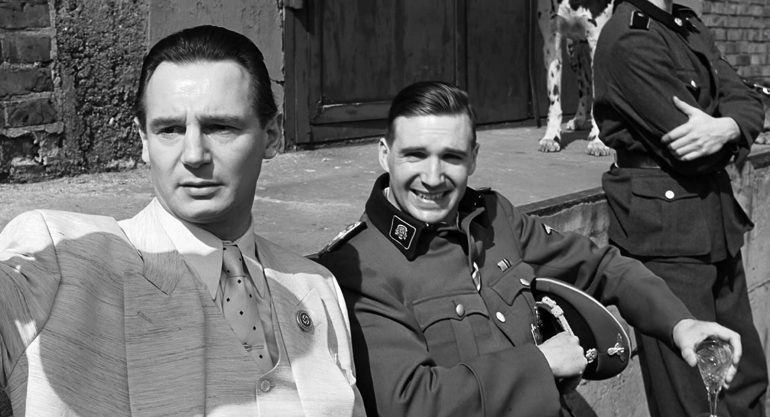
Director Steven Spielberg's film became one of the most important works not only about the Holocaust but also about World War II in general. The film tells the story of German businessman Oskar Schindler, who at the start of the war sought to profit from the cheap labor of Jewish workers but later recognizes the criminality of the Nazi regime. The main character, played by Liam Neeson, undergoes a complex evolution from a selfish businessman to a selfless savior, spending all his wealth to save more than a thousand people. The central figure in the narrative is also Amon Goeth, the heartless camp commandant, played by Ralph Fiennes, who embodies absolute evil, contrasting with Schindler's moral quest. The film impresses with its documentary authenticity: the scenes were filmed in real locations, and the scenes of the concentration camp were recreated with maximum historical accuracy. An important element of the film is its visual style, where most of it is shot in black and white, emphasizing the tragic atmosphere, with the only color element being the red coat of a girl. This technique later became one of the most recognizable symbols of cinema. The film received numerous awards, including Best Picture, and secured its status as a benchmark drama about the Holocaust.
Saving Private Ryan (1998)
This film directed by Steven Spielberg opened a new chapter in depicting wartime events through a revolutionary approach to portraying battle scenes. The film begins with a large-scale scene of the Allies' landing in Normandy, lasting nearly half an hour and shocking the viewer with its realism and brutality. The main plot line focuses on a group of American soldiers sent behind enemy lines to find and rescue Private James Ryan, whose three brothers died on the battlefields. The lead role is played by actor Tom Hanks, who portrays Captain Miller, a veteran of the war forced to lead this risky mission despite his own doubts about its feasibility. The actor masterfully conveys the internal conflict of his character, who understands that the salvation of one person costs the lives of a few but still carries out the order. The film also explores the theme of the cost of war, demonstrating not only heroism but also the physical and psychological traumas that remain with soldiers forever. The technical innovations used during filming significantly influenced the future development of war cinema, setting new standards for the portrayal of combat actions. It is worth noting the work of the cinematographer, who employed a handheld camera to convey a sense of chaos and danger. The film secured a reputation as one of the best war films of all time.
The Pianist (2002)
This drama directed by Roman Polanski became one of the most poignant cinematic works about the tragedy of the Jewish people during World War II. The film is based on the autobiographical book of Polish pianist Władysław Szpilman, who survived the German occupation of Warsaw and managed to survive in conditions where most of his family perished. The lead role was played by actor Adrien Brody, who underwent intensive training to learn to play the piano and lost significant weight to convey the physical exhaustion of his character. His performance was awarded for Best Actor and became one of the key reasons for the film's success. The film impresses with its uncompromising realism, depicting the horrific conditions of the Warsaw Ghetto, where hunger, disease, and mass executions were everyday realities. The director skillfully recreates an atmosphere of despair and loneliness, focusing on the inner world of the protagonist seeking strength to survive through music. An important element of the film is the scene where Szpilman plays Chopin for a German officer, who, upon hearing the music, decides to save the pianist. This moment became a symbol of compassion even amidst absolute evil. The film received numerous awards and solidified Polanski's reputation as a master of deep psychological dramas.
The Thin Red Line (1998)
Director Terrence Malick created an unusual war drama that differs from traditional World War II films with its philosophical approach and narrative structure. The film tells the story of the battle for Guadalcanal, one of the key confrontations between the American and Japanese armies in the Pacific region. The film is distinguished by its focus not on battle scenes but on the internal experiences of soldiers, their fears, memories, and reflections on the meaning of life. The film features numerous well-known actors, including Sean Penn, Adrien Brody, Nick Nolte, and John Cusack, each of whom is given the opportunity to demonstrate the depth of their talent. Nature plays a special role in the film, contrasting with the horrors of war: the camera often lingers on images of beautiful landscapes, giving the film a poetic resonance. The film employs a non-linear plot, intertwining present events with the heroes' memories, creating a sense of deep immersion in their psychology. Malick rejected traditional patriotic clichés, instead depicting war as a senseless slaughter where each soldier faces his own demons. The film was nominated for numerous film awards and remains a model of an author's approach to the war genre.
Dunkirk (2017)
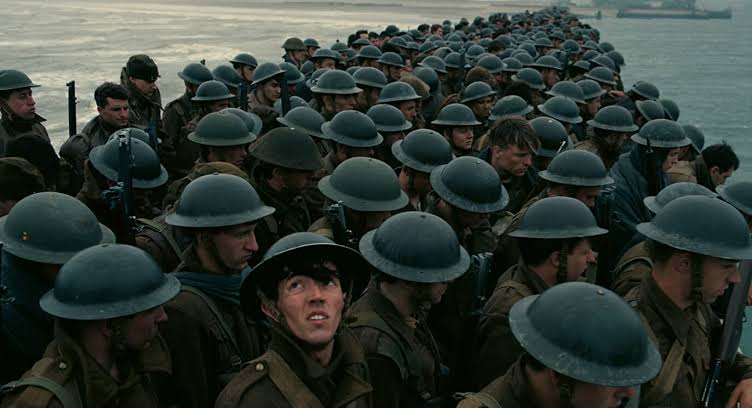
Director Christopher Nolan created a unique war film that explores one of the most important events of the early World War II period—the evacuation of British and Allied troops from the beaches of Dunkirk. The film is structured non-linearly, intertwining three timelines: land, sea, and air, corresponding to one week, one day, and one hour respectively. This approach allows for showing events from different perspectives, gradually revealing the full picture of this heroic operation. The film has almost no traditional dialogues, with the main emphasis placed on visual images and sound design that creates a tense atmosphere. The main roles are played by actors Fionn Whitehead, Tom Hardy, Kenneth Branagh, and Mark Rylance, each adding depth and emotion to their characters. The attack scene of German planes on the beach impresses, filmed using real military planes and ships to ensure maximum realism. Nolan also used practical effects instead of computer graphics, making the film more authentic. The film received several awards for Best Sound and Editing and was nominated for Best Picture.
Inglourious Basterds (2009)

Director Quentin Tarantino presented his own alternative vision of World War II, merging historical facts with fictional characters and unexpected plot twists. The film tells the story of a group of American Jewish soldiers conducting guerrilla warfare in occupied France, exterminating Nazi officers with particular brutality. The lead role of the British lieutenant leading the squad was played by actor Brad Pitt, who added his character charismatic brutality and dark humor. The film also features actor Christoph Waltz, who plays Colonel Hans Landa, a cunning and ruthless interrogator hunting Jews. His performance was awarded for Best Supporting Actor, and the character became one of the most famous movie villains of the new century. The film is distinguished by Tarantino's characteristic long dialogues, unexpected twists, and stylized violence presented with elements of dark humor. The opening scene, where Landa interrogates a French farmer suspected of hiding Jews, has become cult. Moreover, the film has an alternative ending where the heroes succeed in killing Hitler, turning the film into a kind of historical 'what if' project. The film received mixed reviews but secured its status as a cult creation.
Jojo Rabbit (2019)
This film directed by Taika Waititi offers a unique perspective on World War II through the eyes of a ten-year-old boy who is a devoted member of the Hitler Youth. The protagonist, named Johannes, played by young actor Roman Griffin Davis, has an imaginary friend in the form of Adolf Hitler, portrayed by the director himself in a comedic, almost absurd manner. The film balances between satire and drama, showing how a child's naivety confronts the harsh reality of war. Johannes accidentally discovers that his mother, played by actress Scarlett Johansson, is hiding a Jewish girl at home, forcing the boy to reevaluate his beliefs. The actress creates an image of a strong and wise woman trying to protect her son from the influence of Nazi propaganda. Additionally, actor Sam Rockwell appears in the film as the captain, the leader of the local youth camp, who also undergoes his transformation. The film employs a bright color palette and unexpected musical decisions, contrasting with the grim theme of war. It received numerous nominations and awards, including for Best Adapted Screenplay, and became a notable phenomenon in contemporary cinema. Overall, 'Jojo Rabbit' offers viewers a fresh perspective on the theme of war through the prism of childhood naivety.
Fury (2014)
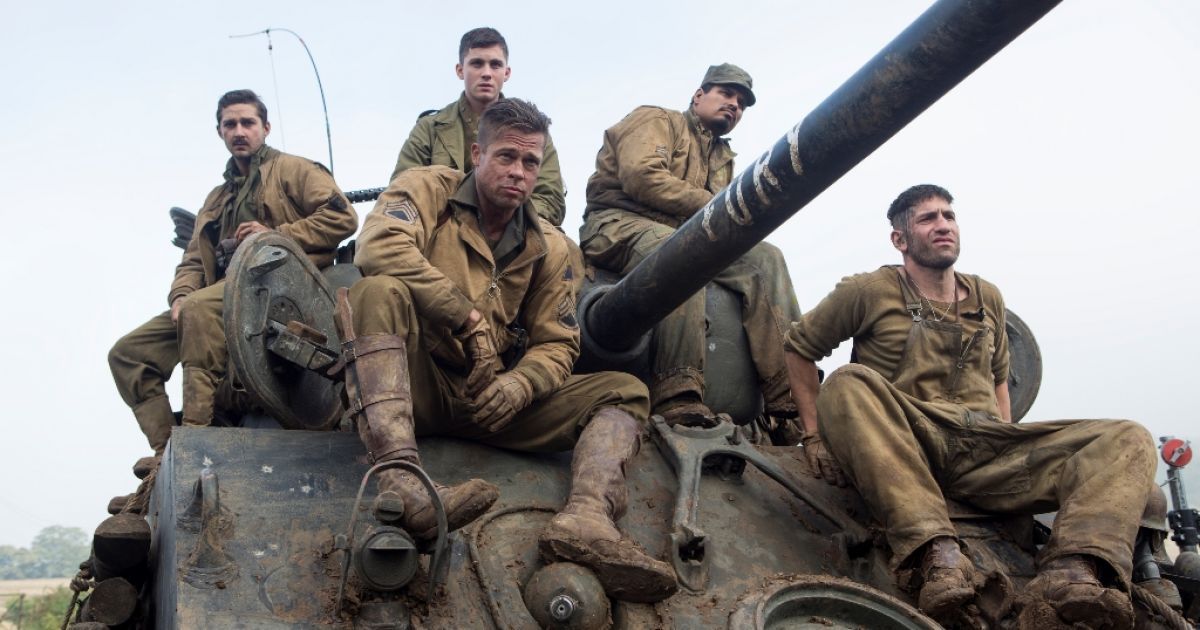
This film directed by David Ayer is one of the most realistic portrayals of combat actions in the final stages of World War II when Allied forces were entering Germany. The film focuses on the crew of an American tank called 'Fury,' which is making its way through enemy territory, undertaking risky assignments under the fierce resistance of German troops. The lead role of the tank commander, Sergeant Donny Collier, is played by actor Brad Pitt, who creates the image of a veteran hardened by war, who has lost faith in humanity but continues to perform his duty. His character is complex and multifaceted: he is brutal to enemies but also shows care for his subordinates, trying to save their lives in hopeless situations. The film also features actors Logan Lerman, Shia LaBeouf, Michael Peña, and Jon Bernthal, each portraying crew members who have their own story and character. One particularly striking scene shows the crew stopping in a German town and witnessing the senseless death of their comrades, emphasizing the tragedy of war on a personal level. The film does not romanticize war but instead depicts it as a dirty and brutal reality where moral compromises become necessities for survival. The director uses a dark, depressing color palette, enhancing the feeling of despair and inevitability. The battle scenes are characterized by maximum realism, including filming with real tanks and handheld cameras, which creates a sense of presence. Special attention is given to the sound design, which conveys the rumble of treads and the explosions of shells. The film has received positive reviews for its uncompromising nature and acting performances.
Valkyrie (2008)
This film directed by Bryan Singer tells the true story of a plot by German officers against Hitler, specifically about the operation to assassinate the Führer, which was code-named 'Valkyrie.' The lead role of Colonel Klaus von Stauffenberg is played by actor Tom Cruise, who portrays a decisive and principled military man aware of the criminality of the Nazi regime and decides to act. His character is the central figure in the conspiracy, uniting various officers with differing views, united by a common goal—to stop the war and save Germany from total destruction. The actor studied Stauffenberg's biography, including his military career and participation in previous operations, to accurately convey his character. The film also features actors Kenneth Branagh, Bill Nighy, Terence Stamp, and Tom Wilkinson, who portray other conspiracy members, each with their own motives and doubts. The film meticulously recreates the historical context, including Hitler's 'Wolf's Lair' and the atmosphere of constant suspicion prevailing among the high command. The tension of the film builds up to the moment of the bomb explosion, after which a dramatic scenario of the operation's failure unfolds. The director skillfully conveys the tragedy of the resistance participants who acted for the future of Germany, knowing that they faced inevitable execution. The film received mixed reviews but remains an important attempt to showcase German resistance to Nazism.
Generation War (2013)
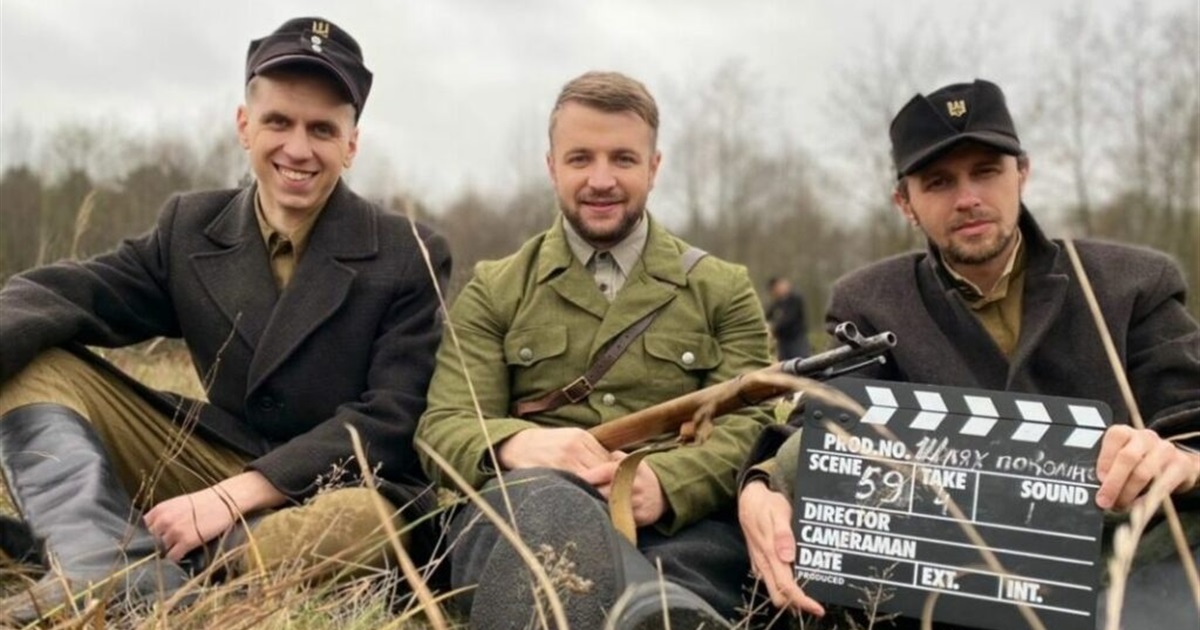
This German miniseries directed by Philipp Kadelbach became one of the largest European projects about World War II, covering the period from 1941 to 1945. The film tells the story of five German friends who seem to have a shared future, but the war separates them in different directions, forever changing their lives. At the center of the plot are five young people from Berlin: two brothers going to the front, a Jewish girl trying to survive in the face of persecution, an ambitious nurse, and a talented singer. Each of these storylines demonstrates different facets of the war: from the brutality on the Eastern Front to everyday life in the German rear. The cast includes Volker Bruch, Tom Schilling, and other well-known German actors who created deep and realistic portrayals of their characters. The series does not attempt to justify Germany's involvement in the war but rather shows the tragedy of an entire generation destroyed by Nazi ideology. Special attention is given to the Eastern Front, depicting the horrors of occupation, treatment of civilians, and the brutality of combat operations. The project received numerous awards and was positively reviewed by critics for its historical authenticity and emotional depth. The series also emphasizes the moral degradation of characters forced to make impossible choices. 'Generation War' serves as a powerful reminder of the price ordinary people pay during ideological conflicts and remains one of the best examples of German cinema about World War II.
Despite the heavy theme of war, new films about historical events are regularly released. Of course, in recent years, the topic of war has somewhat shifted to other areas and now tells about contemporary events.
Read also
- Post-apocalyptic movies: the best films about survival after disasters
- Taylor Swift and Travis Kelce Tie the Knot in New York: Inside Their Private Wedding
- Movies about Betrayal: The Best Films about Passion, Deception, and Relationships
- Movies Based on True Events: Top Best Films Based on Reality
- Rita Wilson's Heartfelt Birthday Message for Tom Hanks at 70
- Best Movies About Hitmen: Top Engaging Crime Thrillers