Russia's Hybrid Warfare Strategy: Weaponizing Religious Institutions.

Religious Institutions as a Front in the Ukraine War
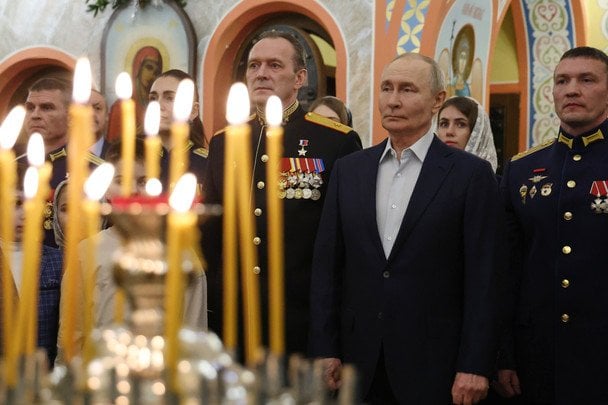
According to TSN.ua: Kremlin officials continue to pursue Vladimir Putin's maximalist war aims in Ukraine while seeking to shift blame onto Kyiv. Analysts at the Institute for the Study of War note that Moscow is now employing religious structures as instruments in its hybrid warfare campaign. In a specific move on January 24, Russia's Foreign Ministry declared that ending the persecution of the Ukrainian Orthodox Church of the Moscow Patriarchate (UOC-MP) was a precondition for achieving peace in Ukraine. This tactic is part of a broader pattern of using non-military means to exert pressure and create divisions.
Ukrainian President Volodymyr Zelenskyy responded to this demand, stating that the provisions within the discussed framework agreement fully comply with international law.
"In our draft framework agreement—those 20 points—everything is written in accordance with international law,"Zelenskyy noted. This underscores Ukraine's commitment to anchoring any negotiated settlement to established global norms, in contrast to Russia's unilateral conditions.
Diplomatic Maneuvers and Rising Tensions
Amid these developments, it is notable that during the U.S.-Russia summit held in Alaska in August 2025, the Kremlin attempted to claim a shared understanding regarding the war in Ukraine. This points to Russia's ongoing diplomatic efforts to shape the international narrative, despite persistent accusations against Ukraine and the fundamental challenges to peace. The conflict's complexity is heightened by the intertwining of religious, cultural, political, and military dimensions.
The weaponization of religious institutions highlights a new front in the hybrid war faced by Ukraine. The situation remains tense, with the international community closely monitoring events. Further study of this tactic is crucial for understanding the strategies of both sides. Future diplomatic engagements, including potential high-level international meetings, could significantly influence the course of negotiations and regional stability.
Read also
- Ukraine’s Ballistic Weapons Will Transform the War: Fedorov Reveals Timeline
- G7 Leaders Escalate Support for Ukraine: More Air Defense Systems and Licensed Weapons Production
- G7 Unites Behind Ukraine: Zelenskyy Highlights Key Summit Outcomes
- Russia Has Lost the Battlefield Initiative, G7 Concludes: Zelenskyy on Moscow’s Inability to Win
- Switzerland and France Step Up to Rebuild Ukraine: Chernobyl Shield and Kyiv Monastery
- Air Defense Talks Dominate Zelenskyy-Merz Meeting on the Sidelines of the G7