A new species of frog found in Brazil: it glows orange and is named after the president.

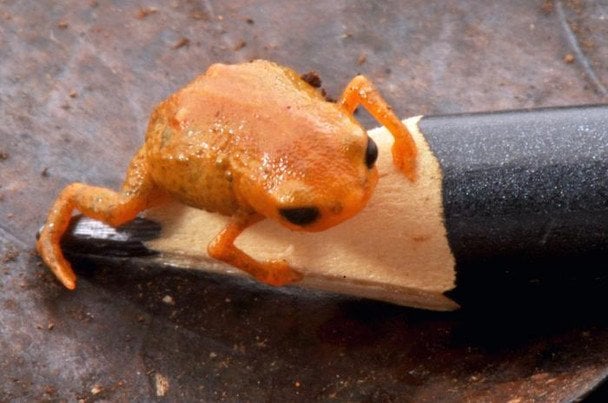
According to ТСН: In the highland forests of southern Brazil, scientists have discovered a new species of small frog with bright orange coloring, measuring just over a centimeter. This new frog, named Brachycephalus lulai, was found in the Serra do Ciririri mountain range in the state of Santa Catarina, at an altitude of over 750 meters above sea level.
The miniature 'pumpkin' frog inhabits the moist leaf litter and is found only in a small area of cloud forest. This makes it a vulnerable species, as it is entirely dependent on a specific region. Alongside B. lulai live two other orange relatives from the family Brachycephalidae.
Research and genetic analysis
Researchers note that the frog was found thanks to its loud mating calls. Males were located by their sounds, while females were discovered randomly. In the laboratory, scientists conducted a detailed genetic and morphological analysis of the samples, officially confirming the existence of a new species, dedicating its name to Brazilian President Luiz Inácio Lula da Silva.
Conservation status and habitat protection
Despite its limited range, B. lulai currently exists in a relatively unchanged environment, so biologists have classified this species as 'least concern.' However, other frog species in Santa Catarina are threatened with extinction due to lost natural forests, livestock grazing, invasive plants, tourism, and mineral extraction.
Scientists emphasize that the preservation of these areas must become a priority. In Brazil, discussions are ongoing about creating a new federal nature protection unit to safeguard cloud forests without purchasing private lands.
Challenges in research
Researchers point out that the work on cataloging representatives of the genus Brachycephalus has been ongoing for seven years. Further field studies will help clarify species boundaries. However, a lack of funding and difficult access to mountainous areas hampers this work - sometimes expeditions are only possible after cutting long trails through dense forests.
Recently in the Qatari desert, scientists discovered a giant animal graveyard, and a team from the Smithsonian Institution and Qatar Museums has only now completed a comprehensive study in the Al-Masjabiya area.
The discovery of a new species of frog in Brazil underscores the importance of biodiversity conservation, especially amid increasing threats to natural habitats. Research of this kind helps not only to identify new species but also to highlight the need to protect existing ecosystems that are under threat. Ensuring the protection of such species could be key to preserving the unique natural resources of the country.
Read also
- Ukrainian Drones Stall Russian Army's Advance on Kupiansk Front: No Positions Lost
- IAEA Demands Iran Report on Uranium Stockpiles, Backed by U.S. and European Powers
- Germany’s Admiral Explains Why Ukraine Now Leads the World in Defense Innovation
- Ukraine Faces Record Night Attack: 221 Drones and Iskander Missiles Launched
- Zaporizhzhia and Sumy Under Russian Attack: Eight Wounded, Hundreds of Structures Damaged
- China Deploys HIMARS for the First Time Toward the Taiwan Strait: Exercise Breakdown