Suede released the album Antidepressants: why the band calls itself anti-nostalgic.


New Suede album: Antidepressants
According to The Sun: “We are a model of anti-nostalgia,” claims Brett Anderson, frontman of Suede.
Suede returned with their tenth studio album AntidepressantsPR Supplied“If you need a headline, here it is. This is exactly who we are. This is how I see Suede.”
Anderson does not name the Manchester band that brings the Britpop of the 90s back to life, but emphasizes: “This is the way I distinguish us from our so-called contemporaries.”
“Our creative energy is focused on what we are doing now — and on our plans for the future.”
However, Anderson admits: “I have no problems with the past. When you are at a festival, playing only new songs is suicide. You have to choose your 'weapons'.”
“There are absolutely wonderful moments when we play songs from the 90s, but everything is focused on the future.”
“I really feel that we are the only ones who are not just repeating old songs.”
Today Suede releases its jam-packed tenth studio album, Antidepressants, which is a continuation of the 2022 album Autofiction.
Anderson's creative energy
Like in their recent works, there is a focused, energetic vibe in Anderson.
At 57, he realizes he is not getting younger, but his dedication to music only strengthens.
“We have fallen in love with rock music again,” he asserts.
“We can experiment and move to interesting places, but we always come back to being a rock band. That is our DNA.”
Despite the artistry, Anderson believes that Suede feels “most comfortable” when playing “hard and rough.”
“I enjoy the opportunity to play such music live. In fact, I love it more than I did in my twenties.”
“As you get older, you see life as something more valuable. And that's one of the hidden themes of the new album.”
Album themes of Antidepressants
The sound of 'Antidepressants' can hit listeners like a powerful hurricane, and the songs and the bright album cover are filled with deeper meaning.
The second album from the 'trilogy of black and white albums' features a clear black-and-white image of the singer without an outer garment, in shadow, framed by two inks.
This pays homage to a photograph by artist Francis Bacon published in Vogue magazine in 1962.
Our creative energy is focused on what we are doing now — and what we plan to do next, says Brett AndersonPR Supplied“Memento mori, if not trying to explain too much, is a reminder of death to express the value of life.”
“It's not like life is endless — life is a moment.”
“Many themes on the record are related to this. The song Sweet Kid, which is about my son, says we must squeeze the maximum out of life.”
“This is the message I convey to my family and career. These are the two great loves of my life.”
“They are both very important to me, and I need them in my life.”
Chatting with Anderson during a video call, I note his duality as a man and musician.
Contemporary world issues
Looking at the album cover, one can imagine a tormented soul — he undoubtedly has had his struggles in the past, but it seems to me that he is now in a really good place.
Anderson believes that his healthy state of mind is reflected in the songs of the album 'Antidepressants'.
“The album has a feeling of euphoria that perhaps was not in Autofiction,” he says, “and a feeling of defiance.”
“The world is broken, and the only choice is to give in or find something beautiful in this brokenness.”
He notes that Suede has chosen the latter since their start in the 90s with their self-titled debut (1993), Dog Man Star (1994), and Coming Up (1996).
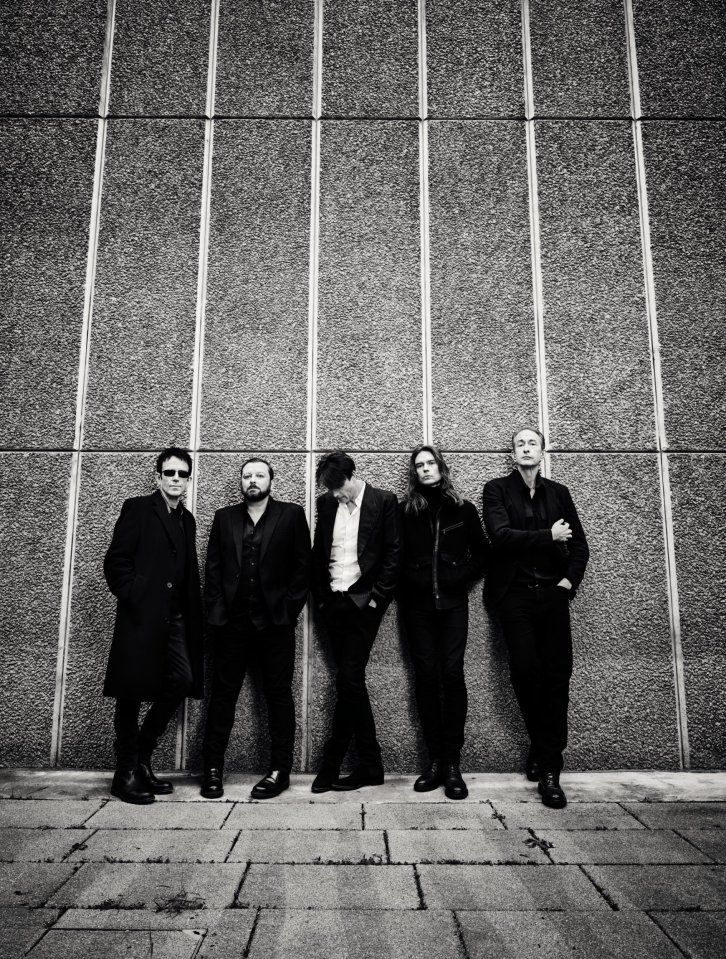 Getty
Getty
Anderson recounts that when they began to play this song live, it was not yet the title of the album.
“I was glad to play it since it's quite a simple song to perform live, and its themes are important to me.”
“Antidepressants is a great word. There's some wit since it relates to the 11 songs on the album.”
This comment opens an interesting perspective on Anderson's world. “My love for music only grows,” he says. “It is such a meaningful part of my daily rhythm.”
“In the morning it has to be Joni Mitchell or Nick Drake — some of the most beautiful music ever created.”
If the sound of 'Antidepressants' stuns listeners, the songs and even the bright cover of the album are filled with deeper meaning.Dean Chalkley
“Later in the day, I might listen to something new. A band I like, NewDad, has released a really nice album.”
“The choice of music for dinner is very specific. It has to be background music — something like Nina Simone.”
“After dinner, especially in winter, my son and my stepson and I play table tennis, and then I pick songs that fit for table tennis, from bands like The Who or Sex Pistols.”
“Then it's time to prepare for sleep, and that's always, every day, Brian Eno for me.”
Anderson reflects on his daily soundtrack and adds with a heavy sigh: “Music is such a great thing. I regret that it seems to mean less to people these days, that it doesn't have the same cultural resonance.”
Social issues theme
This has led us to urgent problems raised in the song Antidepressants. It's the idea that we live in a society “where everyone is diagnosed with some form of personality disorder.”
He adds, “We seem to strive to solve problems scientifically, to resolve everything with pills. But personality disorder is, in essence, a definition of who we are.”
Anderson criticizes a society “where the government leads us like cattle,” with orders and messages.
“This record speaks about challenging such oppression and about becoming human again.”
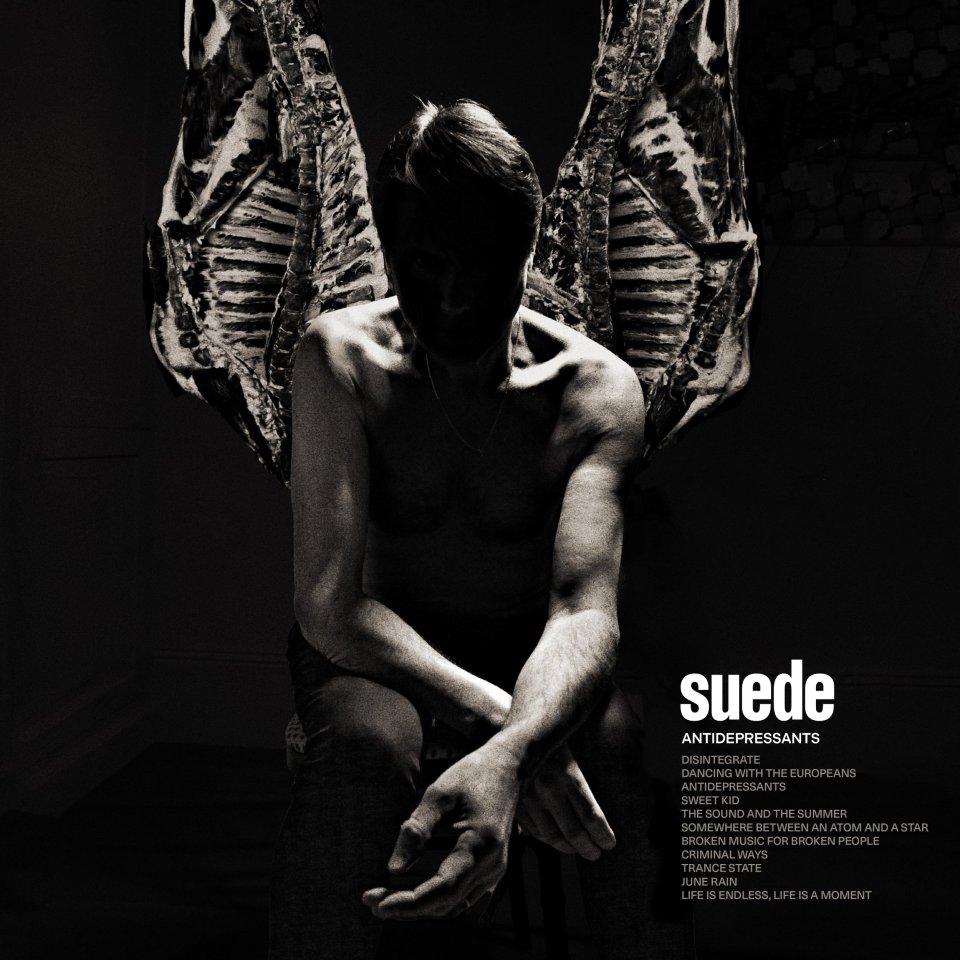 Vibrant, visceral tenth studio album Suede, AntidepressantsPR Supplied
According to him, “the atmosphere of 'f*** you, don't touch me' permeates The Sound And The Summer.”
“It's a song about driving, which I love,” he says. “I learned to do it quite late in life. It's a feeling of power and freedom when you are behind the wheel.”
Isn't it curious that Anderson loves listening to music in the car, “usually my own stuff when I’m making a new record.”
“Driving with music has a physical dimension. You feel the bass penetrating through you!”
He also uses his 13-year-old son — the subject of the song Sweet Kid — as a sounding board, as he explains.
“When he was nine, he was the first person to hear most of the songs from Autofiction, and now, with Antidepressants, he listens to a lot of material before others do.”
“I’m working on something all day, then I pick him up from school.
“If he’s in a good mood, I ask: ‘Do you want to listen to something I made today?’ And he replies: ‘Oh, well alright.’”
Anderson admits he hasn’t played Sweet Kid to his son “because the message is too complex” and not as “naive and positive” as the previous song about him, Life Is Golden.
“A bit more darkness has crept in, but I hope it reflects part of our relationship.”
He states: “Family is such a song generator for me. You won’t find me singing about farming in Kenya, like some ‘left-leaning’ groups.”
Personal themes in Anderson's work
Anderson addresses familiar themes — love, loss, pain, desire — which he calls “simple human emotions.”
“When you are young, you get them when your girlfriend leaves you or you notice a woman on the train.”
“As you get older, passions are not so fleeting. I’m obsessed with my family and the relationships within it.”
To illustrate, he draws my attention to the song She Still Leads Me On from Autofiction, a tribute to his late and “incredible” mother.
His other family, of course, is the band, which includes his former bandmates Mat Osman (brother of TV presenter and author Richard on bass), Simon Gilbert (drums), Richard Oakes (guitar), and Neil Codling (keys).
He would also highlight their long-time and “hard” producer Ed Buller, who returns to helm 'Antidepressants'.
“When I met Mat, we became very close friends and often spent time together,” Anderson says.
But he admits that over time, relationships with band members became “more business-oriented.”
“You spend so much time together, sitting in hotels and airports, that you can't communicate the same way.”
“I love the guys in my band in a completely different way than my family or friends.”
“We’ve been together so long that we have many complex jokes.
“We’ll be sitting and chatting. If some outsider is around, they won’t be able to understand what we’re talking about, as we’re probably referencing something that happened in 1998.”
Anderson particularly praises guitarist Oakes, who replaced original guitarist Bernard Butler in 1994.
“One of the great things about Autofiction and Antidepressants is Richard's role in it all. He’s really become extraordinarily self-sufficient in developing the sound on these two albums.”
“He was a bit overshadowed in early Suede, but now he has the confidence to shape the sound with his identity.”
Another interesting song is June Rain, where Anderson develops a spoken-word vocal style, creating a fantastic effect.
Two songs, Between An Atom And A Star and Life Is Endless, Life Is A Moment, were initially planned for a Suede ballet album, which was postponed due to the band's current rock fixation.
Next for them is the “fixation” on London's Southbank with a series of shows — but I am eager to find out how Anderson envisions the long-term future of Suede.
“We are still evolving,” he replies after a brief pause for thought.
“I hope we create some of the best and most complex musical works we’ve ever made.
“That is always our goal.”
Suede – Antidepressants
Vibrant, visceral tenth studio album Suede, Antidepressants.PR Supplied
★★★★★
The new album release from Suede, 'Antidepressants', impresses not only with its content but also with a shift in emotional tonality, not buckling under the weight of the past. Brett Anderson and his team are driven by a great desire to explore the present through music while keeping a connection to their own past. This album, by all accounts, will continue the band's tradition of thinking about music as a tool to deal with the complex aspects of life, including personality disorders in everyday life.Read also
- Lionsgate Drops First Trailer for 'The Fall: Dead Point' Sequel – Here's When It Premieres
- Three Survival Films That Reveal How Ordinary People Overcome Extreme Circumstances
- Eurovision 2023 Winner: Who Won and Which Countries Took Prizes
- Rihanna Blends High Fashion with a Sporty Tee—Introducing the Sport-Luxe Trend
- Ice Age Returns: Sixth Installment Set for 2027 Release
- Four Films to Capture a Summer Vibe: A Handpicked Selection of Bright Movies