Astronomers have found planets better than Earth: what are superhabitable worlds.

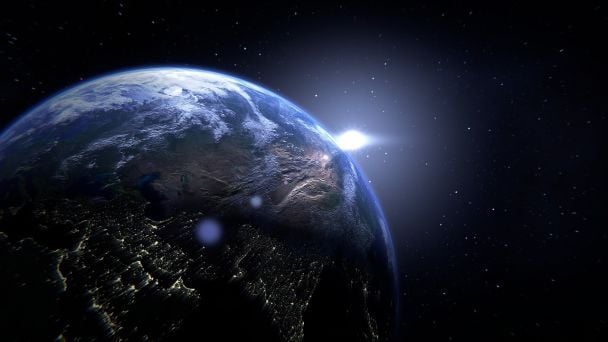
According to ТСН: The search for extraterrestrial life is usually focused on finding a 'second Earth'. However, some scientists suggest that we consider options more broadly, looking at worlds that could be even better than our planet. The idea of 'superhabitable' planets suggests the existence of bodies that have a higher chance of developing biodiversity than Earth.
Why Earth is not the ideal
Back in 2014, scientists René Geller and John Armstrong proposed the hypothesis that Earth may not be the best place for life in the Universe. In their opinion, there are planets that could support richer flora and fauna.
Researchers argue that certain conditions may be more conducive to evolution, such as higher temperatures, larger surface areas, or the presence of a better star, which could turn a planet into a true paradise for living organisms.
The recipe for an ideal planet
Scientists have identified several key characteristics that make a world 'superhabitable':
The right star. Our Sun is a yellow dwarf with a relatively short lifespan from a cosmic perspective. In contrast, orange dwarfs (type K) live longer and are more stable, emitting less harmful ultraviolet radiation, which reduces the need for a powerful ozone layer.
Size matters. An ideal planet should be 20-30% larger than Earth, providing more space for life and a more active plate tectonics, which is important for climate balance.
A little warmer. Higher temperatures combined with moisture could create conditions similar to the tropical forests on Earth, which are the most biologically diverse zones on our planet.
Have astronomers found such worlds
In 2020, astronomers compiled a list of 24 planets that could theoretically be 'superhabitable'. However, scientists caution against premature conclusions.
Most of these objects still require confirmation, as modern telescopes do not always allow for accurate determination of the nature of distant bodies. Even if a planet meets the size and orbit criteria, other factors such as atmospheric composition or the presence of neighboring gas giants could render it uninhabitable.
Therefore, as of today, we only have candidates for the title of 'best home', and the search continues.
It is also worth noting that we tend to assume that aliens are either extinct or hiding from danger. However, the reason for the silence of the Universe may be much simpler. A NASA scientist has put forward a new theory that explains the absence of contact with extraterrestrial life and claims that aliens are simply bored searching for other civilizations.
Overall, the research on 'superhabitable' planets expands our understanding of the possibilities for the emergence of life in the Universe. Scientists believe that planets with unique characteristics could indeed offer new chances for evolution that we have not considered before. This highlights the need for investment in new technologies and methodologies to broaden the horizons of astronomical research.
Read also
- Ukrainian Drones Stall Russian Army's Advance on Kupiansk Front: No Positions Lost
- IAEA Demands Iran Report on Uranium Stockpiles, Backed by U.S. and European Powers
- Germany’s Admiral Explains Why Ukraine Now Leads the World in Defense Innovation
- Ukraine Faces Record Night Attack: 221 Drones and Iskander Missiles Launched
- Zaporizhzhia and Sumy Under Russian Attack: Eight Wounded, Hundreds of Structures Damaged
- China Deploys HIMARS for the First Time Toward the Taiwan Strait: Exercise Breakdown