Russia is blackmailing the world with nuclear weapons: what will happen to the treaty in 2026.

According to FREEДOM:
Using Russia's nuclear status as a tool for blackmail
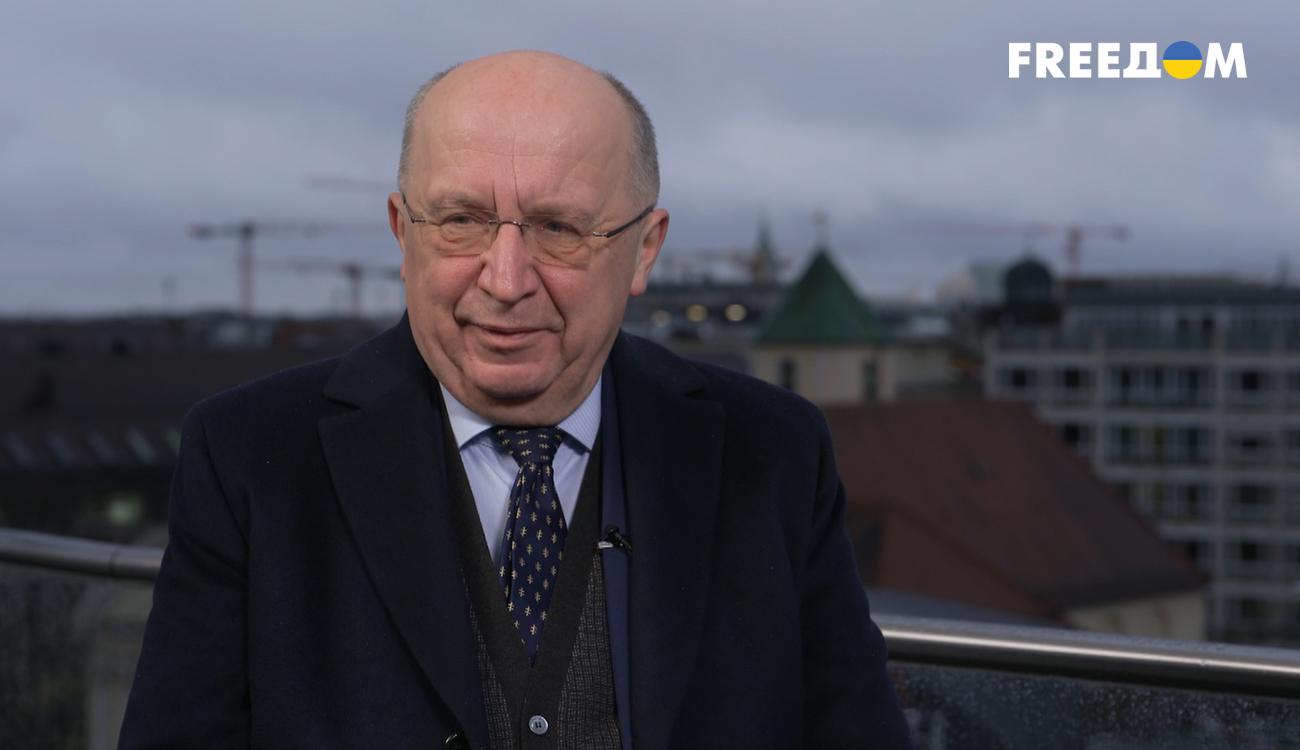
In recent years, Russia, which possesses one of the largest nuclear arsenals in the world, has been using its nuclear status for blackmail. This was stated during a broadcast on the FREEДOM channel by Ukrainian MP Fedor Venislavsky, a member of the Verkhovna Rada's Committee on National Security, Defense and Intelligence.
He noted that there is a certain pattern in international agreements involving Russia.
'After the expiration of the treaty signed in the early 1990s, the question arose about concluding a new one that would prevent the uncontrolled spread of nuclear weapons. This process intensified when Russia began its aggression against Georgia. According to some analysts, this became part of the blackmail, as the United States tried to limit the spread of nuclear weapons under international law, realizing the unpredictability of the Russian regime,' Venislavsky noted.
They are raising the stakes in the nuclear status
According to Venislavsky, the war in Georgia was one of the stages of blackmail. At that time, Russia threatened not to sign an agreement on limiting strategic offensive arms if it faced resistance. As a result, the agreement was signed in 2010 and entered into force on February 5, 2011. It was valid for 10 years with the possibility of a five-year extension, so it effectively ceased to be in force on February 5, 2021.
'And here too, according to some sources, Russia used the war in Ukraine and the occupation of Crimea as an argument to avoid serious sanctions pressure from Western partners and to extend this agreement on limiting strategic offensive arms. The next date is approaching quickly: February 5, 2026, when, if the agreement is not extended, it will cease to be in force. Active consultations are currently ongoing regarding its extension,' the MP explained.
Control and risks of the nuclear arsenal
Venislavsky emphasized that Russia is an unreliable party that can distort the essence of international treaties or not fulfill their conditions at any moment. He also noted that civilized countries understand that the uncontrolled spread of nuclear weapons poses a threat to the entire world.
'Any agreements signed by Russia in the field of strategic offensive arms imply the establishment of a joint commission to monitor compliance with their conditions. For the civilized world, it is important to have the ability to control the state of Russia's arsenal,' he said.
The MP also stressed that Russia has many launch vehicles manufactured in Ukraine, and their condition can only be monitored by Ukrainian manufacturers. However, since the full-scale invasion in 2022, this control has not been ensured.
'Thus, currently, no one knows the technical condition of the nuclear arsenal of the Russian Federation and whether it poses a threat to both Russia itself and the entire world. However, the possibility of conducting inspection checks to assess the condition and quantity of nuclear weapons is an important component of the international treaty,' Venislavsky concluded.
Overall, the issue of Russia's nuclear arsenal remains critically important, and Western countries must leverage international law to at least partially control this situation.
Read also
- Air Alert Declared in Ankara Over Missile Fired from Georgia: Key Details
- Europe Launches 'Anti-Ballistic Coalition' Freyja: What We Know About the New Initiative
- Zelenskyy Appoints New Defense Minister: Khmara Replaces Fedorov
- What Fedorov’s Dismissal and His Team’s Exit Mean for Ukraine’s Defense Capabilities
- Zelenskyy Nominates Yevhen Khmara as New Defense Minister, Replacing Fedorov
- Turkey as a Venue for Zelenskyy-Putin Talks: Sybiha and Fidan Discuss Peace Roadmap