The Russian economy has fallen into stagnation: how many years will the resources last for the war.

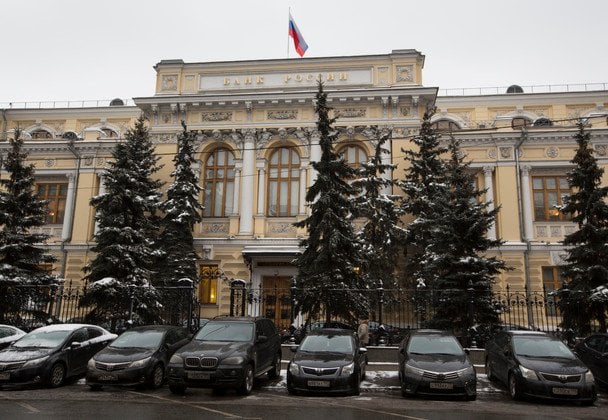
According to ТСН: The Russian economy is in a state of prolonged stagnation, but the Kremlin has enough resources to support the war for at least a few more years.
Maria Snehova, a senior research fellow at the Center for Strategic and International Studies (CSIS), notes that the situation in Russia is not catastrophic. Although the 'sugar boom' of the early years of the war has ended, there are enough resources to last for another 3-5 years.
Financial Burden on the Population
The Kremlin is actively shifting the financial burden of the war onto the middle class through tax increases. Meanwhile, for workers in the military-industrial complex, the war has become a source of income. In depressed regions such as Buryatia and Dagestan, the volume of bank deposits has increased by 80-150%, indicating a significant influx of 'military money.'
GDP Forecasts
In 2023-2024, Russia managed to maintain real GDP growth of over 4%, but 2025 will reflect the true economic situation in the aggressor country. It is predicted that GDP growth in Russia in 2025 will be at a minimal level - 0.6% (according to the International Monetary Fund) or 0.5-1.0% (according to the Bank of Russia). The Central Bank of Russia has also presented modest forecasts for 2026 and 2027: 1% and 2% GDP growth, respectively.
Inflation Situation
At the beginning of the year, Russia faced significant inflation, which exceeded 10% from February to April. To overcome this phenomenon, the Bank of Russia raised the key rate to 21%. However, since May, inflation has started to decrease, and in June, the Central Bank initiated a policy of lowering the key rate to stimulate the economy.
Thus, despite the difficulties, the Russian economy has certain reserves to continue the conflict. At the same time, the increase in taxes and the financial burden on the population shows that citizens are beginning to feel the consequences of this policy. The forecasts for GDP growth and inflation indicate a difficult economic situation that the country finds itself in.
Read also
- Ukraine’s Shadow Economy: Zheleznyak Sets the Stage for Budget Growth
- Construction Costs in Ukraine Surge: What You’ll Pay for a Foundation and House Shell in 2026
- Monobank Eliminates SWIFT Transfer Fees: How Much Ukrainians Will Save
- Why Ukraine must avoid becoming a cheap labor hub, according to former minister Zholnovych
- Oschadbank to Halt Operations on June 14: What Services Will Be Unavailable for Customers
- Soaring Grain Prices Threaten Famine in Vulnerable Nations