January Frosts: How to Protect Your Garden and Save Your Harvest.

According to ТСН: The winter season is not only a time for gardeners to rest, but also a critically important period for preparing for the upcoming season. Experts emphasize that the right actions at the end of December and the beginning of January can significantly simplify work in spring and protect the harvest from dangerous frosts.
How to Insulate Young Trees with Snow
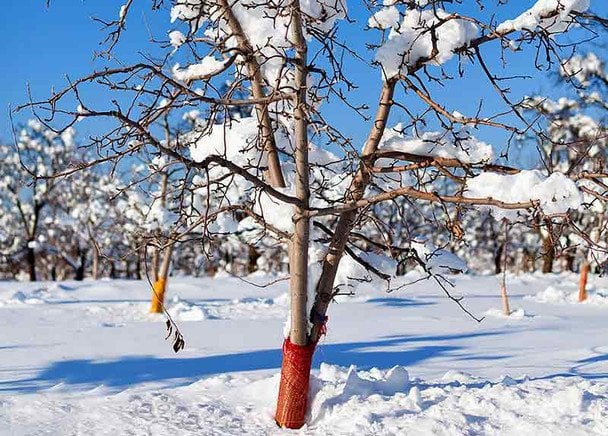
Fresh fluffy snow is the best natural insulator. For young trees aged one to two years, it can be critically important for survival in cold frosts.
Gather snow from paths or free areas of the garden and pile it around the trunks of young trees. The larger such a "snow castle" is, the better it will protect the root collar and surface roots from frost.
Why does this work? A thick layer of snow maintains a stable temperature near the ground, preventing cold from reaching vulnerable roots. Even if the temperature rises, the piled snow will not disappear in vain, but will melt where needed, providing moisture to the soil. This creates an effect of "moisture-charging watering": moist soil freezes much more slowly and to a shallower depth than dry soil.
It is important to remember the interconnection between all elements of the landscape. If you decide to gather snow from the lawn to insulate young trees, be careful. Snow on the lawn is a natural "blanket" that protects the growth point of the grass. Exposing the lawn in severe frosts can lead to damage to the root system. Therefore, it is better to use precipitation from garden paths or areas without perennial ornamental plants for snow manipulation.
How to Save Winter Garlic After a Warm Autumn
This year, many gardeners faced the problem of excessive garlic growth due to an unusually warm autumn. When the plant has sprouted, sudden frosts can be a serious challenge.
Experts reassure: there's no need to panic. Even if the upper part of the leaves has frozen, the main thing is to preserve the root system. Since the soil does not have time to freeze to the planting depth during a few days of frost, quickly covering the beds with snow will help stabilize the temperature. A layer of snow prevents sharp temperature fluctuations, allowing the plant to remain dormant until spring.
Care for the Lawn and Coniferous Plants
Caring for decorative plantings in winter requires a special approach, as different types of plants react to snow load differently. Owners of coniferous crops must be especially careful, as snow can be both a protection and a cause of serious damage.
Coniferous plants have different crown structures and wood flexibility, which affects their resistance to winter conditions:
The structure of thuja, especially its vertical varieties, is prone to accumulating heavy snow, which can lead to loss of decorative shape. The greatest danger occurs during temperature fluctuations: if the snow melts and hardens, it can turn into heavy ice that breaks branches. Therefore, it is important to regularly gently shake off the fresh fluffy snow.
Unlike thuja, most species of juniper have a higher elasticity of shoots, allowing them to bend under the pressure of snow. This flexibility minimizes the risk of damage. The snow cover covering the juniper also protects against frosts and winter drying by the sun.
Sanitary Inspection of the Garden
The winter period opens up the possibility for gardeners to conduct a thorough sanitary inspection, which may be impossible at other times. One of the important tasks is the removal of "mummified" fruits that remain on the branches after harvesting.
These fruits not only look unsightly but are also a source of dangerous infections, including fruit rot. They are protected from decay and can spread diseases to young plants in spring.
Such fruits also serve as shelter for pests that may attack your garden in spring. Conducting an inspection now has several advantages. By removing mummified fruits, you reduce the likelihood of epidemics in the garden and decrease the number of chemical treatments.
It is important not just to drop these fruits on the ground, but to collect them and take them out of the garden or bury them deeply to stop the development of diseases.
Thus, winter is an important period for gardeners since proper care for plants and preparation for the upcoming season can significantly ease work in spring. So don’t forget these simple yet effective methods to keep your garden in great shape until spring comes.
Read also
- Ukrainian Star Pavlo Zibrov Celebrates First Strawberry Harvest from His Kyiv-Area Garden
- Beat the Heat on the Subway: A Train Operator Reveals the Coolest Spot in the Car
- Summer’s Hottest Micro-Trends: Balloon Skirts, Capri Pants, and Fringe Make a Comeback
- Tarot Warns of Challenges Until June 15: Which Zodiac Signs Are Most at Risk
- The Cloud Cut: Summer 2026’s Most Versatile Hair Trend That Suits Almost Everyone
- Evergreen Charm All Year Round: Why Golden Euonymus Fortunei Shines in Any Garden