522 years since the birth of Nostradamus: what he truly predicted for the world.

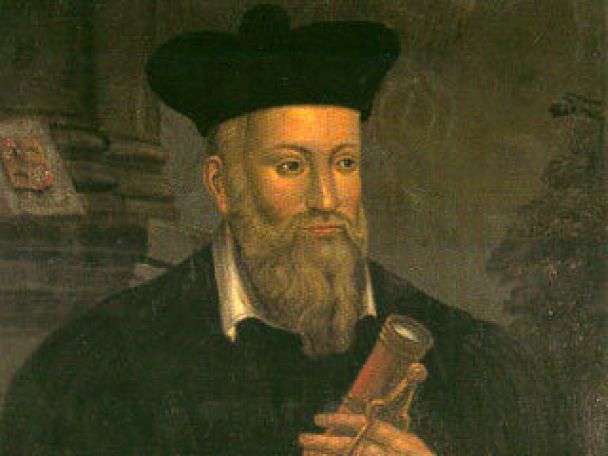
According to ТСН: On December 14, the world celebrates the 522nd anniversary of the birth of the French doctor and astrologer Michel de Nostredame, better known as Nostradamus (1503–1566). He is the author of the collection "Prophecies," which has drawn the attention of scholars for centuries and sparked lively public discussions.
Nostradamus was born on December 14, 1503, in Saint-Rémy-de-Provence, to a notary's family. His grandfather, of Jewish descent, converted to Catholicism in the mid-15th century, changing the surname to Nostre Dame, which helped the family avoid the Inquisition's persecution.
The future doctor received his education at the University of Avignon and later studied at the medical faculty of Montpellier, focusing on anatomy, pharmacology, and astrology, which was considered part of medical practice in the 16th century. After being expelled from the university for engaging in apothecary activities, Nostradamus became a traveling doctor in France and Italy and actively participated in combating plague epidemics.
According to historians, he rejected traditional treatment methods, such as bloodletting, and preferred hygiene and sanitary measures. In 1534, during a plague epidemic, he lost his first wife and two children. In 1547, he settled in Salon-de-Provence, remarried, and continued his medical and astrological practice.
Astrological Almanacs and Popularity
From 1550, Nostradamus began publishing annual astrological almanacs, which brought him significant popularity. In 1555, his main work was published — the book Les Prophéties ("Prophecies"), containing 942 rhymed quatrains written in a complex and encoded language without specific dates or geographical references. According to the author’s design, these texts cover events until the year 3797.
After the book's release, Nostradamus attracted the attention of the French royal court. Queen Mother Catherine de’ Medici invited him to Paris, where he became her advisor, significantly enhancing his status and contributing to the popularity of "Prophecies."
Criticism and Interest in “Prophecies”
The scientific community generally views Nostradamus’s legacy as an example of retrospective interpretation, where his works are interpreted after the occurrence of historical events. Critics note that the quatrains do not contain unambiguous predictions and largely rely on ancient and biblical sources.
Nonetheless, interest in "Prophecies" continues into the 21st century. At various times, Nostradamus’s quatrains have been associated with the French Revolution, world wars, global crises, and contemporary geopolitical events, including the war in Ukraine. However, researchers emphasize that Nostradamus did not mention specific modern states, and such interpretations are attempts to find patterns in abstract texts.
Thus, the figure of Nostradamus remains more of a cultural-historical phenomenon than a reliable source of future predictions.
The significance of Nostradamus in culture and history remains relevant. His "Prophecies" still provoke interest, and many people turn to his works in search of meaning during turbulent times. And although scientists understand the limitations of his predictions, this figure remains part of history, inspiring and intriguing generations.
Read also
- Fight Dust with Liquid Glycerin: A Simple Pharmacy Find That Transforms Your Cleaning Routine
- Kyiv Region Braces for a Warm June 11: Temperatures Set to Reach +28°C
- A Simple Zucchini and Eggplant Stew Recipe from 'Tasty Bites'
- A Festive Drink Made from Tea Rose Petals: An Easy Recipe for Your Holiday Table
- A Surprising Twist on Crab Stick Salad: One Unlikely Ingredient Transforms the Flavor
- Unique Venus-Jupiter Conjunction: One Zodiac Sign Gets a Rare Opportunity Until June 14