Tree, Fir or Pine: How to Choose the Perfect Christmas Tree.

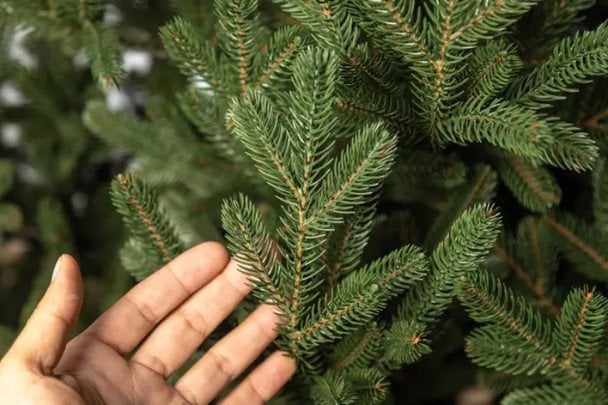
According to ТСН: The approach of winter holidays brings many pleasant chores, one of which is choosing a Christmas tree. Discussions between fans of traditional fir trees and supporters of pines will continue for a long time, as each type has its unique characteristics. To ensure that the holiday is not spoiled by fallen needles just a few days later, it's worth understanding the biological characteristics of coniferous trees and learning to recognize them.
How to Distinguish Spruce from Fir: Secrets of Needles and Branches
At first glance, spruce and fir may seem similar due to their conical shape and dense green needles, but they actually have many noticeable differences.
Spruce, or common fir, is a symbol of classic Christmas. Its needles are stiff, very sharp, and have a distinct quadrangular shape. When you take one needle between your fingers, you feel all its edges. The needles attach to the branch on stiff projections, so when they fall off, the branch becomes rough. Spruce attracts with its pyramidal shape and light color of the needles, but it has a very weak scent and quickly sheds in a warm room.
Fir, or Abies, is considered a more elite option for the home due to its beauty and softness. Its needles are softer, have a flat shape, and rounded tips. Often, light streaks can be seen on the underside of the needles. The needles do not attach to the branches, so after they fall off, they leave smooth scars. Fir has a pleasant scent that intensifies when the needles are crushed, and it retains its freshness, hardly shedding, even after drying.
Pine: Champion of Aroma and Durability
Pine, although not as symmetrical as fir and spruce, has its advantages. Its needles are longer — up to 6-8 cm — and grow in pairs, forming fluffy bundles. Pine withstands modern conditions better due to its high resin content, maintaining its fresh appearance for thirteen days longer than spruce. Besides, pine has an intense scent that fills the home with a festive atmosphere.
Practical Tips: How to Check the Quality and Legality of the Tree
When purchasing a Christmas tree, follow simple rules to choose a quality product.
First, perform a elasticity test: the branches of a healthy tree should be resilient. If they break with a sound, it indicates that the tree has been cut down for a long time.
It’s also important to conduct a needle analysis: by rubbing the needles in your hands, you should feel a sticky residue of resin and a characteristic pine scent. Needle length: spruce — at least 3 cm, pine — 6-8 cm.
Don’t forget to visually inspect the trunk: it should be clean, without stains or fungi. The presence of cones on the branches is also a good sign.
Check the legality of the tree's origin: there should be a stamp or documentation confirming its legality of cutting on the cut surface.
Which Tree to Choose for New Year
The choice of tree depends on your priorities:
If you're looking for a budget option with a strong resinous scent, choose pine.
If classical Christmas aesthetics and dense branches are important to you, your option is spruce. However, remember that it sheds quickly, so it’s better to set it up closer to the holiday.
If you want comfort and soft needles, fir will be an excellent but more expensive option.
Don't forget about environmental responsibility: after the holidays, take your tree to recycling points for processing into mulch or fertilizer.
Read also
- Kyiv Region Braces for a Warm June 11: Temperatures Set to Reach +28°C
- A Simple Zucchini and Eggplant Stew Recipe from 'Tasty Bites'
- A Festive Drink Made from Tea Rose Petals: An Easy Recipe for Your Holiday Table
- A Surprising Twist on Crab Stick Salad: One Unlikely Ingredient Transforms the Flavor
- Unique Venus-Jupiter Conjunction: One Zodiac Sign Gets a Rare Opportunity Until June 14
- Short Nails Look Longer with the Italian Manicure: How This New Beauty Trend Works