A Tomb of Shoshenq III Discovered in Egypt: 225 Unique Figurines Reveal Secrets.

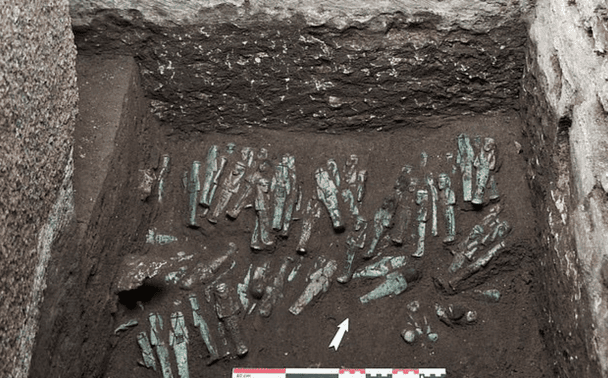
According to ТСН: In Egyptian Tanis, archaeologists made an incredible discovery – 225 masterfully crafted funerary figurines arranged in a ritual order. This is the first untouched find in nearly 80 years, confirming that the desert tomb belonged to Pharaoh Shoshenq III, whose burial place had remained a mystery for many years.
Unique Discovery
This discovery changed researchers' perceptions of ancient history. Under the sandy layers in Tanis, 225 carefully crafted figurines were found, arranged in an unusual ritual order, even though the tomb itself was empty. The shocking scale of the find and its unique details impressed scholars. More than half of the figurines are female, a rare case in royal burials, raising new questions about the rituals of the Third Intermediate Period.
Unanswered Questions
This find marks the first in the royal tomb of Tanis in nearly 80 years and is already recognized as one of the most significant since discoveries in the 1940s. The symbols of royal power on the figurines confirm that the tomb was intended for Pharaoh Shoshenq III, who ruled between 830 and 791 BC. However, the discovery raises questions: why was the pharaoh never buried in this tomb? For 10 days, researchers carefully extracted the fragile figurines, even working at night, and plan to showcase them in the Museum of Egypt.
Frédéric Payraudeau described the discovery as "stunning": "Why was he not buried in this tomb?"
Shoshenq III ruled during a period of political instability and power struggles. His nearly forty-year reign took place against the backdrop of "a very bloody civil war between Upper and Lower Egypt", where several pharaohs fought for the throne. This may have led to changes in burial plans or the relocation of the pharaoh's body due to looting.
Exploration of the Tomb
The limestone tomb was first opened in 1939 near the Temple of Amun. Despite looting, the largest chamber retained the granite sarcophagus of Osorkon II. Scholars examined all other parts of the narrow tomb with a massive, but unnamed sarcophagus.
"When we saw three or four figurines together, we immediately understood – this will be something incredible," said the Egyptologist.
According to him, there have not been similar discoveries in the Valley of the Kings for decades, except for the tomb of Tutankhamun in 1922, as most burials were looted long ago. Currently, Tutankhamun's tomb in Luxor is considered to be in terrible condition after the flood of 1994, which inundated this valley. Researchers warn that cracks in the mountains around Luxor could lead to the collapse of rocky masses onto neighboring tombs.
This discovery not only marks an important event in archaeology but also opens new horizons for the study of ancient Egyptian culture and the era of the pharaohs. Further research may shed light on the unresolved details of Shoshenq III's life and death, as well as help understand the customs and traditions of that time.
Read also
- Ukrainian Drones Stall Russian Army's Advance on Kupiansk Front: No Positions Lost
- IAEA Demands Iran Report on Uranium Stockpiles, Backed by U.S. and European Powers
- Germany’s Admiral Explains Why Ukraine Now Leads the World in Defense Innovation
- Ukraine Faces Record Night Attack: 221 Drones and Iskander Missiles Launched
- Zaporizhzhia and Sumy Under Russian Attack: Eight Wounded, Hundreds of Structures Damaged
- China Deploys HIMARS for the First Time Toward the Taiwan Strait: Exercise Breakdown