Archaeologists in Pompeii Have Found the Secret of Eternal Roman Concrete.

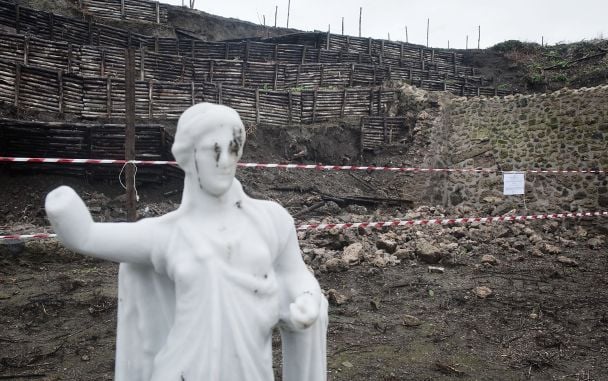
According to ТСН: Archaeologists made an amazing discovery during the excavations of the ancient Roman city of Pompeii, located in the modern comune of Pompeii in the Campania region of Italy. This find sheds light on the technologies that allowed the Roman Empire to construct remarkably durable structures that have withstood for over two thousand years.
Discovery on the Construction Site
The research uncovered a construction site that remained untouched after the eruption of Mount Vesuvius in 79 AD. This find made it possible to recreate the formula and methods of producing Roman concrete, known for its durability and ability to self-heal.
Scientists have long been trying to uncover the secrets of the materials that helped preserve such great structures as the Pantheon and the Colosseum. New data from Pompeii confirmed that the Romans used a 'hot mixing' technology based on non-hydrated lime mixed with water, volcanic stone, and ash. The chemical reaction during mixing heated the materials, significantly strengthening the concrete.
Evidence of High Organizational Level
The site revealed several rooms with prepared materials, as well as fragments of ceramics, indicating a high level of organization in the construction processes of Roman architecture.
'Although ancient methods cannot be directly applied to modern standards, the principles we have uncovered can help create more durable and environmentally friendly building materials for the future.'
— noted Professor Admira Masich of the Massachusetts Institute of Technology, who led the research.
Concrete was the primary building material of the Roman Empire: it was used to construct stadiums, temples, baths, aqueducts, bridges, and port structures. Its ability to harden underwater was particularly important, as it allowed for the construction of harbors and breakwaters.
Significance of the Discovery
Pompeii was completely buried under ash after the eruption of Vesuvius, which was fatal for its inhabitants, but at the same time provided a unique preservation of architecture, art, and traces of human life. Systematic excavations in this city began in the 18th century.
Scientific studies confirmed that the materials for concrete—lime, pozzolana, and aggregates—came from the Somma-Vesuvius area and were produced using a unique technology. Hot mixing left lime inclusions in the concrete with micro-cracks that over time filled with new mineral compounds, enhancing the structure's durability.
Researchers emphasize that understanding these technologies can help modern restorers restore historical structures with maximum authenticity and durability.
This discovery not only opens new avenues for studying Roman architecture but may also have significant implications for modern construction. With the growing interest in environmentally friendly technologies, ancient practices could become a valuable source of inspiration for developers of new building materials. Pompeii, once again, becomes a window into the legendary history of Rome, revealing secrets that remain relevant today.
Read also
- IAEA Demands Iran Report on Uranium Stockpiles, Backed by U.S. and European Powers
- Germany’s Admiral Explains Why Ukraine Now Leads the World in Defense Innovation
- Ukraine Faces Record Night Attack: 221 Drones and Iskander Missiles Launched
- Zaporizhzhia and Sumy Under Russian Attack: Eight Wounded, Hundreds of Structures Damaged
- China Deploys HIMARS for the First Time Toward the Taiwan Strait: Exercise Breakdown
- Overnight on June 11, Russia Launches 221 Drones and Two Missiles in Massive Assault on Ukraine