Putin Faces a New Challenge: African Pipeline Set to Replace Russian Gas in Europe.

The Trans-Saharan Pipeline: A Game-Changer for European Energy
According to Espreso.tv: Nigeria, Niger, and Algeria are pushing forward with an ambitious initiative—the Trans-Saharan Gas Pipeline—designed to deliver up to 30 billion cubic meters of natural gas annually to Europe. Construction has already kicked off in Algeria, where a new segment will stretch roughly 1,210 kilometers. Meanwhile, Niger is scheduled to begin work on its 720-kilometer portion in 2027.
Spanning approximately 4,128 kilometers in total, the pipeline will run from Warri in southern Nigeria to the Hassi R'Mel gas hub in Algeria. According to Hamadou Tini, this project holds the potential to drive significant economic growth and improve social conditions for local communities.
Bolstering Europe's Energy Security
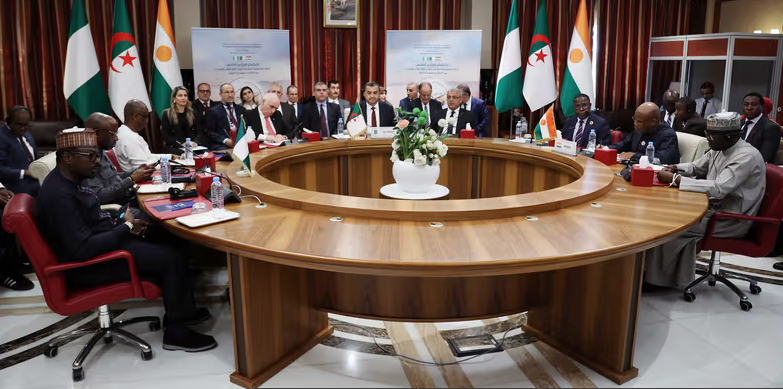
Algeria already supplies around 12% of the European Union's natural gas imports. Amid current energy challenges, the EU aims to completely eliminate its reliance on Russian gas by the end of 2027. Officials from all three participating countries—Mohamed Arkab, Ekperikpe Ekpo, and Hamadou Tini—attended the groundbreaking ceremony. This initiative opens up fresh avenues for Europe's energy security while advancing regional energy infrastructure development.
The Trans-Saharan Gas Pipeline represents a critical step in reducing Europe's dependence on traditional energy suppliers, particularly Russia. Beyond enhancing the region's energy security, the project is expected to spur economic growth in Nigeria, Niger, and Algeria, potentially uplifting local communities.
“This pipeline could become a strategic cornerstone in shaping new energy routes for Europe.” - Hamadou Tini
Read also
- Credit Card vs. Online Loan: Which One Saves Ukrainians More Money?
- Russia’s War in Ukraine Marks a Historical Turning Point as Its Economy Cracks Under Pressure
- Brent Crude Surpasses $110 a Barrel: Could Iran Tensions Trigger a Global Energy Crisis?
- Ukraine Strikes Russian Ports: The Cost of a Month-Long Shutdown at Tuapse
- Fuel Shortage in Crimea: Russian Logistics Crippled by Ukrainian Strikes, Says Feigin
- Ukraine’s Strikes Trigger Fuel Crisis as Russia Loses 40% of Oil Refining Capacity