Holy Evening in Ukraine: How to Properly Prepare 12 Lean Dishes and Revive Traditions.

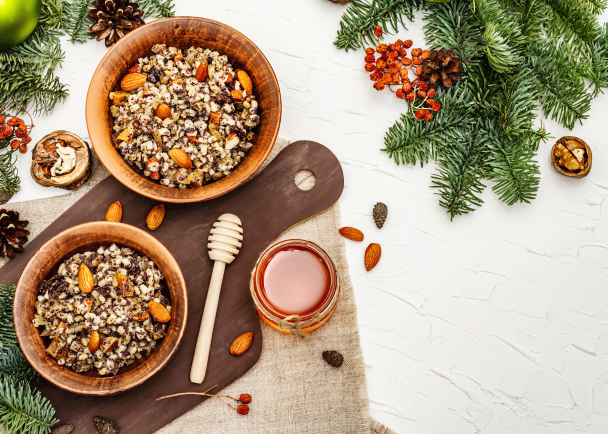
According to ТСН: Modern families are provided with a wonderful opportunity to revive ancient Ukrainian Christmas customs, recall the symbols of their ancestors, and prepare 12 lean dishes that traditionally accompany the Ukrainian Holy Evening.
Preparation for Holy Evening: Main Traditions and Rituals
Before Holy Evening, the house was thoroughly cleaned, decorated with embroidered towels and paper cutouts, and the floor was covered with hay or straw, symbolizing the manger and bringing fertility. One of the key attributes was didukh — a festive bundle of wheat or rye, in which, according to beliefs, the souls of ancestors lived. The host ceremoniously brought the didukh into the corner, which marked the beginning of Holy Evening.
The tradition of making didukh is being revived: Ukrainians are again creating it from different types of grains, decorating it with ribbons, and using it as the main symbol of the Christmas cycle.
The hostess prepared dishes for Holy Evening throughout the day. It was important to have a good mood and a clean oven. On the eve of the holiday, people tried not to use knives so as not to “cut off happiness” — all dishes were prepared beforehand. Conflicts were prohibited: by Holy Evening, one needed to make peace with everyone to ensure harmony in the home for the year.
During this time, the host walked around the yard, took care of the livestock, and performed protective rituals. Animals were not to be beaten or scared — it was believed this could deprive the family of offspring. They were fed the edge of the festive bread. To protect the homestead from evil forces, garlic, bitter herbs, or blessed poppy seeds were used. To ensure a good harvest, a ritual of “scaring” was performed — symbolically threatening with an axe, after which the trees were “protected” with a straw rope.
Holy Evening Menu: 12 Lean Dishes, the First Star, and Family Unity
On the day of Holy Evening, a strict fast was observed, and in the evening, after the divine service, the whole family had to be at home. This was the main rule of Ukrainian Holy Evening — no one should be absent from the table, which symbolized family unity. According to folk beliefs, the souls of the dead also joined the dinner, so sometimes separate dishes were set for them.
On the festive table, hay or straw was spread. A wax candle was a mandatory attribute: a steady flame promised a good year ahead, while a flickering flame signified troubles or hardships. In some regions, iron tools were placed under the table as a talisman for health and prosperity.
The dinner began when the first star appeared in the sky — a sign of the Bethlehem Star. It was believed that whoever saw it first would be the happiest in the new year.
Kutya: Significance, Cooking Traditions, and Modern Recipes
The main dish of Holy Evening is kutya. It is eaten first. Traditionally, kutya is made from wheat, honey, and poppy seeds. The wheat was not stirred during cooking to ensure a good harvest.
Today, kutya recipes have become more diverse: nuts, raisins, apricots, figs are added, and rice, bulgur, or barley can be used to prepare it. However, its symbolic meaning — family unity and blessings for the new year — remains unchanged.
Once, kutya was eaten from one bowl, and the first spoon was thrown to the ceiling. The more grains stuck, the more successful the year was to be. Kutya, along with uzvar, was placed in the corner and “called for frost” so it would not harm the crops.
What else is Cooked on Holy Evening
The menu of 12 lean dishes usually includes:
fish (baked, fried, in borscht or jellied),
beans, bean puree or dumplings with them,
mushrooms (pickled, marinated, in dumplings, pancakes, or soup),
stewed or pickled cabbage,
dumplings with cabbage, potatoes, or poppy seeds,
pampushky with garlic, pies, bread,
baked potatoes, beet salad,
uzvar from dried fruits.
These lean dishes are traditional for various regions of Ukraine and remain so today. After dinner, the food was not cleared away, leaving treats for the souls of ancestors.
Moreover, dishes were shared: children brought treats to grandmothers, grandfathers, godparents, and in return, they were given gifts. Such exchanges symbolized family ties and good wishes.
Caroling and Nativity Play: Christmas Customs that have Endured
An inseparable part of Holy Evening in Ukraine is caroling. Children and youth go from house to house, singing carols, greeting the hosts, and bringing the Christmas star. For this, they are treated with sweets or money.
Ancient Ukrainian beliefs state that carolers are a symbol of ancestors, thus their songs and wishes brought goodness and harvest to the home.
Another important Christmas custom is the living nativity play, a theatrical performance about the birth of Jesus Christ. Participants transform into biblical characters and create a special Christmas atmosphere.
Christmas traditions in Ukraine have always been important for families, as they unite people around eternal values and customs. Holy Evening and the preparations for it ensure a connection between generations, allowing the cultural heritage to be passed down to the next. During this time, not only is the holiday celebrated, but customs are also observed that promote unity, love, and fertility in the family.Read also
- Easy Pickled Tomatoes for Winter: The Perfect Brine Recipe Using 1 Liter of Water
- A 15-Minute Dinner That Feels Like a Feast: Carbonara-Style Potatoes with Bacon and Cream Sauce
- A Quick 5-Minute Homemade Gravy: Simple Ingredients, Big Flavor
- Hairstyles That Wreck Fine Hair: Top Mistakes to Avoid
- Fight Dust with Liquid Glycerin: A Simple Pharmacy Find That Transforms Your Cleaning Routine
- Kyiv Region Braces for a Warm June 11: Temperatures Set to Reach +28°C