How do you know if you’re wasting your life?.

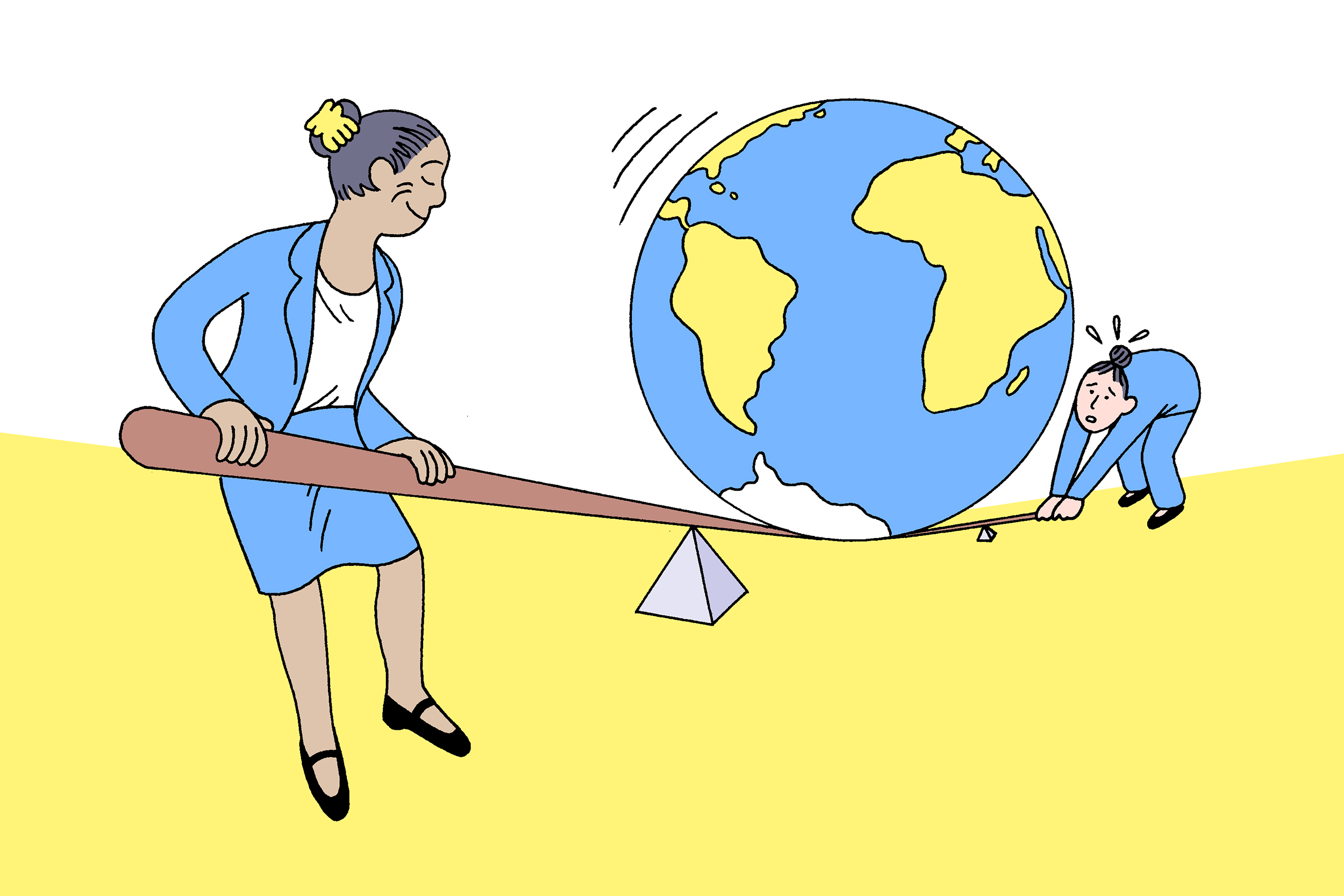
According to Vox: Your Mileage May Vary – is a column that offers a unique approach to solving moral dilemmas. It is based on the idea that each of us has several values that may conflict with one another. To send your question, fill out this anonymous form. Here is this week's question from a reader, shortened and edited for clarity:
I have been working in communications for ten years, helping to convey important ideas to society. I believe my work is valuable, but I don’t feel like I’m making a powerful impact on the world.
Some of my friends have made careers that truly change the world. They work in healthcare, shape environmental policy, and are involved in global projects. I feel that my contribution seems small compared to theirs.
I understand that life is not a competition, but I have been told since childhood that I have a mind and great potential to change the world. I worry whether I am living up to that expectation. On the other hand, it is important for me to have a balance between work and personal life, as well as to gain experience outside of the office. Should I change my career to something more impactful? Or can I just live a simple life and do good deeds?
Dear Influential,
What do you feel about your mortality?
This question may sound strange, but the fear of death often drives us to seek extraordinary careers.
American anthropologist Ernest Becker, in his Pulitzer Prize-winning book 'The Denial of Death', argues that one of the primary functions of culture is to help cope with the horror of being aware of our mortality and the inevitability of being forgotten.
Key Points
- We tend to think we should achieve something 'significant' in life. However, according to Becker, the desire to leave a great legacy is an attempt to cope with the fear of death.
- Saint Teresa of Lisieux said that the world would be dull if everyone focused solely on effective ways to do good.
- Instead of fixating on 'doing good', focus on all the 'goods' that your life brings. Start with gratitude, and you will naturally want to share with others.
The fear of absolute annihilation is so powerful that humanity seeks various ways to assure itself of achieving immortality. In prehistoric times, most people sought it through religion.
Today, when religion no longer plays such an important role, we are inventing new ways to achieve 'symbolic immortality' – for instance, through publications, national identity, or achieving social progress.
The idea of using work to maximize good opens up possibilities for achieving extraordinary results. But with these great expectations comes a heavy burden: the necessity to be a hero; otherwise, your life is considered meaningless.
But not everyone agrees with this approach.
An example would be Saint Teresa of Lisieux, who lived in France in the 19th century and spent only 24 years. For the last nine years of her life, she lived in a convent, being very devout and acknowledging her shortcomings.
She developed her concept of good, known as 'The Little Way'. It is not about reaching a large audience but about daily, small, yet sincere acts.
Saint Teresa compared people to flowers. Many strive to be great, yet she was content being a small flower at Jesus' feet:
If all the little flowers strive to be roses, nature would lose its spring beauty, and fields would no longer be covered with beautiful shades. So too in the world of souls, the living garden of our Lord. He wished to create great saints, who might be compared to lilies or roses, but also created smaller ones, who must be content to be daisies or simple violets blooming at His feet.
Saint Teresa became known as the Little Flower, and after her death, her spiritual memoirs gained popularity. She proved that it is not enough to merely do good – it is also important to have a personal approach to it.
If you are considering your potential, I would advise you to focus on the bigger picture. You don't need to obsess over finding a career that allows you to do the most good. But trying to do more good? Why not!
At the same time, it is important to remember that there are many forms of 'good'. The results of the same actions cannot always be directly compared. Life is not just about 'doing good', but also about enjoying other values, such as art or human relationships.
Ultimately, the best choice will be a career that provides harmony among various criteria: meaningful good, enjoyment of life, sustainability, and alignment with your values.
While this may not sound so 'significant', that is precisely the point: life is not just about achieving a legacy.
Perhaps life is simply a gift, and the time spent on this incredible Earth has great value, even as it passes. If we accept this perspective, we will not feel the pressure to achieve something grand.
Bonus: What I Am Reading
- Were people in the past like us, with similar emotions? In an article, Gala Becker explores the idea of 'experimental relativity'.
- How has choice become equivalent to freedom in many areas of everyday life? questions this article. Perhaps there are better ways to make people freer than offering a multitude of choices.
- What a time to be alive! Now we have access to the text that shaped the personality of one of the world’s most famous AI chatbots.
Read also
- A Quick 5-Minute Homemade Gravy: Simple Ingredients, Big Flavor
- Hairstyles That Wreck Fine Hair: Top Mistakes to Avoid
- Fight Dust with Liquid Glycerin: A Simple Pharmacy Find That Transforms Your Cleaning Routine
- Kyiv Region Braces for a Warm June 11: Temperatures Set to Reach +28°C
- A Simple Zucchini and Eggplant Stew Recipe from 'Tasty Bites'
- A Festive Drink Made from Tea Rose Petals: An Easy Recipe for Your Holiday Table