Woman Rejects Heating: How to Save Hundreds on Bills.


Saving on Heating Bills
According to The Sun: A smart homeowner significantly reduced her energy costs thanks to a smart purchase that allowed her to ditch central heating.
Raquel Griffiths, a 56-year-old resident of Llantrisant, South Wales, lives in a four-bedroom house where her son used to live before moving to his own place five years ago.
The ceramic heater cost around £30 from Amazon SuppliedThis January, the retiree bought two ceramic heaters with a power output of 1.2 kW, each costing just over £30.
The heaters work by passing electric current through a ceramic plate, generating heat.
Raquel said: “I liked the idea of being able to heat individual rooms as needed. After the purchase, I mainly kept one in the bedroom and the other in the living room.”
Using separate heaters can sometimes be more expensive since gas central heating systems are usually the cheapest way to heat a home. However, for Raquel, it turned out to be quite different.
She commented: “I know this is a bit controversial, but I saved a lot by taking these measures.”
Thanks to these devices, Raquel did not turn on the central heating in February, March, and April this year. “In those three months, I spent just £121.13 on energy bills,” she noted.
“This is compared to nearly £200 during the same period in 2023 and a shocking £214.65 in 2024.”
So Raquel effectively nearly halved her costs over these three months this year compared to the previous year – a saving of nearly £100, which is expected to increase this winter.
She shared: 'I originally thought about buying a few after visiting a friend who used one to heat his static caravan in Pembrokeshire. I was impressed by how well it worked.'
After a bit of research, Raquel decided to try them out in her home as an alternative to expensive central heating.
According to Uswitch, operating a 1.2 kW ceramic heater like Raquel's costs about 32 pence per hour. In comparison, gas central heating can cost between 60 pence and £1 per hour, which is at least twice as expensive.
Raquel shared: “In the cold months earlier this year, one heater in the bedroom and another in the living room worked very well. It didn’t make sense to spend money to heat a room where there were no people.”
She also noted: “I live alone in a relatively large family home. There’s absolutely no need to pay to heat more than 60% of the rooms.”
While working from home (until her retirement in April), she moved one of the two heaters to her office during the day.
“I have been working remotely since the start of the lockdown,” she recalled. “I needed to stay warm and comfortable, but heating the room was only necessary when I was there.”
Raquel has become a full supporter of the heaters, as she enjoys adjusting the temperature of each: “Usually, I choose the ‘eco-mode’ when the device turns off at 20°C.”
The heaters even have a remote control.
“This way, I can set it to turn on ten minutes before I need it,” she noted. “In the winter, I would turn on the heater in the bedroom ten minutes before going to sleep. It made the room very cozy.”
Raquel has a standard variable tariff with Utility Warehouse.
“Since changing how I heat my home, I noticed that my energy bills have dropped significantly,” she stated. “This has had a substantial impact on my budgeting.”
According to Raquel, the initial cost of each ceramic heater, just over £30, is entirely justified.
“I really believe this is a great purchase – and logical,” she agreed.
The retiree plans to actively use her heaters from October until the end of April or until it warms up in spring.
“I hope this leads to even more savings on my bills.”
Additional Steps Towards Savings
Considering the success with the ceramic heaters, Raquel purchased three more for the cold months. Many families are already feeling the effects of the energy tariff increase that took effect on October 1 and raised average bills from £1,720 to £1,755.
This will be a significant blow to budgets, as many start turning on heating in October. Raquel noted: “I now have five heaters in total. I hope that by carefully planning their placement, I can avoid turning on central heating this winter.”
“I plan to turn on the radiators only as a last resort – if the temperature drops to a level that threatens freezing pipes.”
Raquel retired from her job in insurance in April this year to spend more time with her elderly mother, who suffers from Parkinson’s disease. She receives a private pension and occasionally works as a barista at events in Castle Cardiff to supplement her income, as well as for social interaction and activity.
Like many others, the retiree faces challenges due to rising living costs in recent years.
“The amount I have to spend on gas and electricity significantly impacts my monthly budget.”
One possible option for saving on heating costs is to use radiators only in the rooms that are commonly used.
What the Numbers on My Radiator Mean?
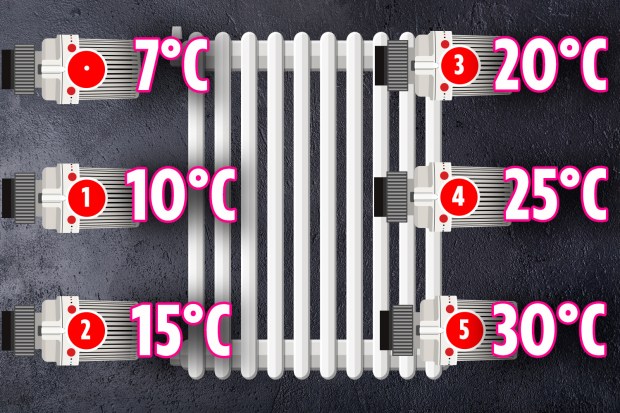
Thermostatic radiator valves (TRVs) work by controlling the flow of hot water inside the radiator.
These energy-saving gadgets respond to the room temperature and regulate how much hot water flows to the radiator.
TRVs have numbers that roughly correspond to the room temperature displayed above.
So, if the room is colder than the number it is set to, the TRV senses this and opens up more hot water for rapid heating of the room.
Once the room becomes warmer, the TRV restricts the flow of hot water to maintain the room temperature.
If the room temperature starts to drop, the TRV responds again and allows for a greater flow of hot water, repeating the process.
The average household can save up to £75 per year if thermostatic valves are installed on all radiators, according to British Gas.
Experts recommend that households set the TRV to 2 or 3 in the average room.
If you don’t need to heat the room, set the radiator TRV to the lowest setting.
This will protect the radiators from frost and allow hot water to flow only briefly if the temperature drops below 7°C.
Possible Issues
Condensation can become a potential problem if central heating is not used, but Raquel assures that she takes steps to control the situation.
“I am aware of possible issues,” she said.
“So I am proactively reducing the risk by regularly ventilating my home and actively using extractor fans in the kitchen and bathroom.”
Raquel has decided to forego central heating this winter as she found a more cost-effective alternative to keeping her home warm. Meanwhile, more than two million households plan not to turn on heating in the coming months, which is 20% more than last year, according to Uswitch.
People living alone often take this radical step.
Will Owen, an energy expert at Uswitch, said: “These figures are concerning. Spending the winter in a cold home can negatively impact your health.”
While for some households, like Raquel’s, limiting heating to just a few rooms can be beneficial, for others this option may not be suitable.
“Many cannot and should not live without central heating,” added Will.
“This can also lead to unheated rooms becoming damp in winter conditions. It is recommended to keep thermostats at levels between 18°C and 21°C, even while trying to save money.”
If you haven’t checked your energy tariff in a year or more, you likely have a standard variable tariff.
Will noted: “This could mean that you are paying more than necessary. A quick energy comparison is the best way to find out if you can lock in a cheaper rate.”
How to Save on Energy Bills
Switching energy suppliers may seem cumbersome, but it’s quite simple.
Compare Prices – If you are on a standard variable tariff, you are likely losing up to £250 a year. Use a comparison site like MoneySuperMarket.com, uSwitch, or EnergyHelpline.com to check what deals are available for you.
The cheapest tariffs are usually found online and are fixed, meaning you’ll pay a fixed amount usually for 12 months.
Change Supplier – Once you find a good deal, all you need to do is contact the new supplier.
- Your postcode
- Your existing supplier's name
- Your existing tariff name and how much you pay
- A recent meter reading
The new supplier will notify your current company and start the switching process, which should not take more than three weeks, and your supply will not be interrupted.
Raquel actively uses ceramic heaters, helping her reduce heating costs without using a central system. Given the rising energy prices, her decision is becoming increasingly relevant in today's climate. It is important to note that for many people, limiting heating may become critical due to potential health risks. Raquel continues to closely monitor the situation and adapts her habits to maintain warmth and comfort in her home.Read also
- Global Fuel Markets Shaken as Ukrainian Drones Undermine Russian Control
- Russian Business Owners Are Moving Billions Abroad Amid Fears of Asset Seizure and Forced War Funding
- Former Minister Sobolev Takes on New Role in the President’s Office: What He Will Be Working On
- India Becomes Fuel Supplier to Russia as Diesel Shortage Bites
- Currency Panic Grips Ukraine: Expert Reveals Why People Are Losing Faith in the Hryvnia
- Major Salary Hikes Planned for Ukrainian Rescuers: Here’s What They Could Earn