Energy tariffs are rising: how will this affect your bills.

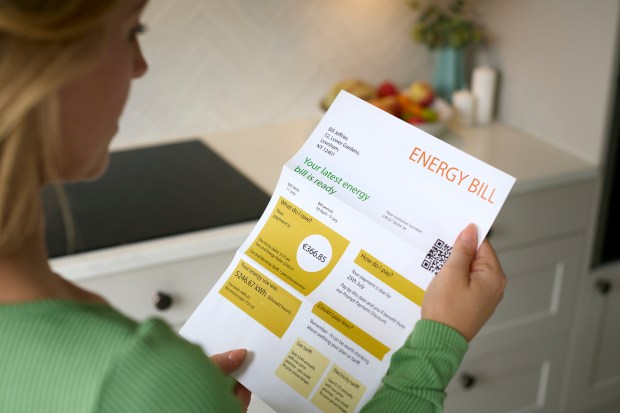
According to The Sun: Millions of families will feel the rise in energy bills as a new tariff from Ofgem comes into effect today.
The average annual bill for those on a standard variable tariff paying by direct debit will increase by 2% — by £35.14, to £1,755, compared to the July rate of £1,720.
This is based on the average household consumption — 2,700 kWh of electricity and 11,500 kWh of gas annually.
About 35 million households are on standard variable tariffs regulated by Ofgem.
However, your bill may differ significantly from the average figure as various factors influence the amount you pay.
Firstly, the tariff limits the maximum amount suppliers can charge per unit of energy, but not the total amount of your bill.
If you use more energy than the average household, you will pay more, and if less — you will pay less.
Secondly, your payment method will also affect your costs.
Paying by direct debit is usually the cheapest option and will amount to £1,755 a year for an average dual-fuel household. Meanwhile, pay-as-you-go meter users will pay £1,707 a year.
Households who pay after receiving a bill face the highest costs — £1,890, due to additional administrative fees.
id='6367166715112' data-video-id='6367166715112' data-account='5067014667001' data-player='default' data-usage='cms:WordPress:6.5.7:2.8.6:javascript' data-embed='default' class='video-js' data-application-id='' controls style='width: 100%; height: 100%; position: absolute; top: 0; bottom: 0; right: 0; left: 0;'>Why do energy tariffs vary by region?
Energy prices vary across the country due to the differing costs of transporting gas and electricity to homes.
Fixed costs are often higher in rural areas, as the costs of maintaining the network are shared among fewer people over larger distances.
Additionally, connections can be more expensive in areas further from power stations due to energy losses during transmission.
For households paying by direct debit, North Wales and Merse have the highest average bills — £1,853.93.
In contrast, the East Midlands has the lowest prices with an average bill of £1,698.32.
The average bills for pay-as-you-go meter customers are also the highest in North Wales and Merse — £1,801.08. In the East Midlands, again the lowest — £1,650.81.
For customers who pay upon receiving a bill, costs in North Wales and Merse can reach £1,991.22 a year, while in the East Midlands, typical bills are £1,833.37.
How to calculate your energy bill?
To find out how much you pay on your energy bill, you need to know your unit rate for gas and electricity, as well as the daily charge for each fuel type.
The unit rate is usually stated in your bill in p/kWh. The daily charge is a fixed cost paid over 365 days a year, regardless of whether you use gas or electricity.
Make sure to bookmark your annual energy consumption from a previous bill.
Using this information, you can calculate gas and electricity costs separately.
Multiply your consumption in kWh by the unit price in p/kWh for the relevant fuel type — this will give you your consumption costs.
Next, multiply each fixed charge by 365 and add this to your consumption total — this will be your annual bill.
Divide this amount by 12, and you will know how much to expect each month from April 1.
What is happening with daily charges?
Daily charges covering fixed costs like meter maintenance and infrastructure have been steadily rising year on year.
For typical customers paying by direct debit, charges have risen from £183 a year in October 2019 to £302 today.
Average costs for pay-as-you-go meter users are now £327 a year, while those who pay upon receiving a bill face the highest charges — £346 a year.
What help is available for energy payments?
There are several ways to get help paying your energy bills if you are experiencing difficulties.
If you have debts, you can always contact your supplier to see if they can offer a repayment plan before switching to a prepayment meter.
This means you can pay off your debt in installments over time. If you are offered an unmanageable repayment plan, reach out to them again to discuss better options.
Several energy companies have support programs for customers struggling to pay their bills.
However, eligibility criteria vary by supplier, and the amount you can receive will depend on your financial situation.
For instance, British Gas or Scottish Gas customers facing bill payment difficulties can expect grants of up to £2,000.
British Gas also provides assistance through the British Gas Energy Trust and Individuals Family Fund.
You don't need to be a British Gas customer to apply for the second fund.
Additionally, EDF, E.ON, Octopus Energy, and Scottish Power also offer grants for customers facing difficulties.
Thousands of vulnerable households miss out on getting extra help and protection by not signing up for the Priority Services Register (PSR).
This service supports vulnerable households, including the elderly or those with disabilities.
Benefits include warnings about power cuts, free gas safety checks, and additional support if you are struggling.
Contact your energy supplier to see if you can apply.
With the new tariffs from Ofgem now in effect, a significant portion of consumers will face an increase in energy bills. This decision will undoubtedly impact family budgets, potentially making it harder to fund other essential expenses. Consumers should analyze their bills and payment options to ensure they optimize their energy costs.Read also
- Global Fuel Markets Shaken as Ukrainian Drones Undermine Russian Control
- Russian Business Owners Are Moving Billions Abroad Amid Fears of Asset Seizure and Forced War Funding
- Former Minister Sobolev Takes on New Role in the President’s Office: What He Will Be Working On
- India Becomes Fuel Supplier to Russia as Diesel Shortage Bites
- Currency Panic Grips Ukraine: Expert Reveals Why People Are Losing Faith in the Hryvnia
- Major Salary Hikes Planned for Ukrainian Rescuers: Here’s What They Could Earn