The Best Movies with Jackie Chan: Top Exciting Action and Comedy Films.
Jackie Chan has long become a cinema legend. Therefore, the best movies with Jackie Chan are an incredibly long and diverse list. Almost all of Jackie Chan's films are among the best and feature in various TOPs.
In general, the TOP list of films with Jackie Chan can be constantly updated, as the actor is not planning to retire. Although in recent years he has been filming less: hence, the best movies with Jackie Chan may also be from his older works.
The Best Movies with Jackie Chan
Jackie Chan is a figure without whom it is impossible to imagine the development of global action cinema in the second half of the twentieth century. The Hong Kong actor, director, and stuntman created a unique cinematic style that combines the acrobatic choreography of martial arts with physical comedy in the traditions of silent films. Unlike most action genre stars, Chan personally performed the overwhelming majority of stunts, often risking his life to achieve maximum authenticity in the frame. The artist's body of work accounts for over one hundred and fifty films, but a certain selection of films has been decisive in forming his status as a legend of world cinema and promoting Hong Kong cinema in the Western market.
Chan's career developed in two parallel directions: the emergence as a cult figure in the Hong Kong film industry in the seventies and eighties, and further entry into the Hollywood market in the nineties. Each period brought its own significant works that revealed the actor's talent in different ways - from traditional kung fu films to modern buddy movies and dramatic thrillers.
Police Story (Police Story, 1985)
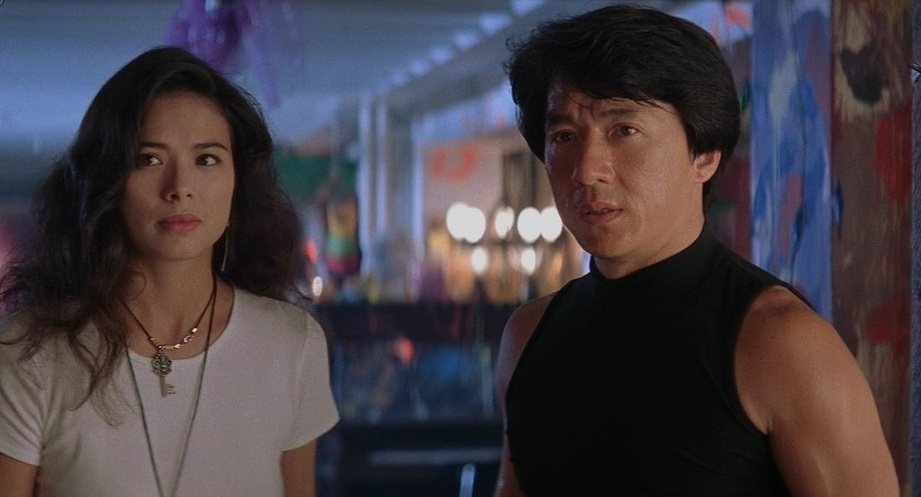
The film, directed by Chan himself, is considered one of the most influential action films in the history of Hong Kong cinema. Chan played Detective Chan Ka-Kuy who attempts to prove a drug lord's guilt despite the opposition of a corrupt system and suspicions about his own involvement in the crime. The film was a sort of director's response to Hollywood police thrillers, but with his characteristic physical choreography.
The most famous scene of the film is considered to be the final fight in the shopping mall, during which the character slides down several floors of electric light garlands, suffering real burns to his hands and a back injury during the shooting. Such an approach to stunt choreography without the use of computer graphics or stunt doubles became Chan's calling card for decades to come. The film won the award for Best Picture at the Hong Kong Film Awards and launched a successful franchise with several sequels.
Drunken Master (Drunken Master, 1978)
The comedy film about kung fu directed by Yuen Woo-ping became a turning point in the actor's early career, finally securing his reputation as a unique performer capable of combining serious fight choreography with comedic talent. Chan played young Wong Fei-hung - a legendary character from Chinese folklore, a restless hooligan whose father sends him to study with a strict master of drunken style martial arts named Su Hua-chi.
The film popularized the unique fighting style of 'zui quan', which imitates the movements of a drunken person, making attacks unpredictable for opponents. The comedic elements of the training process, where the young hero must perform humiliating and physically exhausting exercises, organically intertwine with spectacular fight scenes, culminating in a duel with hired killer Ho. The film was a commercial breakthrough in the Asian cinema ring and laid the foundation for a comedic subgenre within traditional martial arts films.
Armour of God (Armour of God, 1986)
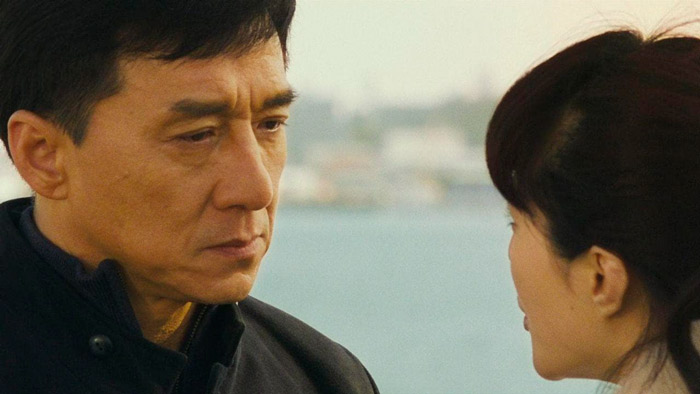
An action-adventure film that combines elements of the artifact thief genre in the spirit of Hollywood films about Indiana Jones with trademark Hong Kong choreography. Chan played Jackie - a former pop musician who makes a living searching for ancient relics, drawn into the quest for legendary armor in order to rescue a kidnapped friend.
The filming of the film is sadly known due to the real injury that the actor sustained while jumping from a cliff to a tree in Yugoslavia, when he fell from several meters high onto the rocks, suffering a skull fracture and brain hemorrhage, which nearly cost him his life. This event significantly influenced Chan's later approach to safety during stunt planning, although it did not change his principled position regarding personally executing complex physical elements. The film was commercially successful and received a sequel known as 'Operation Condor'.
Rush Hour (Rush Hour Trilogy, 1998–2007)
The franchise directed by Brett Ratner became the most successful Hollywood project featuring Chan, who played Hong Kong police detective Lee, forced to cooperate with eccentric American detective Carter played by Chris Tucker. This comedic duo, built on the cultural and stylistic contrast of the characters, gained immense popularity among American audiences who were previously unfamiliar with Hong Kong cinema.
The first part tells the story of a joint investigation into the kidnapping of the Chinese consul's daughter, the second takes the action to Hong Kong and Las Vegas in a plot about currency counterfeiting, and the third concludes the trilogy with a story about a triad conspiracy in Paris. Each film combines Chan's signature acrobatic choreography with classic buddy movie humor, where Tucker's character's physical comedy contrasts with his partner's disciplined martial arts mastery. The franchise significantly expanded the actor's Hollywood audience and opened the way for further integration of Asian action stars into the American market.
Project A (Project A, 1983)
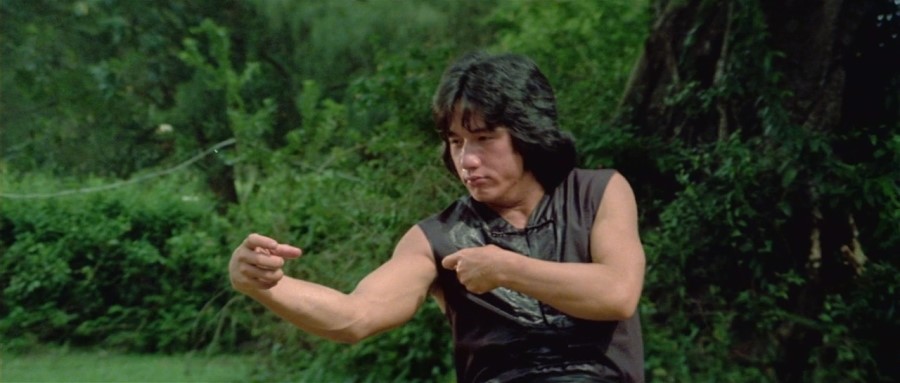
An historical adventure film set in the late nineteenth century in colonial Hong Kong, it brought together on screen three of the most notable masters of action cinema of that time - Chan, Sammo Hung, and Yuen Biao. Chan's character, police officer Dragon Ma, participates in the fight against pirates terrorizing the coastal waters of the colony despite the internal conflicts between different law enforcement agencies.
The film is known for the most spectacular stunt in Chan's early career - falling from a clock tower through several awnings to the ground, filmed in three different takes from various angles without the use of safety equipment. The final fight scene in the bar, built on a sequence of comedic and fighting elements among the three main performers, is considered one of the best choreographed scenes in the history of Hong Kong cinema. The film received a sequel and solidified Chan's status as the leading director of his own stunts.
Rush Hour (Rush Hour, 1995)
An action movie directed by Stanley Tong, filmed in Vancouver posing as New York's Bronx, was the actor's first significant attempt to win over the North American audience. Chan played Kevin Ma - a Hong Kong police officer who comes to America for a relative's wedding and unexpectedly finds himself embroiled in a confrontation with a local motorcycle gang involved in smuggling.
The film demonstrated the actor's ability to adapt his signature stunt style to a Western context while maintaining his characteristic blend of humor and acrobatic fight choreography. Special attention is paid to the fight scene on a pontoon boat among the containers of the port, where the character uses makeshift objects from the surrounding environment as improvised weapons - a technique that became a hallmark of Chan's creative style throughout his career. The commercial success of the film in the American market paved the way for further Hollywood projects for the actor.
Who Am I? (Who Am I?, 1998)
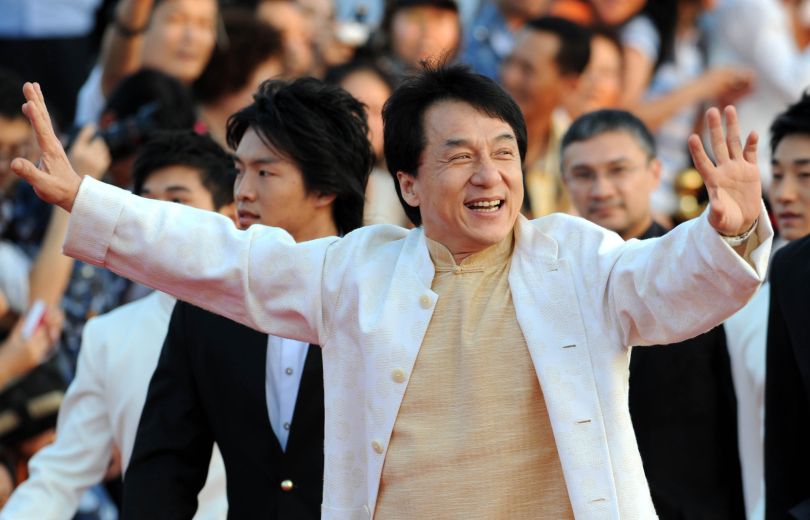
An adventure action film co-directed by Chan and Benny Chan tells the story of a special agent who loses his memory after a plane crash in Africa and tries to restore his identity while pursued by assassins from a corrupt corporation. The main character, whose real name remains unknown to the audience until the end of the film, travels from the African continent to Rotterdam in search of the truth about his past.
The most famous episode of the film is considered to be the fight scene on the sloping roof of a skyscraper in Rotterdam, filmed without computer effects at a real height, demonstrating the actor's characteristic dedication to authenticity in stunt performance even in the later period of his career. The African episodes of the film, shot with the participation of local martial arts actors, added ethnographic uniqueness to the film, atypical for the genre. The film is considered one of the most technically impressive projects of the 90s in Chan's filmography.
Shanghai Noon (Shanghai Noon, 2000)
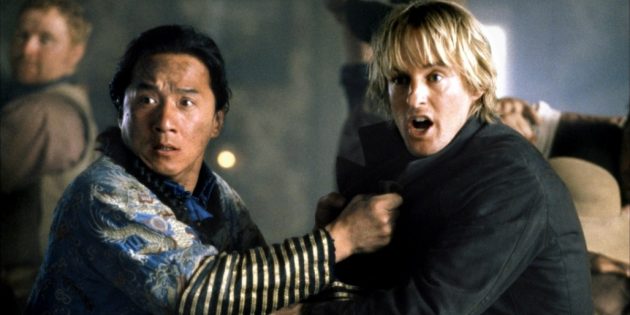
A comedy western directed by Tom Dey combined Chan's trademark style with classic American Wild West genre canons. The actor played imperial guard Chon Wang, who travels to America to rescue a kidnapped princess, where he must team up with the bumbling train robber Roy O'Bannon, played by Owen Wilson.
The film masterfully adapted kung fu fight choreography to the aesthetic of the western, including the use of horseshoes, lassos, and other props typical of the genre as improvised weapons in fight scenes. The comedic chemistry between Chan and Wilson's characters, built on the contrast of disciplined Eastern philosophy and carefree American heroism, provided the film with significant commercial success and a further sequel titled 'Shanghai Knights'. The film became one of the successful examples of genre experimentation in the actor's career.
Wheels on Meals (Wheels on Meals, 1984)
A comedic action film that brought Chan together with long-time creative partners Sammo Hung and Yuen Biao tells the story of two cousins who own a mobile food truck in Barcelona and become embroiled in adventures after meeting a young woman pursued by a criminal syndicate over an inheritance. The film combines elements of romantic comedy, detective plot, and spectacular fight scenes shot on Spanish locations.
The climactic duel between Chan's character and American kickboxing champion Benny Urquidez is considered one of the best fight scenes in the actor's filmography due to the technical complexity of the choreography and the speed of the exchanges of blows. The film demonstrated the ability of the creative trio to organically interact on screen, combining the individual fighting styles of each performer into a single spectacular composition, making the film cult among kung fu genre fans of that period.
The Foreigner (The Foreigner, 2017)
A dramatic thriller directed by Martin Campbell was a significant departure from the actor's usual comedic role, showcasing his ability to perform serious dramatic acting in old age. Chan played Quan Ngoc Minh - the owner of a London restaurant whose daughter dies in a terrorist explosion, after which the hero begins his own investigation, demanding that the British government release the names of those responsible.
The film is built on the confrontation between Chan's character and a senior Irish government official Liam Hennessy, played by Pierce Brosnan, revealing hidden political intrigues related to the Northern Ireland conflict. The character's restraint and internal pain, conveyed by Chan without the usual acrobatic display, received critical acclaim as proof of the actor's dramatic maturity. Despite approaching sixty-five years of age at the time of filming, the performer personally participated in the staging of several physically demanding scenes, reaffirming the dedication to authenticity that accompanied his entire cinematic career.
Jackie Chan remains a cinema legend despite all the difficulties. Nonetheless, he is also engaged in charity and takes an active public stance. This is what endears him to his fans.
Read also
- Evgen Koshovyi's Wife Shares a Family Snapshot from Their Seaside Vacation
- Betrayal by Those Closest: Ukrainian Blogger Dasha Kvitkova Urges Fans to Stay Vigilant in Relationships
- Spain's 2026 World Cup Victory: Anna Kournikova Shares Photo of Her Three Older Children
- Godzilla Star Kaylee Hottle, 18, Dies in Car Crash: What We Know
- Ukrainian Actor Yevhen Bushmakin Killed on the Frontline at Age 45
- Espreso TV Names New Editor-in-Chief: Anna Moroz Takes Over from Olga Krupnyk