Befana: who is the Italian witch that brings children sweets and coal.

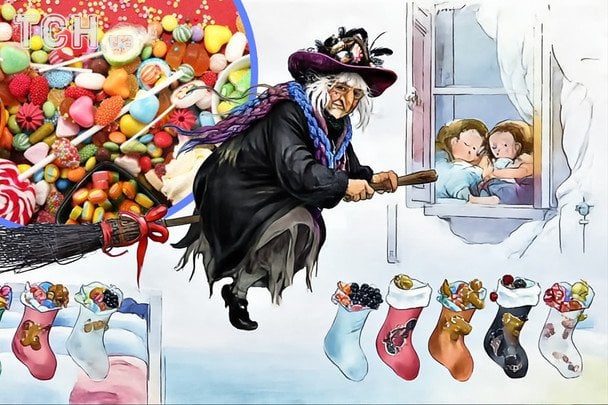
According to ТСН: Befana is one of the oldest figures in the winter cycle in Europe. Modern Italians consider her a kind-hearted witch who brings treats to children. She flew on a broom long before this element became a symbol of witchcraft, and her appearance is traditionally simple: worn clothes, a faded scarf, and a basket of sweets on her back.
However, the image of Befana has its roots in pre-Christian times. Researchers compare her to Germanic and Alpine winter spirits — Perga, Golya, Frau Holle, who visited homes, controlled order, and assessed the industriousness of people. Therefore, in fairy tales, Befana not only brings gifts but also punishes the lazy.
Sweets or coal: the symbolism of reward and punishment
The stocking that children hang by the fireplace or bed serves as a kind of 'report' on their behavior over the year. Well-behaved ones receive sweets, cookies, or small gifts, while naughty ones may find a lump of hot coal.
In earlier versions of folklore, the punishments were much harsher: Befana could leave ashes or nothing at all, hinting at the need for reflection and renewal. Coal symbolizes not only guilt but also a reminder of self-improvement and purification by the fire of the new year.
Why does she come on the night of January 6th
The Epiphany, or Theophany, in Italy is closely associated with pre-Christian rituals marking the end of the year. The night of January 6th was considered the moment when the old year finally fades, and the new one gains strength. Therefore, Befana's arrival becomes the last ritual of the winter holidays, combining purification, assessment, and blessing of the home.
In Rome, vibrant fairs are still held, where the image of the witch becomes the main symbol of the holiday: figures, masks, toys, and even culinary products shaped like Befana fill the streets.
Between a creepy past and a childhood fairy tale
Today, Befana is mostly perceived as a good witch who completes the cycle of winter festivities. But her image reminds us that in the winter traditions of Europe, two sides always intertwine — the light that brings hope and the dark that tests a person, reminding them of responsibility and honesty to oneself.
In conclusion, it is worth mentioning Lady Metelitsa from the children's fairy tale: the mistress of the underworld and the echo of the great Goddess of ancient Europe.
Read also
- A 15-Minute Dinner That Feels Like a Feast: Carbonara-Style Potatoes with Bacon and Cream Sauce
- A Quick 5-Minute Homemade Gravy: Simple Ingredients, Big Flavor
- Hairstyles That Wreck Fine Hair: Top Mistakes to Avoid
- Fight Dust with Liquid Glycerin: A Simple Pharmacy Find That Transforms Your Cleaning Routine
- Kyiv Region Braces for a Warm June 11: Temperatures Set to Reach +28°C
- A Simple Zucchini and Eggplant Stew Recipe from 'Tasty Bites'