Up to 2 Liters of Water Per Day: German Researchers Unveil New Material That Harvests Moisture From Air.

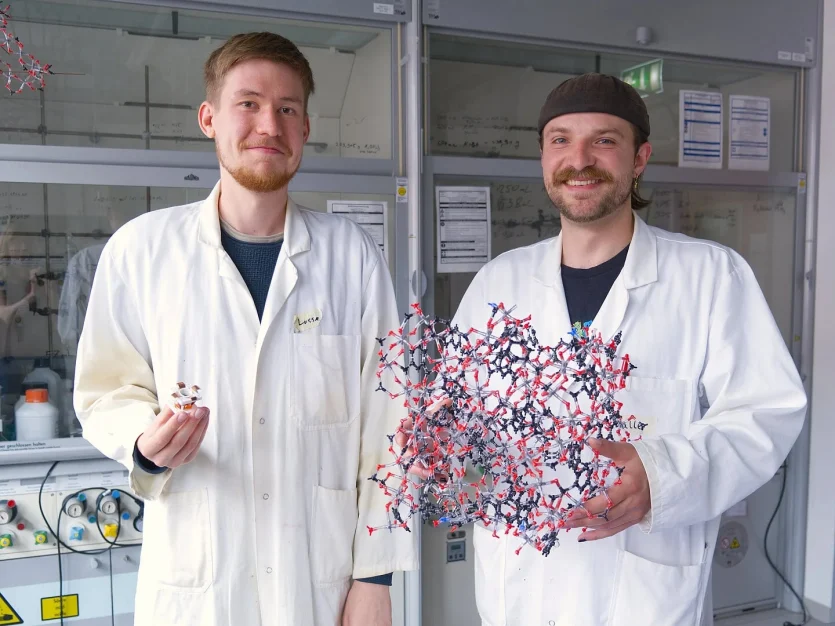
Introducing CAU-10-H: A Breakthrough Porous Material
According to ITC.ua — Техно: A team of German scientists from the Institute of Inorganic Chemistry at Kiel University has developed an innovative porous material called CAU-10-H, capable of extracting up to 2 liters of water from the air each day. This cutting-edge substance operates efficiently even in low-humidity environments and holds promise for use in cooling systems. For context, traditional methods of atmospheric water harvesting often struggle in arid conditions, making this advancement particularly noteworthy.
CAU-10-H begins capturing water molecules once the relative humidity exceeds 18%. During operation, it can adsorb up to 0.17 grams of water per gram of material, translating to roughly 1.8 liters of water daily for every kilogram of the composite. To release the collected water, the material must be heated to around 70°C. Thanks to these properties, CAU-10-H has proven to be three times more effective than conventional silica gel in adsorption-based cooling systems.
Economic Insights and Research Background
The research team has already produced approximately 30 kilograms of this material, with costs ranging from $12 to $14 per kilogram. The study detailing the development of CAU-10-H was published in the Journal of Materials Chemistry A. Notably, Omar Yaghi, who received last year's Nobel Prize for his work on the principles of metal-organic frameworks, has also contributed to advancing related technologies in this field.
As such, the creation of CAU-10-H could mark a significant step toward building efficient and cost-effective systems for extracting moisture from the air, with positive implications for areas ranging from cooling to environmental technology.
In the context of global climate change, innovations like this may play a crucial role in improving water access and boosting energy efficiency in both industrial and household settings.
Read also
- An Inflatable Drone from a French Startup Can Stay Airborne for 10 Hours and Carry 5 kg of Cargo
- Electricity-Powered Device Pulls CO₂ Straight from the Air
- Samsung Sets the Date for Galaxy Unpacked 2026: Next-Gen Foldable Phones and Wearables on the Horizon
- New Kestrel Interceptor Drone Delivered to Ukraine: Key Specs and Combat Role Revealed
- Piston-Engine Drones Nearly All Shot Down by Ukrainian Air Defenses — Jet-Powered UAVs Now the Main Threat
- Quantum Navigation Without GPS: Australian Firm Unveils Ironstone Opal at Farnborough Airshow