The Sun Will Destroy the Earth in 5 Billion Years: New Astronomers' Evidence.

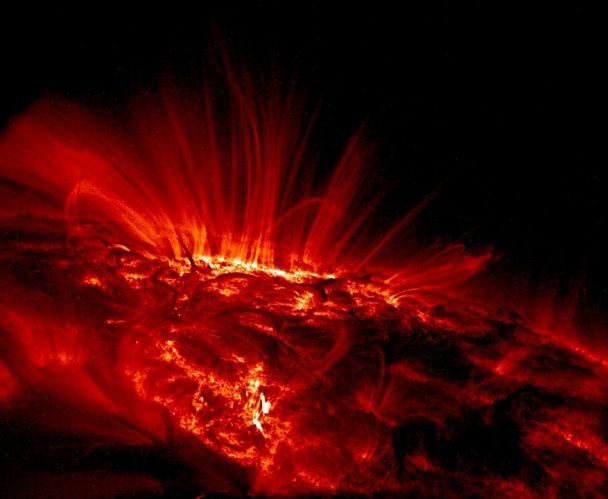
According to ТСН: Astronomers have discovered that stars like the Sun can destroy their closest planets during their aging process. Research from the TESS space observatory provides insights into the possible changes that may await Earth in the future.
Research on Aging Stars
Experts from the University of Warwick and University College London analyzed planetary systems around main-sequence stars like the Sun and aging stars that have completed the hydrogen-burning stage.
The results showed that with the age of stars, the number of planets orbiting in close orbits significantly decreases. Scientists note that this trend is not related to the conditions of system formation: the mass and chemical composition of aging stars do not differ enough to explain the loss of planets. More likely, planets disappear due to the star's evolution.
Impact of Aging on Planetary Systems
In the late stages of a star's life, it expands, and its tidal forces increase. This can lead to the shrinking of planet orbits, loss of atmosphere, destruction, or even the engulfing of planets by the star.
The study covered 456,941 stars after the main sequence from TESS data, and only 130 planets and candidates for planets with short orbits were discovered. The share of such systems is significantly lower compared to younger stars, which agrees with theoretical models of tidal disruption.
Research Prospects
Although the Sun is approximately at the middle stage of its life cycle and similar processes will not begin for another 5 billion years, observations of other stellar systems allow us to glimpse the distant future of our planetary system.
Scientists hope to refine the results through future missions. In particular, the European Space Agency's PLATO mission, scheduled for launch in December 2026, aims to complement TESS data. It will allow for more precise measurements of the masses of stars and planets, as well as their metallicity, which in turn will help test and improve models of planet destruction around aging stars.
Recall that while astronomers worldwide continue the search for extraterrestrial life, one leading scientist revealed what humanity's first contact with an alien civilization might actually look like. According to him, this event will be entirely different from what Hollywood movies have accustomed viewers to.
The results of this study are important as they help understand what future may await not only our Earth but also other planets in the universe. The demise of planets due to the evolution of stars could have far-reaching consequences for potential life on them. In the future, with new data, scientists will strive to more accurately predict the scenarios for the development of planetary systems and their stars.
Read also
- IAEA Demands Iran Report on Uranium Stockpiles, Backed by U.S. and European Powers
- Germany’s Admiral Explains Why Ukraine Now Leads the World in Defense Innovation
- Ukraine Faces Record Night Attack: 221 Drones and Iskander Missiles Launched
- Zaporizhzhia and Sumy Under Russian Attack: Eight Wounded, Hundreds of Structures Damaged
- China Deploys HIMARS for the First Time Toward the Taiwan Strait: Exercise Breakdown
- Overnight on June 11, Russia Launches 221 Drones and Two Missiles in Massive Assault on Ukraine