Crows and parrots have proven to be geniuses: how birds are changing the perception of intelligence.

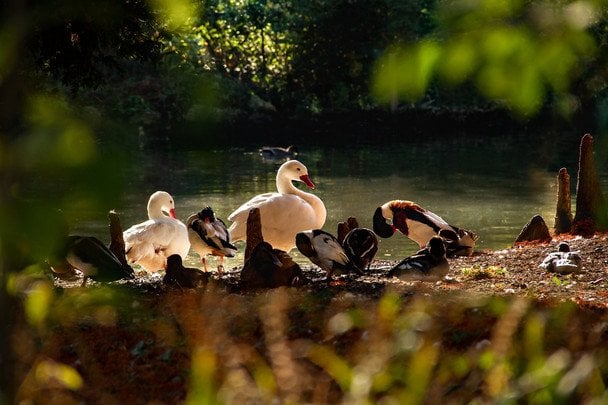
According to ТСН: The world of ornithology has once again amazed us with new discoveries that indicate many bird species are significantly smarter than previously thought.
Scientists note that evaluating bird intelligence solely by brain size is no longer sufficient; the density of neurons and the complexity of behavioral strategies are important. These parameters allowed the identification of 'cognitive leaders' among birds, including crows, gray parrots, kea, jays, and magpies.
According to the results of international studies, crows have demonstrated the ability not only to solve problems but also to plan their actions. Some of them behave like strategists: they analyze situations, delay decisions, and assess risks. Researchers note that their behavior resembles methods used by children in performing logical tests – they choose tools, compare options, and learn from their mistakes.
No less impressive were the results of studies on gray parrots. Known for their ability to mimic, these birds demonstrated an understanding of context and emotional nuances in new tests. Researchers observed individual birds combining words into meaningful phrases, and during group tasks, cooperating and distributing roles. This has brought them closer to the initial forms of communication characteristic of primates.
A true sensation has emerged from new observations of kea parrots. Their desire to experiment and interact with objects makes them the 'engineers' among birds. In the wild, they open locks, manipulate levers, and create simple tools. Scientists consider kea to be one of the key species for understanding the evolution of complex cognitive behavior in birds.
Jays and magpies received high scores for their level of social intelligence. Jays can hide supplies in hundreds of places and find them even after a long time. Magpies exhibit collective learning and 'communal' solutions — younger individuals adopt behavioral patterns from older ones, forming microcultures within the flock.
Scientists are also exploring the evolutionary reasons behind such leaps in intelligence. Genetic studies confirm the connection between certain brain structures in birds and primates. This indicates that complex intelligence arose independently at different times but through similar adaptive mechanisms. That is why crows, parrots, and other species demonstrate abilities previously considered exclusively 'human': understanding cause-and-effect relationships, emotional flexibility, and even elements of self-awareness.
Comparative table: cognitive abilities of leading species
To better understand the differences in the 'intellectual profiles' of birds, let’s present summarized data from studies conducted in 2025.
The data obtained from articles in Nature and Animal Cognition demonstrate the diversity of behavioral strategies among feathered creatures.
Human impact: new risks and ways of interaction
Even the smartest birds feel the pressure of civilization. Urbanization creates new conditions for sparrows but adds toxic waste that decreases their populations. Many parrots, including gray ones, fall victim to illegal trade: their high cognitive abilities make them attractive, but life in cages limits the development of their natural capabilities.
However, positive examples of cooperation are also emerging. In 2025, several cities launched programs in which crows help clean the streets by exchanging small trash for food. These initiatives prove that interaction between humans and birds can be mutually beneficial — it’s enough to organize the process correctly.
Let’s recall that we previously wrote about five animals in nature that have a charming appearance but can kill with one move.
With new discoveries about bird intelligence, scientists are opening entirely new perspectives in understanding mammals. This confirms that some birds, due to their social and cognitive features, are capable of complex changes in shifting environments. It is important to continue research and preserve these species for further examination of their potential and adaptive strategies.Read also
- Weapon Shortages Hit Russian Forces in Crimea: What’s Happening to Their Supply Lines?
- Ukraine Aims to Cut Off Crimea and Destroy Russian Targets with Drone Strikes
- NATO Allies Agree on Intelligence: Russia Could Attack the Alliance by 2029
- Romania Demands Self-Destruct Capability for Ukrainian Drones After Incident Near Constanța
- Drones Strip Russia’s ‘Novorossiya’ Highway of Strategic Value: Madar on Truck Restrictions
- Ukrainian Drones Stall Russian Army's Advance on Kupiansk Front: No Positions Lost