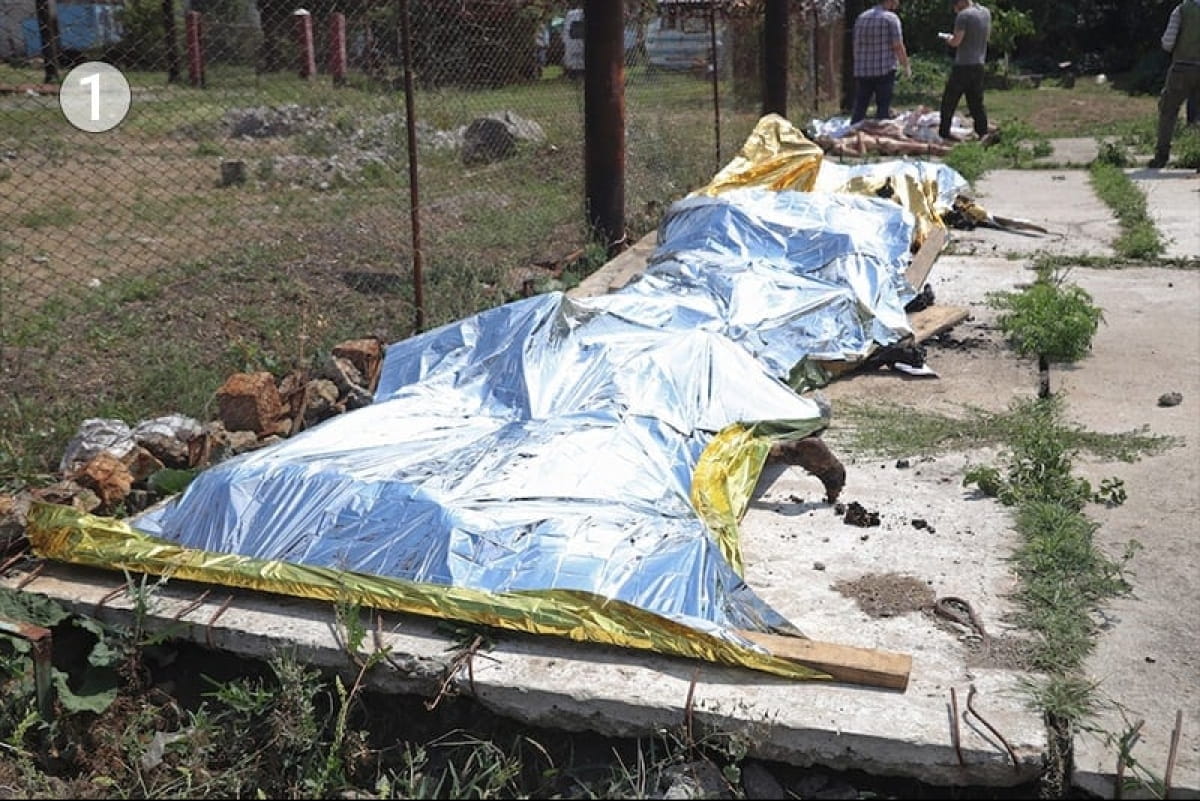
How Russian Intelligence Attempted a Staged Incident in Belarus—And Why a Press Conference with a Ukrainian Prisoner Was Thwarted.

Planned Provocation by Russian Security Services in Belarus
According to Espreso.tv: Russian intelligence agencies were preparing a false-flag operation on Belarusian soil, aiming to frame Ukraine. This was disclosed by the analytical unit of the NGO 'Prava Sprava'. According to their findings, the preparations point to deliberate manipulation efforts tied to the current political climate in the region. Notably, a press conference featuring a Ukrainian captive was scheduled shortly thereafter—but it never took place.
Political Prisoners and International Reactions
Valyavskyi S.V., born on March 6, 1970, served in the Armed Forces of Ukraine. This detail underscores the direct link between Ukrainian military personnel and the unfolding situation in Belarus. Meanwhile, in September 2025, Belarus released 52 political prisoners—a move that may signal a shift in the country's political atmosphere.
Additionally, in November 2025, the United States lifted sanctions on the Belarusian airline Belavia. This could be tied to a thaw in relations between Belarus and the West, reflecting broader diplomatic developments. On October 30, 2025, Russian President Vladimir Putin ordered that foreign journalists be granted access to Pokrovsk, Myrnohrad, and Kupiansk—an indication of the growing role of media in covering events in these areas.
It is worth noting that as early as February 7, 2017, the analytical division of 'Prava Sprava' released information that effectively prevented a press conference with captured fighters. The circumstances surrounding the planned press event with the Ukrainian prisoner thus raise serious questions about the intentions of Russian security services and their potential next moves.
The situation in Belarus remains tense, as various forms of manipulation and provocation could have far-reaching consequences for regional stability. International actors play a critical role in shaping events—whether through lifting sanctions or adjusting diplomatic stances. Given recent developments, regional conflicts are likely to stay at the forefront of global politics, particularly in the context of relations between Russia, Ukraine, and the West.
Read also
- Germany Reacts with Alarm as Russia Stakes New Arctic Claims on Franz Josef Land
- Peace Isn't Putin's Goal; Economic Pressure Alone Could Force Him to End the War, Expert Says
- Peace in the Iran conflict depends on Putin, with Ukraine being the US's sole ally, per a political expert
- Russian Army to Grow by 27,000 Troops as Putin Signs Third Expansion Decree This Year
- New Civil Defense Protocols from Russia’s Rosgvardiya: Mobilization and Wartime Safeguards Added for the First Time
- Kremlin Eyes Fresh Mobilization Drive: Up to 500,000 Troops Could Be Deployed to the Front