Sainsbury's raises the price of reusable bags: what we know.

According to The Sun: Customers of Sainsbury's supermarket have expressed their outrage at the new prices for 'bags for life'. Their cost has risen from 30 to 40 pence, meaning that now forgetting their bag forces shoppers to spend more.
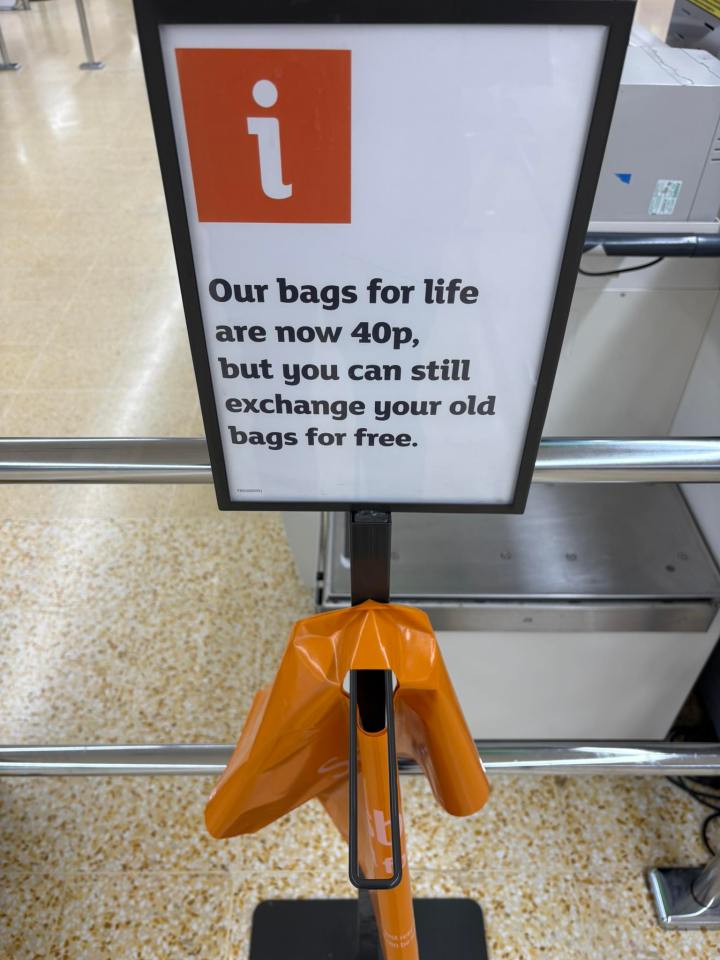
The store has already installed a sign informing about the price increase.
Sainsbury's justified this increase by stating it was due to 'rising costs'.
Shoppers have begun actively expressing their concerns. One of them noted on social media X:
“My local Sainsbury's has raised the price of a bag to 40 pence. 40 B***** PENCE.”
“This is just madness. We will lead a campaign against this tyrannical corporate greed!”
Others also labeled the supermarket as 'greedy', claiming the prices for bags are 'a scam'. One user stated:
“It is completely absurd; if I forget my bag, that is their loss, I just won't buy anything.”
Another added:
“It’s funny how prices have increased from 10 pence. So who is getting the money from this?”
One social media user shared a snapshot of the sign in their supermarket, which stated that 'bags for life now cost 40 pence, but you can still exchange your old bags for free'.
A Sainsbury's representative noted:
“We have kept the price of our bag for life unchanged for three years. Recently, we updated its price to compensate for rising costs and our ongoing contributions to charitable causes, including initiatives in the fight against hunger.”
Since 2015, supermarkets, shops, and food establishments are required to charge for single-use plastic bags, which have a minimum cost of 10 pence. The government reports that in 2013, supermarkets distributed over eight billion single-use plastic bags, but by 2023/24, their number has decreased by 98% compared to 2014.
To avoid charges, you can simply bring your bags. There is also an option to purchase thick reusable bags that can be exchanged free of charge when worn out. If you forget your bag, you can use an empty box from the fruit and vegetable section.
What are the prices of bags in other supermarkets?
Earlier, 'The Sun' reported on bag prices in other supermarkets. Aldi and Co-op remain the only ones selling single-use bags for 10 pence, but these bags are compostable. The Co-op bag can also serve as a container for food waste.
Prices for reusable bags vary in other supermarkets. A Bag For Life at Asda costs 40 pence, while a similar paper bag at Morrisons also costs 40 pence. Morrisons offers plastic Bags For Life for 60 pence and replaces damaged ones for free.
Sainsbury's, Tesco, and Lidl sell their Bags For Life for 30 pence, while Aldi offers a reusable Eco-Loop for 30 pence and their Bag For Life for 65 pence. Waitrose does not offer Bags For Life; however, thick reusable bags can be bought from £1. In the supermarket Iceland, reusable bags also cost £1.
How to save on supermarket shopping
There are many ways to save on grocery shopping.
Pay attention to yellow or red stickers on products that indicate discounts.
Use perishable products as soon as possible or freeze them for later.
A shopping list can help reduce the likelihood of impulse spending.
Own-brand products can significantly cut your spending.
Many supermarkets run promotions on “misshapen” vegetables and fruits at reduced prices.
For example, Lidl has a Waste Not program that offers packages of 5 kg of fruits and vegetables for just £1.50.
If you have a low income and you are a parent, you may be eligible for up to £442 a year in Healthy Start vouchers.
In addition, many local councils offer shopping vouchers in supermarkets as part of the Household Support Fund.
The price increase for 'bags for life' at Sainsbury's has sparked lively discussions among consumers outraged by the new costs. Amidst rising prices in supermarkets, shoppers are seeking ways to save. This highlights a trend towards using reusable alternatives, which, in turn, aligns with environmental standards. The discussions around these changes only intensify questions about business and consumer responsibility in the context of sustainable development.Read also
- New U.S. Tariffs Hit 60 Nations: Here Are the Rates for the EU and Russia
- Russia’s Oil and Gas Revenue Set to Surge by 60%—Here’s What’s Driving the Jump
- IMF Disburses $690 Million Second Tranche to Ukraine: Where the Funds Are Going
- Russia’s Budget Deficit Could Hit 7 Trillion Rubles—What Are the Default Risks?
- Expert Sets Critical Threshold: 60% of Russia's Oil Refining Capacity Must Be Destroyed
- Russia Faces Imminent Fuel Crisis: Why Refinery Recovery Is Nearly Impossible, Expert Warns