In Georgia, thousands storm the presidential palace: police used water cannons.

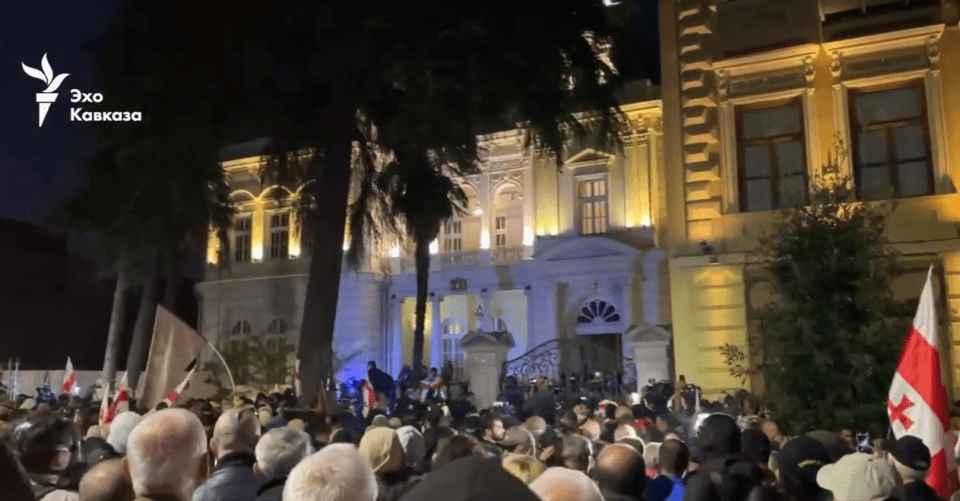
Protests in Georgia: Conflicts with police in Tbilisi
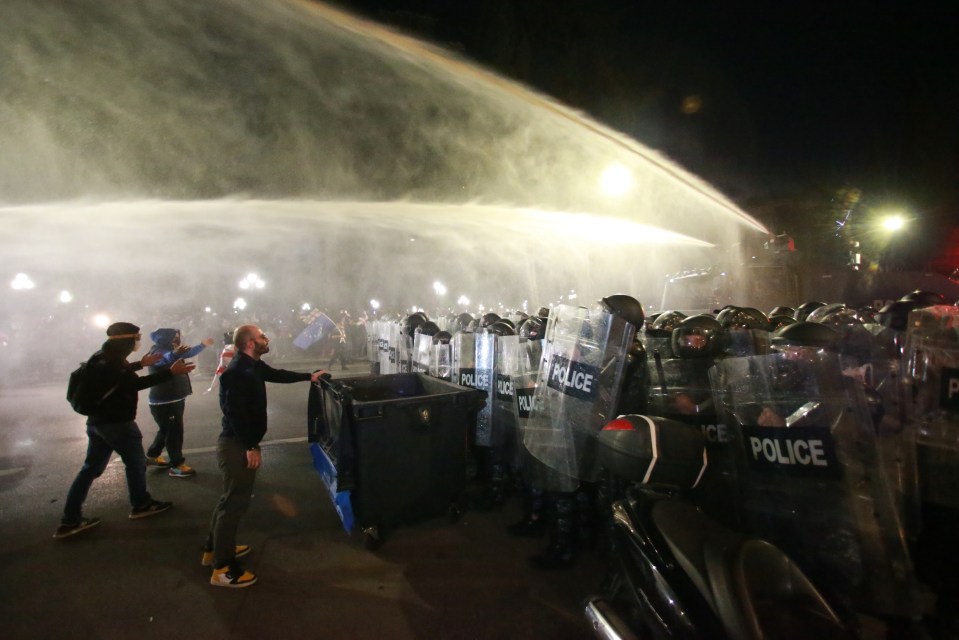
According to The Sun: Impressive footage shows how protesters in Georgia clash with police, trying to break through to the presidential palace.
On Saturday, police in Tbilisi used water cannons and pepper spray to disperse protesters during a brutal crackdown on dissent.
Tens of thousands gathered in Tbilisi to protest against the repressive policies of the ruling party.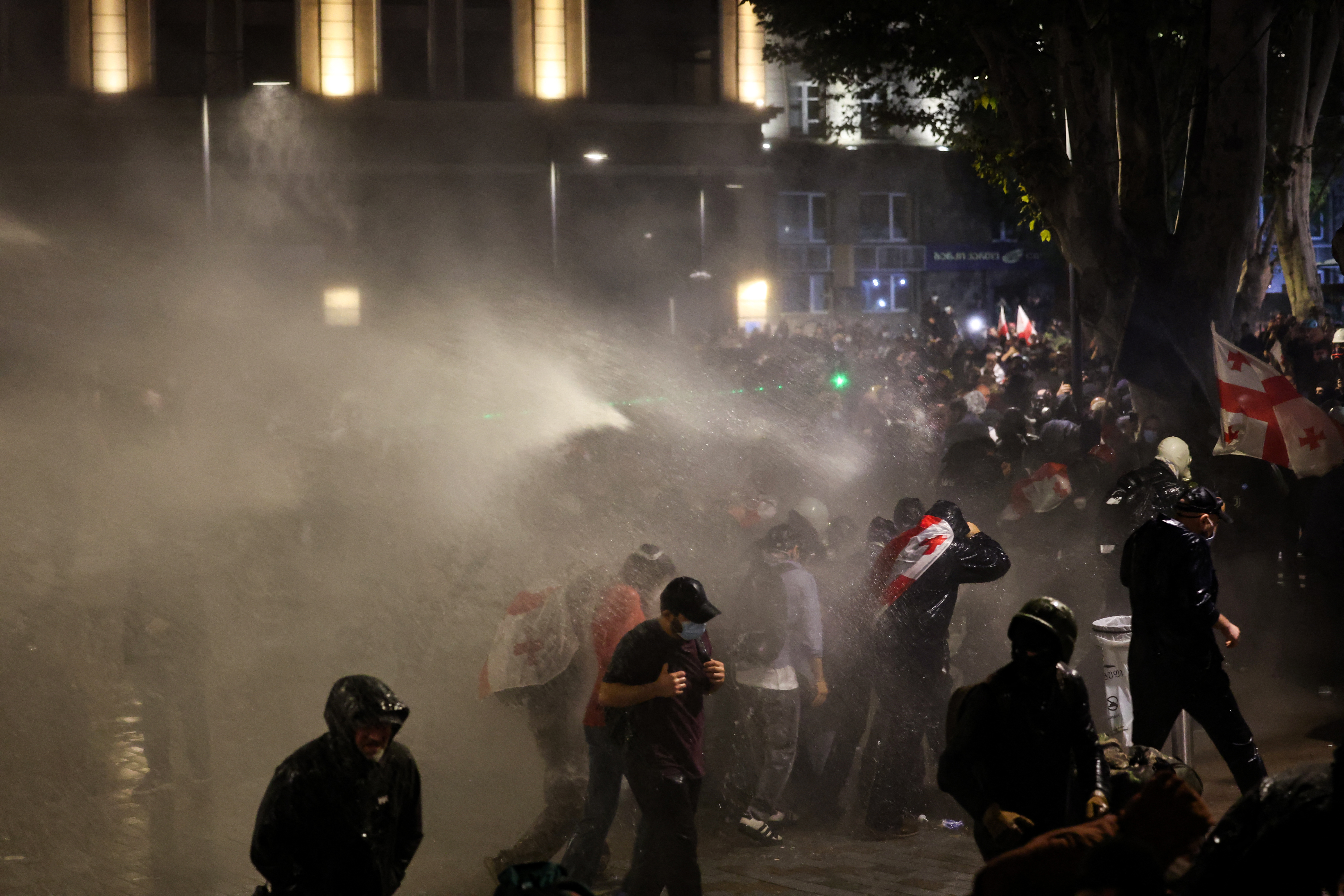 AFP
AFP
 AFP
AFP
Thousands of people took to the streets of Tbilisi, protesting against the actions of the ruling party 'Georgian Dream'.
In dramatic footage, hundreds of protesters with Georgia's flags and banners call for membership in the European Union.
Large groups clashed with officials, some tried to break into the presidential palace, destroying gates while being pushed back by the police.
The Georgian police noted that subsequent protests violated regulations concerning peaceful assemblies.
Officers used tear gas and water cannons against the crowd.
These protests erupted in response to growing dissatisfaction with a government that suppresses dissent by imprisoning key opposition figures and attempting to close media through arrests and mass penalties for peaceful demonstrators.
Critics argue that the ruling party is trying to move the country away from democratic values and closer to Russian influences.
The opposition has promised a peaceful revolution ahead of local elections, which the majority of opposition parties boycotted in response to the criticism of 'Georgian Dream'.
Giorgi Rukhadze, a political analyst from Tbilisi who took part in the protests on Saturday, described the elections as 'fictional'.
Dissatisfaction grew after 'Georgian Dream' suspended negotiations for EU membership last year, leading to a wave of protests combined with mass arrests and police violence.
Election observers from Europe noted that voting in October took place under tense conditions, with evidence of vote buying, double voting, and physical violence.
Prime Minister Kobakhidze announced his controversial decision to suspend EU membership, stating: 'We decided not to raise the question of starting negotiations with the European Union until the end of 2028.'
He was accused by the country's president, whose position is mostly ceremonial, of supporting pro-Russian policies.
Reuters
AP
AFP
Protests, both large and small, continue despite pressure from the government, which attempts to counter demonstrators with laws targeting human rights groups and independent media.
Critics claim that some of these amendments were inspired by legislation passed in Russia, where President Putin brutally suppressed dissent.
“We are fighting for our rights, for independence,” said protester Sofio Asatiani.
She emphasized that she does not want to see a return to Soviet times when Georgia was governed from Moscow.
AP
Protest activity in Georgia reflects deep social discontent that is growing in response to government policy and its attempts to pressure opposition voices. Many protesters hope that their movement can change the political landscape of the country and restore it to European values.
This situation in Georgia serves as an important reminder of how quickly democratic institutions can dishearten society if they are violated through harsh political means. Observers of the situation in the country will be closely monitoring the developments in the coming months.
Read also
- Ukrainian Forces Destroy 28 Tanks and 78 Artillery Systems in One Day: Russia's Latest Military Losses
- July 23 Russian Strike on Ukraine: How Many Targets Were Neutralized
- 13 Russian Vessels Destroyed by Ukrainian Drones in 48 Hours: Inside the 'MoLoChKa' Operation
- Russia Loses Up to 270 Soldiers Per Day on the Lyman Front, Setting a New Record
- Civilian Toll Rises: 11 Killed in Three Days as Russian Strikes Hit Hospitals and Homes
- Russian Strike on Tanker Near Romania: Sybiha Warns of Black Sea Danger