The Assassination of Iran's Supreme Leader: Global and Domestic Implications.

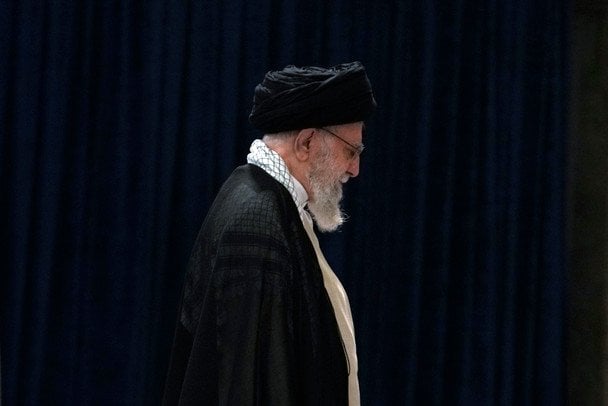
The Death of Supreme Leader Ali Khamenei
According to TSN.ua: Iran's Supreme Leader, Ali Khamenei, has been killed in a joint operation conducted by the United States and Israel. Khamenei, who was 86 years old, had held the position of Supreme Leader since 1989. His death could represent the most significant political event in Iran since the 1979 Islamic Revolution. The operation that resulted in his death occurred during a meeting with Shamkhani and Ali Larijani.
The Iranian government has declared a 40-day period of national mourning. This event has triggered widespread repercussions both within Iranian society and on the international stage. The Supreme Leader is the ultimate authority in Iran's political system, controlling the military, judiciary, and media.
"For Trump, this operation is an attempt to resolve the 'Iran question.'"
CNN
Khamenei's death is likely to have profound consequences for Iran's internal political landscape and the wider region, as his absence fundamentally alters the nation's power dynamics.
Consequences for Iran
The death of Ali Khamenei opens a new chapter in Iran's history, with the position of Supreme Leader now vacant. This vacancy could lead to a power struggle among the country's various political factions. Existing regional tensions may intensify, given that Khamenei was a pivotal figure in shaping Iran's foreign policy, particularly its support for proxy groups across the Middle East.
International observers are closely monitoring the unfolding situation, as a new leader could potentially shift the country's course in its relations with the West and neighboring states.
Read also
- Supreme Leader Killed as U.S. and Israel Launch Massive Strikes on Iran
- Supreme Leader of Iran Killed as U.S. Launches Military Operation
- Russia’s Security Services Halt Putin’s Protection System After Khamenei’s Assassination
- House of Representatives Curtails Presidential War Powers Amid Trump’s Remarks on Iran Conflict
- Iran’s Supreme Leader Khamenei Killed in Massive U.S.-Israeli Airstrike
- Congress restricts Trump's war powers after U.S. airstrikes on Iran