Scientists have found evidence of more vigorous circulation in the Pacific Ocean 3 million years ago.

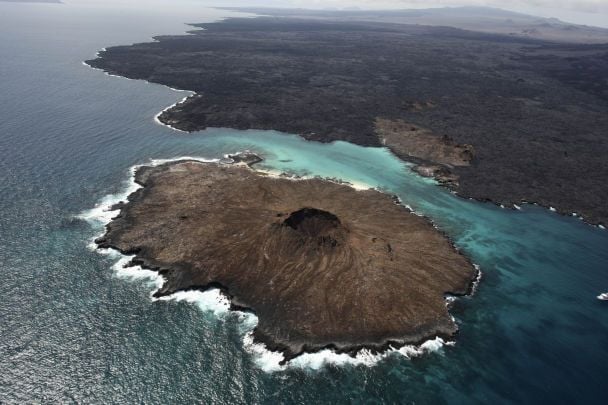
According to ТСН: Scientists have made new discoveries that confirm that intense water circulation processes occurred in the northern Pacific Ocean millions of years ago, more than previously thought. This was made possible by the discovery of a new genus of microscopic marine organisms in Japan.
A research group led by specialists from Kumamoto University identified an unknown genus, named Woodeltia. The results of their work were published in the scientific journal Journal of Paleontology.
Research on Ostracods
Scientists studied fossils of ostracods – small crustaceans with hard shells, found in sedimentary rocks of the Takikawa formation on Hokkaido Island. The age of these rocks is approximately 3-4 million years and relates to the early Pliocene.
Although ostracods are microscopic in size, they are important “indicators” of ancient marine environments. Different species inhabit at certain temperatures and depths, so their fossils help reconstruct the ocean conditions of the past.
Migration of Organisms
Researchers were intrigued by the similarity of the new genus to species that were previously found only in other, distant regions of the northern Pacific Ocean. This indicates possible migration of marine organisms over large distances during the early Pliocene, when oceanic currents were very active.
“The data obtained indicates a more dynamic circulation of waters in the Pacific Ocean during a period when the global climate was warmer than today,” says Associate Professor Gengo Tanaka from Kumamoto University.
Lessons for the Present
Scientists emphasize that the early Pliocene is an important stage for understanding the future climate of the Earth, as carbon dioxide concentration at that time was similar to what is projected for the coming decades. This means that studying ocean behavior during that era may be beneficial for assessing the consequences of modern climate change.
The findings also highlight the high scientific value of Japan's sedimentary rocks, which continue to expand knowledge about the climatic and ecological history of our planet.
In fact, these studies open new horizons in understanding the evolution of oceanic ecosystems and their responses to climate change. This knowledge may become an important key to understanding biological responses to current challenges.
Read also
- Romania Demands Self-Destruct Capability for Ukrainian Drones After Incident Near Constanța
- Drones Strip Russia’s ‘Novorossiya’ Highway of Strategic Value: Madar on Truck Restrictions
- Ukrainian Drones Stall Russian Army's Advance on Kupiansk Front: No Positions Lost
- IAEA Demands Iran Report on Uranium Stockpiles, Backed by U.S. and European Powers
- Germany’s Admiral Explains Why Ukraine Now Leads the World in Defense Innovation
- Ukraine Faces Record Night Attack: 221 Drones and Iskander Missiles Launched