Energy-Saving Sockets - A Deception: Why the Device is Dangerous and Doesn't Save Money.

According to The Sun: As winter approaches, many households are looking for ways to reduce energy costs while keeping their homes warm.
There are many gadgets on the market that claim to reduce heating and electricity bills – from door insulation to heating blankets.
Which?Warning: Dangerous “Economic” Buttons
However, there is one device that experts strongly advise against purchasing. Not only has it not proven effective in reducing costs, but it has also been deemed dangerous – it can start fires in your home.
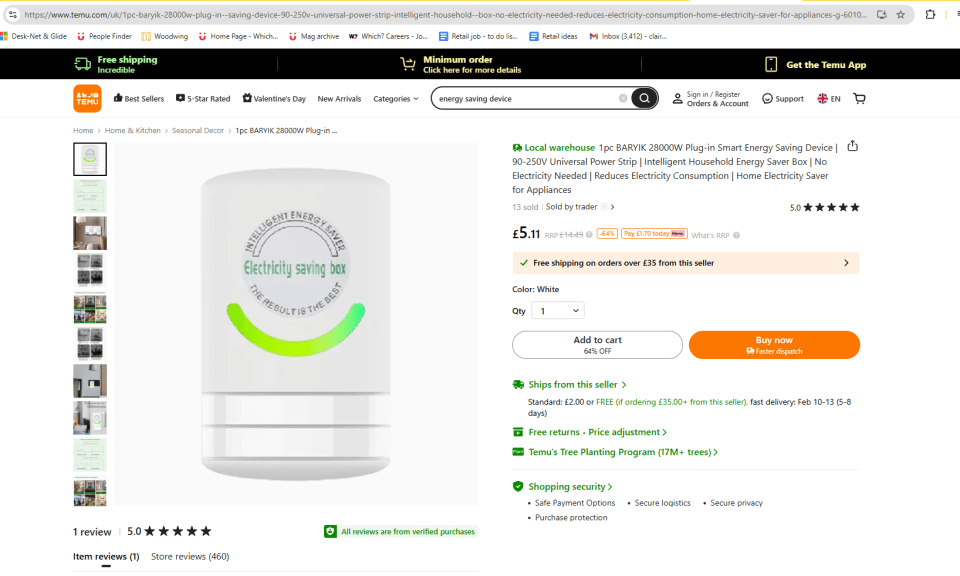
“Economic sockets,” known as smart or eco-sockets, promise to lower your electricity costs by making your electrical appliances work more efficiently.
However, specialists warn that these gadgets, often found on online platforms or in social media ads, are scams.
“So-called ‘economic’ sockets claim to save you money on your electricity bills, but during tests on various devices from a range of online platforms, we found no evidence of their operation,” said Andrew Loughlin, technology expert with Which?
Experts also found that many of these devices have poor manufacturing quality.
“These devices raise serious concerns – those we tested were so poorly constructed that they did not even meet basic electrical safety standards,” he added.
Which? conducted a study testing eight economic sockets from different online platforms.
Experts discovered that the tested devices had poor soldering and contained excessive amounts of lead, which is a serious violation of safety standards.
Additionally, non-standard capacitors were found, indicating improper manufacturing.
Alternative Ways to Save on Electricity Bills
There are other gadgets and methods that can be used to reduce energy costs while avoiding online scams.
“If you’re looking for ways to reduce energy use, pay attention to using your appliances more efficiently,” advises Loughlin.
- Regularly descale your kettle.
- Defrost your freezer.
- Clean the dryer filter.
- Maintain your fridge condensers.
Utilize the “eco-settings” on your devices.
Always run your washing machine or dishwasher only when fully loaded, and wait for food to cool before placing it in the freezer.
Also, consider switching off energy-hungry devices when they’re not in use – even small changes can yield significant savings,” adds Loughlin.
And if you’re curious about which devices actually work, pay attention to simple door insulators.
According to data from the Energy Saving Trust, insulating around windows, doors, and floors can save about £85 a year.
In your store, insulators can cost as little as £2.
Common Myths About Energy Consumption
Gwylym Snook, domestic appliance expert at AO.com, debunked several commonly known myths about household appliances and energy consumption.
MYTH – Your fridge and freezer operate cheaper when empty.
The belief that a fridge is more efficient when empty is incorrect. Energy consumption decreases when shelves are filled.
MYTH – Washing at higher temperatures cleans better.
Many families in the UK don't trust washing at 30°C, thinking it’s insufficient. But in reality, it is more than enough for most clothing.
MYTH – Dryers are not environmentally friendly.
Modern dryer models save energy better than their predecessors.
MYTH – Boiling water in a kettle is always energy-efficient.
It’s easy to waste energy if you fill the kettle to the brim.
MYTH – Energy-efficient appliances don't matter.
Energy-efficient appliances actually reduce electricity bills by £100 a year.
Help us sort out your financial issues by writing to email [email protected].
You can also join our Facebook group to share your tips and stories.
In the face of constantly rising energy prices, it is important to know which devices to use to avoid losses. By choosing verified solutions and avoiding dubious gadgets, you can not only save money but also ensure the safety of your home. This information will be useful to anyone looking to optimize electricity expenses and keep their home warm.
Read also
- New U.S. Tariffs Hit 60 Nations: Here Are the Rates for the EU and Russia
- Russia’s Oil and Gas Revenue Set to Surge by 60%—Here’s What’s Driving the Jump
- IMF Disburses $690 Million Second Tranche to Ukraine: Where the Funds Are Going
- Russia’s Budget Deficit Could Hit 7 Trillion Rubles—What Are the Default Risks?
- Expert Sets Critical Threshold: 60% of Russia's Oil Refining Capacity Must Be Destroyed
- Russia Faces Imminent Fuel Crisis: Why Refinery Recovery Is Nearly Impossible, Expert Warns