Payments for Ukrainians with Disabilities to Be Stopped: Who Will Receive Letters from DWP.

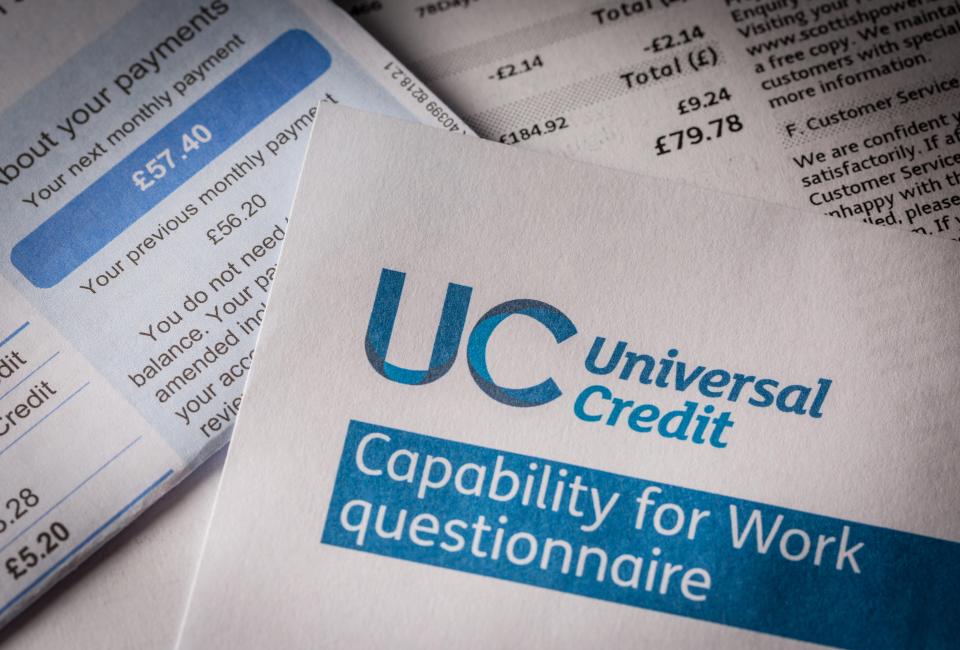
According to The Sun: Thousands of households receiving Universal Credit have been warned not to ignore an important letter as it could lead to the suspension of their payments.
This warning is part of a government plan to transfer all clients of 'old' benefits to Universal Credit as part of a process known as "managed migration".
AlamyThe managed migration began in July 2022 after a successful pilot project in July 2019.
Since then, households receiving one of the five old benefits have been receiving postal notifications with instructions on how to transition to Universal Credit.
Upon receiving a migration letter, applicants have three months to make the transition.
If no action is taken within this time frame, they risk losing their current payments.
According to the latest data from the Department for Work and Pensions (DWP), 340,260 people have lost their payments due to missing the deadline.
So far, 2,108,000 migration notices have been sent.
Of these, 1,605,629 people have already applied for Universal Credit.
A further 162,108 cases are in the processing stage.
Currently, tens of thousands of households receiving Employment and Support Allowance (ESA) are encouraged to transition to Universal Credit.
This support financially assists those unable to work due to illness or disability.
Initially, the government planned to transfer all ESA recipients to Universal Credit by the end of 2028. However, the deadline was shortened to March 2026.
DWP is ramping up the number of migration notifications to 83,000 per month.
DWP has already closed new applications for four old benefits: tax credits, income support, income-based jobseeker's allowance, and housing benefit.
Which Payments Are Being Stopped?
Universal Credit replaces six types of benefits from the old social security system, commonly referred to as 'old' benefits. They are:
- Working tax credit
- Child tax credit
- Income-based jobseeker's allowance
- Income support
- Employment and Support Allowance (ESA)
- Housing benefit
If you receive one of these benefits, you should pay attention to the opportunity to transition to the new one, though your financial situation may not improve.
Consider how the transition will impact your finances, as returning is no longer an option.
Online benefits calculators offered for free by charities like Turn2Us and EntitledTo can help you with comparisons.
You may also be transferred to Universal Credit if your situation changes, such as moving house, changing working hours, or having a baby.
However, in the long term, everyone will be transferred to Universal Credit as part of the managed migration process.
This accelerated approach means that DWP plans to contact all remaining ESA recipients by September 2025.
The transition is designed to ensure households have enough time to successfully move to Universal Credit by March 2026.
Help with Getting Universal Credit
You can use the benefits calculator to find out if you are eligible for Universal Credit and how much you could receive.
Everyone transitioning from tax credits to Universal Credit can get help in various ways.
You can find your local jobcentre at find-your-nearest-jobcentre.dwp.gov.uk/.
Citizens Advice also offers a free service called 'Help to Claim'.
You can contact one of the advisors at the following phone numbers:
- England: 0800 144 8 444
- Scotland: 0800 023 2581
- Wales: 08000 241 220
Or get online assistance from advisors by visiting: citizensadvice.org.uk/about-us/contact-us/contact-us/help-to-claim/.
Will I Be Better Off with Universal Credit?
ANALYSIS by James Flenders, chief consumer reporter at The Sun:
Approximately 1.4 million recipients of old benefits will find themselves in a better financial situation after switching to Universal Credit, according to government data.
A further 300,000 will see no change in their payments, while about 900,000 may experience losses when transitioning to Universal Credit.
Among them, around 600,000 will have eligibility for transitional protection if they make the switch as part of the managed migration process.
The majority of them – about 400,000 receive Employment and Support Allowance (ESA).
Approximately 100,000 receive tax credits, while fewer than 50,000 on other old benefits may find themselves in a more difficult situation.
Those who transition to Universal Credit voluntarily and receive less will not receive transitional payments and may lose funds.
Those who miss managed migration deadlines and later apply may not receive transitional protection.
Three months start from the moment of receiving the first letter, with reminders sent by mail and text messages.
Another month of grace period continues, during which any application for Universal Credit can be opened, and transitional protection can still be provided.
Examples of those who may receive lower payments from Universal Credit include:
- Households receiving ESA and severe disability premium and enhanced disability premium
- Households with lower child disability premiums on old benefits
- Households subject to Minimum Income after the 12-month grace period
- Households working a certain number of hours (for example, single parents working 16 hours and receiving tax credits)
- Households receiving tax credits with savings over £6,000 (and up to £16,000)
In any case, if these households do not transition in the future, they risk missing any benefit increases and freezing them.
If you have a financial issue that needs resolving, contact us at [email protected].
You can also join our Facebook group Sun Money Chats and Tips to share your tips and stories.
The reform of social benefits associated with the transition to Universal Credit is significantly changing the support system. It is important for recipients to be informed about the deadlines and conditions that may affect their financial capabilities. By allowing sufficient time for adaptation, the government aims to ensure that people are not left without support.
At the same time, the reason for the transition to the new system lies in an attempt to improve the efficiency of social benefits and ensure better adaptation to modern conditions, which may become an important aspect for many households in the future.
Read also
- Facing Diesel Shortages, Russia Bans Exports and Turns to Imports for the First Time
- Kyrgyzstan Scrambles for Fuel as China and Belarus Step In to Replace Russia
- UDP Leadership Accused of Asset Theft: Losses Hit $7 Million
- Russia Faces Fuel Crisis: Putin Admits Shortages as Moscow Prepares to Import Petroleum Products
- Half a Million Bankruptcies in One Year: Russia’s Economy on the Brink of Collapse
- Defense Forces Strike Halts Key Russian Refineries: Fuel Shortage Expected to Hit 30,000 Tons