Error in tax code: how to check and reclaim overpayment.

According to The Sun: Employees can check their payslips to find out if they are due a tax refund, which can reach thousands of pounds.
If your tax code is incorrect, you may be paying more than necessary, and it is likely you are owed money back.
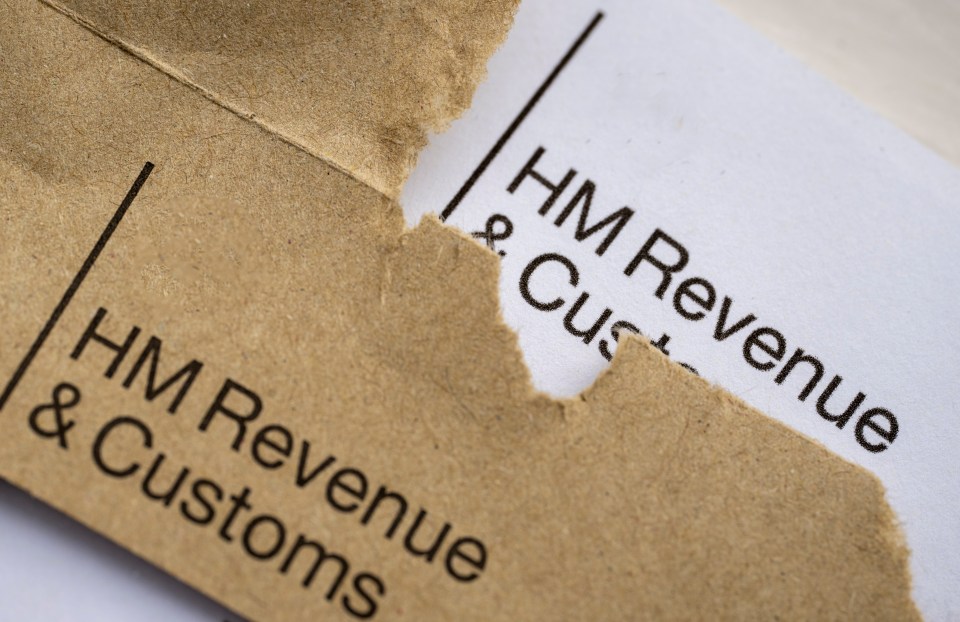
GettyHMRC opens a tax letter.[/caption]A tax code usually consists of letters and numbers, with the most common being the 1257L code.
These letters and numbers determine how much income tax you pay, so it is important to have the correct code.
If an incorrect tax code is identified, you can reclaim any overpaid tax for the last four tax years.
However, the responsibility for checking and notifying HMRC of an incorrect code lies with you.
What are tax codes
The letters at the start of your tax code have different meanings and indicate whether you qualify for a personal allowance.
The amount you can earn in a year before you start paying tax is £12,750.
The standard tax code for most people with just one job is 1257L.
In the tax year 2025-2026 in the UK, tax rates are divided into three categories.
The basic tax rate applies to taxable income up to £37,700 and is set at 20%.
The higher tax rate applies to taxable income between £37,701 and £125,140, where the rate is 40%.
The additional tax rate is for income over £125,140 and is 45%.
Here’s how tax codes are determined:
- L – you are entitled to the standard personal allowance tax-free.
- M – Marriage Allowance: you have received a transfer of 10% of your partner's personal allowance (£1,260).
- N – Marriage Allowance: you have transferred 10% of your personal allowance to your partner.
- S – Your income or pension is taxed at rates in Scotland.
- T – Your tax code includes other calculations to determine your personal allowance, for instance, reductions due to estimated annual income over £100,000.
- 0T – Your personal allowance (currently £12,570) has been used or you have started a new job without the necessary information to provide a tax code.
- BR – All income from this job or pension is taxed at the basic rate (usually used if you have multiple jobs or pensions).
- D0 – All income from this job or pension is taxed at the higher rate (usually used if you have multiple jobs or pensions).
- D1 – All income from this job or pension is taxed at the additional rate (usually used if you have multiple jobs or pensions).
- NT – You do not pay tax on this income.
- Tax codes that start with K mean you have income that is not taxed in any other way and exceeds your tax-free allowance.
There are many reasons why you may have an incorrect tax code.
Errors usually happen if your salary changes.
HMRC does not often provide updates regarding new circumstances.
If you change jobs or your salary changes, check your tax code to ensure you are paying the correct amount.
How to check your tax code?
You can check your tax code in your personal tax account online, on any payslip, or in the HMRC app.
To log in, visit www.gov.uk/personal-tax-account.
If you have it, you can also check the code via the 'Tax Code Notification' letter from HMRC.
Note that you may need your Government Gateway ID and password to log in.
If you do not have this, you can use your National Insurance number or postcode and two of the following:
- A valid UK passport.
- A photo card driving license issued by DVLA (or DVA in Northern Ireland).
- A payslip from the last three months or P60 from your employer for the last tax year.
- Details of tax credit if you have received one.
- Details from your self-assessment tax return (for the last two years) if you submitted it.
- Information from your credit file, if you have one (like loans, credit cards, or mortgages).
What to do if my tax code is wrong?
If you believe your tax code may be incorrect, contact HMRC.
You can call them at 0300 200 3300.
Or send a letter to: Pay as You Earn and Self Assessment, HM Revenue and Customs, BX9 1AS, United Kingdom.
If you are on the wrong tax code and have overpaid tax, HMRC will ensure you pay the correct amount in the future.
You should also get back any overpaid tax.
If you find you have underpaid tax, contact HMRC, and usually, you'll have 12 months to make good the debt.
HMRC might inform you that you are due a tax refund.
In such cases, they will send you a P800 letter or a simple refund notification.
The P800 letter may indicate that you have not paid enough tax and that you should pay it back. It will state whether you can apply online or via the government website.
If it states that a check will be sent to you, you should receive it within 14 days of the date on your letter.
If you need to apply online, you will have to provide your Government Gateway ID and password.
The money will be returned within five days.
You can also claim a refund through the HMRC app.
How much money do people usually owe?
The tax year runs from April 6 to April 5, so HMRC calculates whether you have paid the correct amount soon after this period.
Recently, HMRC has urged workers to check if they have missed any unclaimed payments.
It is known that around a million people have not claimed back refunds they are owed.
About four million P800 letters were sent to those eligible for a tax refund.
Analysis showed that £48.7 million was overpaid in pension taxes.
Read also
- Russian Billionaire Andrey Melnichenko Shares His Vision for Russia’s Post-War Future
- Fuel Crisis in Russia Exposed by Intelligence: Gasoline Prices Surge by a Third
- Global Fuel Markets Shaken as Ukrainian Drones Undermine Russian Control
- Russian Business Owners Are Moving Billions Abroad Amid Fears of Asset Seizure and Forced War Funding
- Former Minister Sobolev Takes on New Role in the President’s Office: What He Will Be Working On
- India Becomes Fuel Supplier to Russia as Diesel Shortage Bites