Russian Aerospace Forces have become more dangerous for NATO than before the war: RUSI analysis.

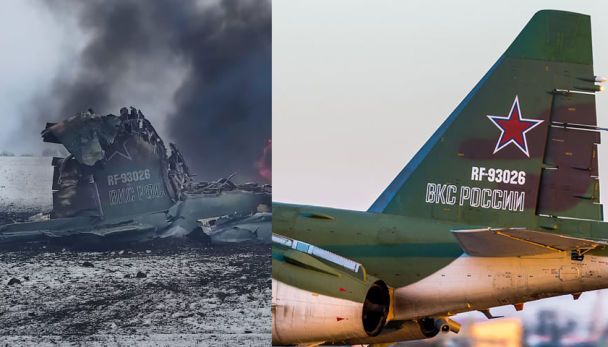
According to ТСН: Despite significant losses at the beginning of the full-scale invasion, the enemy's aerospace forces have become much more dangerous for NATO by 2026. This information was provided by analyst Justin Bronk of the Royal United Services Institute.
Production Rates and Experience
Russian aircraft production is outpacing losses, significantly strengthening their military aviation. Having lost about 130 aircraft, the new Su-34, Su-35S, and Su-30SM2 fighters have not only compensated for these losses but also increased the fleet of modern aircraft.
The analyst also points out that Russian pilots have gained significant experience over four years of continuous combat operations, which has greatly improved their effectiveness in air battles compared to pre-war training.
Technological Adaptation
The enemy has shifted to using long-range air-to-air missiles R-37M and is actively employing guided aerial bombs, allowing them to attack Ukrainian forces from great distances (up to 130 km) while remaining unreachable for most air defense systems.
Coordination between aircraft and anti-aircraft systems (S-400) has also improved significantly, creating challenging conditions for Ukrainian aviation.
"Aerospace Forces of the 2025-2026 model are a significantly more capable threat to Western air forces than they were at the onset of the large-scale war. The Russians have learned lessons from their failures," summarizes Bronk.
Moreover, the tactics of combined strikes have significantly improved: Russian cruise missiles, ballistic missiles, and decoy drones now operate as a single entity, exhausting Ukraine's air defense.
The director of a defense enterprise, a reserve officer of the Air Force Anatoliy Krapchynskyy, notes that Russia is increasingly relying on the mass use of strike drones as its strategic aviation faces serious technical problems.
In the conditions of continuous hostilities and constant changes on the front, the performance of Russian aerospace forces raises serious concerns. The ongoing improvement of Russian techniques and tactics, as well as the accumulated experience of pilots, indicates that the enemy is capable of adapting to new challenges and threats. This may significantly impact the strategy of the movement of Ukrainian Air Forces in the future.
Read also
- Baltic Sentry: NATO Reduces Response Time to Sabotage from 17 Hours to One Hour
- Belgium Announces Major Aid Package for Ukraine, Including F-16 Delivery Timeline, Says Zelenskyy
- Kyiv Falls Behind on Winter Readiness: National Security Council Meeting Called Over $4 Billion Allocation
- Intercepted Russian Document Contradicts Claims of Drone Strike on Bus Carrying Belarusians, Says Ukraine's SBU
- Ukraine's Parliament Rejects Seven Motions on 2026 Budget: What It Means for Defense and Energy
- At the G7, Trump Proposed Backing Ukraine in Exchange for Iran Cooperation