Japanese scientists have made a discovery: How to make a drill less frightening.

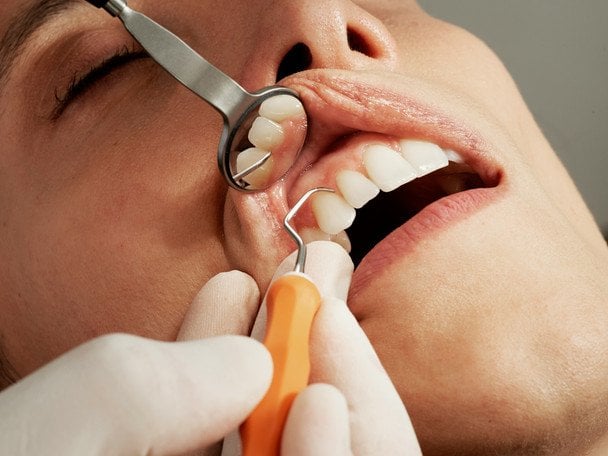
According to ТСН: Many people are afraid of dentists not so much because of the pain, but because of the sharp and uncontrollable noise of the drill. This causes anxiety in patients even before treatment begins, and some of them avoid going to dental practices for many years.
Dentist and professor at Osaka University, Tomomi Yamada, points out that even her own child was only afraid of the sound of this device. This prompted her to conduct extensive research to find out how the sound of the drill can be reduced while maintaining its effectiveness.
Research of Japanese scientists
A team of scientists from universities in Japan and Taiwan used the country’s most powerful supercomputer to model:
the airflow within the drill,
the rotational speed of up to 320,000 RPM,
the formation of sound waves that patients feel.
During the modeling, the airflow was visualized, moving at a speed of about 135 m/s – nearly 0.4 Mach. This flow generates the same sharp noise that causes fear.
The scientists plan not only to reduce the noise but also to improve its quality, making it sound less alarming and more pleasant for the patients. In this regard, new geometries of drill blades, modification of the air outlet, and redesign of the pressure within the turbine are being worked on.
Children's reaction to the sound of the drill
The research findings show that children perceive the sound of the drill as louder and sharper than adults do. When a child says the sound 'hurts', it is not just a word, but a real physiological reaction. For this reason, the scientists emphasize the importance of creating a more comfortable acoustic environment in dentistry.
The next step will be the development of prototypes together with manufacturers of dental equipment. Although it is impossible and even undesirable to completely eliminate the sound, as it signals to the patient that the instrument is working, it is quite realistic to make the sound softer.
The researchers are also considering the possibility of creating a 'comfortable' sound that calms patients during treatment procedures.
It is also worth mentioning that an elderly man in China has stained his teeth after trying to make dentures himself. To save money, he ordered materials worth only 5 Yuan (about 30 UAH) and tried to apply them himself.
During his visit to dentist Liu in Tianjin, the patient complained of pain and was unable to chew normally: his teeth were covered with a hard brown resin layer that had practically cemented his oral cavity.
The doctor explained that the material had not set properly and had turned into a dense mass that is practically impossible to remove without serious risks. If the situation is not rectified, the man could lose all his teeth.
Doctors remind again: dental treatments should only be performed by qualified professionals, and attempts to create dentures or constructions independently can lead to serious consequences.
Changes in jaw structure and the development of modern dental technologies demonstrate how important it is to provide patients not only effective but also comfortable assistance. Systematic research, like the one mentioned, can significantly improve the treatment experience for people who worry about the sounds of the drill. Educating patients about the importance of professional dental care remains critically important, as dental health has a direct impact on quality of life.
Read also
- Why Drinking Water from a Plastic Bottle Left in Your Car Is a Dangerous Habit
- Heatwave Alert: 150 Million at Risk as Ukraine Faces Temperatures Up to 35°C
- Europe's Deadly Heat Wave: Over 1,300 Deaths and 150 Million at Risk
- Shingles Vaccine Linked to 20% Lower Dementia Risk: Four Pillars of Longevity
- Deadline June 30: What Happens to Ukraine’s 2000 Hryvnia Health Screening Payouts
- Medication Shortage in Ukraine Forces Cancer and Epilepsy Patients to Seek Treatment Abroad