Russia cannot cut off million-strong cities: what is happening with the energy system.

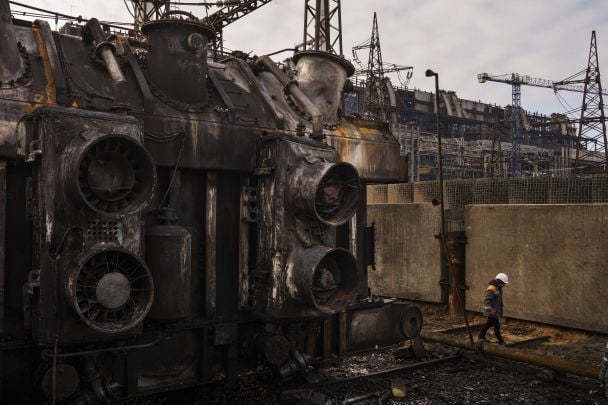
According to ТСН: Russian troops are again attacking Ukraine's energy infrastructure, striking cities, including Kyiv, Kharkiv, Odesa, Dnipro, Zaporizhzhia, and Kryvyi Rih. Despite numerous attacks, the enemy has so far been unable to cut off the million-strong cities.
Serhii Nahorniak, head of the energy efficiency and energy saving subcommittee of the Verkhovna Rada, noted that current measures resemble a temporary "restoration" of damaged infrastructure, rather than a full recovery.
“For now, the talk of recovery is premature. It is still a long way off. I heard statements from the Ministry of Energy about six months for recovery in the absence of shelling, but in my estimates, it will take twice or three times longer,” said Nahorniak.
He also emphasized that this applies not only to large facilities but also to local ones, such as the Kaniv, Dnipro, and Dniprovska hydroelectric power plants, the Trypillia TPP, and the “Ukrenergo” substations, which recently suffered from massive drone attacks in Dnipropetrovsk and Zaporizhzhia.
According to the MP, one of Russia's strategic goals is to divide Ukraine into “energy peninsulas,” complicating the transmission of electricity from nuclear power plants to the regions.
“This goal is clear to us. We are preparing and hope to keep the energy system intact,” added Nahorniak.
Additionally, recently, in the evening and at night on January 12, as well as in the morning of January 13, the Russian army launched a massive attack on Ukraine, using missiles of various types and drones. Hits have been recorded at 24 locations, including energy infrastructure and residential buildings. This has led to power outages in several cities and casualties among the population.
The situation with the energy infrastructure remains critical, as continuous shelling complicates recovery efforts. Authorities emphasize the need to ensure the stability of the energy system to avoid new crises in the context of military actions. For successful electricity supply, it is important not only to urgently eliminate the consequences of attacks but also to strategically plan further material support for the energy sector.
Read also
- Baltic Sentry: NATO Reduces Response Time to Sabotage from 17 Hours to One Hour
- Belgium Announces Major Aid Package for Ukraine, Including F-16 Delivery Timeline, Says Zelenskyy
- Kyiv Falls Behind on Winter Readiness: National Security Council Meeting Called Over $4 Billion Allocation
- Intercepted Russian Document Contradicts Claims of Drone Strike on Bus Carrying Belarusians, Says Ukraine's SBU
- Ukraine's Parliament Rejects Seven Motions on 2026 Budget: What It Means for Defense and Energy
- At the G7, Trump Proposed Backing Ukraine in Exchange for Iran Cooperation