Guyana: The only country in the world that completely provides for its own food.

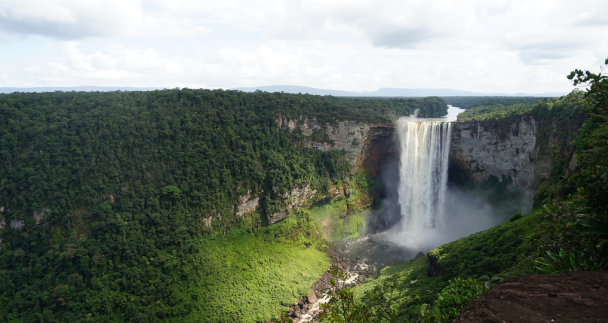
According to ТСН: Despite global food security problems, Guyana - a small country in South America - has achieved success that remains unattainable for most countries. With a population of approximately 830,000 people, Guyana has become the only state capable of fully providing its population with basic food products through domestic production.
According to research data, Guyana is self-sufficient in all seven key categories: fruits, vegetables, dairy products, meat, fish, legumes, nuts and seeds, as well as starchy crops. At the markets of the capital, Georgetown, one can see stalls filled with rice, cassava, fresh fish, fruits, and vegetables grown within the country.
Natural conditions and agricultural approaches
This result has been achieved without significant agricultural expansion into tropical forests, which is a common practice in the region. Currently, over 85% of Guyana's territory is still covered by primary forests. The foundation of food self-sufficiency is a combination of natural conditions and agricultural methods adapted to the locality's specifics.
Guyana is located in the tropical zone with constant warmth, high humidity, and fertile soils formed by river sediments over millennia. The organization of agriculture plays an important role. Local farmers actively use intercropping - cultivating several crops on one field. This approach, according to research, allows for a yield increase of 20-50%, reduces the risk of crop losses, and maintains soil structure.
Regenerative agriculture
Researchers pay particular attention to regenerative agriculture practices, which involve integrating livestock with crop production, preserving living roots in the soil year-round, and natural protection of land from erosion. This allows for maintaining fertility without depleting resources.
However, the authors of the research emphasize that complete food autarky is not a universal goal for all countries. Most states do not have enough resources or suitable land, and attempts at achieving self-sufficiency in the past have often been accompanied by restrictions and strict internal policies. However, Guyana's example demonstrates that even small countries can achieve a high level of food resilience if they consider their natural conditions and focus on crop diversity.
Against the backdrop of climate change, wars, and disruptions in global trade, Guyana's experience is becoming increasingly relevant. Researchers emphasize that the future of food security depends not only on technologies but also on effective management of available resources.
Guyana has become an example of how a country with a small population can achieve self-sufficiency in food production. Its successful agricultural practices, focused on preserving natural resources and crop diversity, can serve as useful experience for other countries seeking solutions to improve food security amid global challenges.Read also
- E10 Gasoline Safety for Older Cars: What Ukraine’s New Fuel Standards Mean Starting July 1
- Panic Among Polish Farmers: Growing Pressure from Ukrainian Agricultural Competitors
- Ukraine’s Shadow Economy: Zheleznyak Sets the Stage for Budget Growth
- Construction Costs in Ukraine Surge: What You’ll Pay for a Foundation and House Shell in 2026
- Monobank Eliminates SWIFT Transfer Fees: How Much Ukrainians Will Save
- Why Ukraine must avoid becoming a cheap labor hub, according to former minister Zholnovych