Ukrainian border guards destroyed a Russian D-30 howitzer: unique drone attack video.

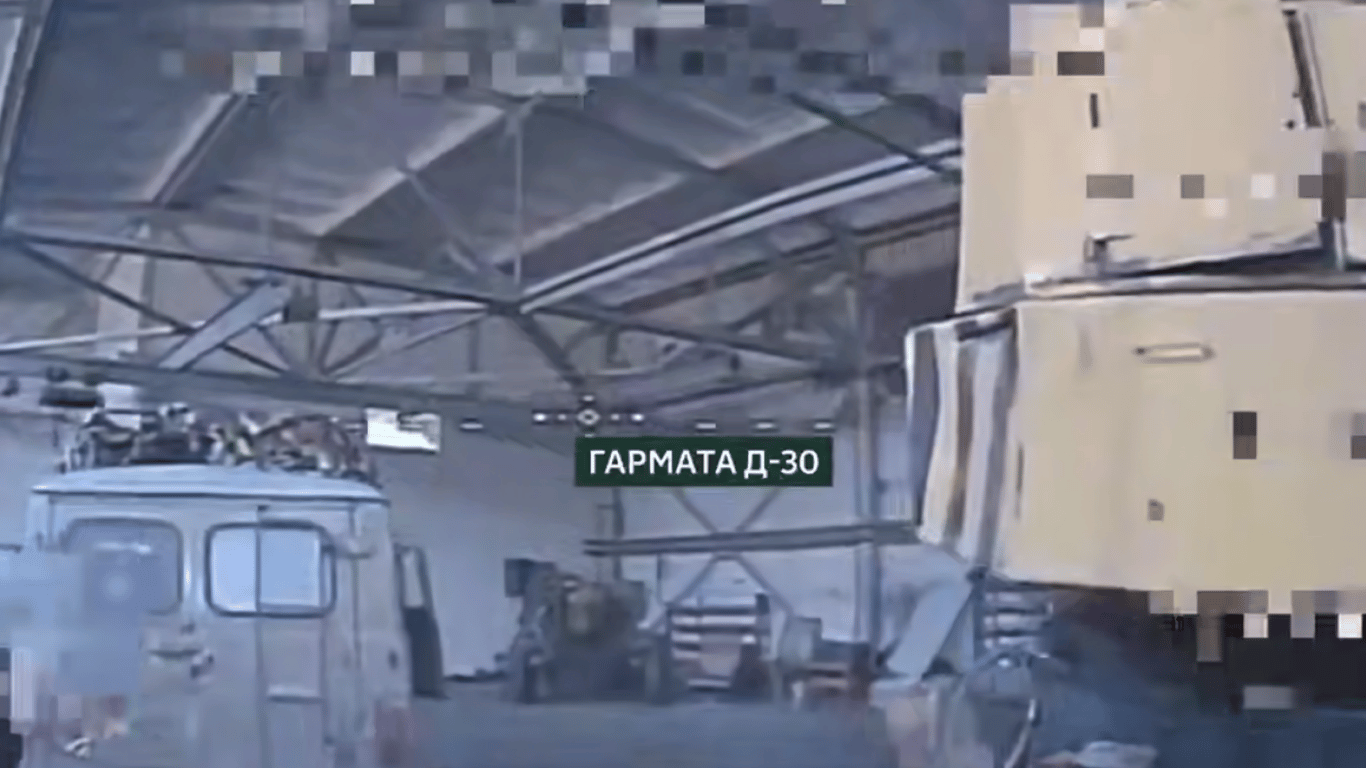
In southern Ukraine, the aerial reconnaissance of the Berdyansk border detachment discovered and attacked a concealed enemy D-30 artillery system with a . Russian military tried to hide it in an industrial building.
The FPV drone footage was released by the press service of .
Ukrainian border guards successfully attacked Russian enemy equipment
After precise targeting, the FPV drone hit the enemy target. Ukrainian servicemen skillfully guided the drone through a window, allowing it to successfully approach the howitzer and completely destroy it.
The DPSU ironically commented on this as 'failed parking' of Russian equipment.
The destroyed gun is a 122-mm D-30 howitzer of Soviet design, in service with the Russian army since the 1960s. It is intended to hit personnel, fortifications, equipment, and rear enemy targets.
It has a firing range of up to 15.4 km with conventional shells and up to 21 km with rockets. Due to its mass and size, it is usually used in stationary fire positions or towed by vehicles.
Let us remind you, explosions were heard in Russia due to the of drones on certain infrastructure facilities.
And the Odesa marines on Russian equipment and personnel at the front.
The event in Ukraine confirms the success of using drones to destroy enemy equipment and highlights the importance of developing modern technologies in the military sphere. Recent events in the country indicate that both sides of the conflict actively use drones for attacks from everywhere.Read also
- Poroshenko Calls on Parliament While Delivering $28 Million in Drones and Gear to Ukraine’s Military
- Ukraine Refrains from Striking the Crimea Bridge, Security Forces Commander Explains Why
- New Moldovan Government Takes Office: Who Holds Key Cabinet Positions
- Ukraine Calls Emergency UN Security Council Session Over Russian Strikes on Civilian Ships in the Black Sea
- Kremlin propaganda pushes false claims of US-Russia talks that exclude Ukraine
- Fedorov Dismissed as Defense Minister: Tensions with Syrskyi Behind the Decision