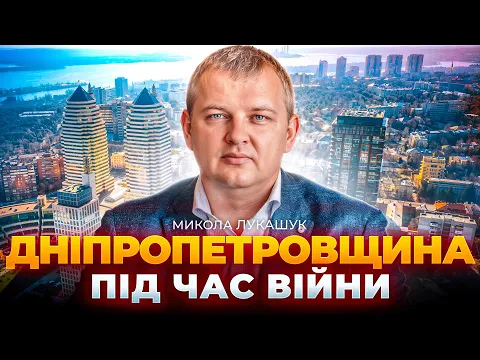
Life Under Shelling and Reconstruction Plans: An Interview with the Head of the Dnipropetrovsk Regional Council.

Life in a Frontline Region
According to Novyny.live: Mykola Lukashuk, the head of the Dnipropetrovsk Regional Council, discussed how the region endures constant Russian shelling and what role it will play in Ukraine's post-war recovery. Since Russia launched its full-scale invasion in 2022, Dnipropetrovsk Oblast has once again become a key frontline area—a status it has held since hostilities first began in 2014. The ongoing danger to civilians was underscored on March 17 of this year, when two people were wounded in a shelling attack.
Vulnerable Districts and Safety Measures
The Nikopol and Synelnykove districts are now the most exposed to artillery strikes, severely disrupting daily life for residents. In response, regional authorities are actively working on recovery and security efforts. A major priority is building social housing for those displaced by the fighting. The region is also running the 'Superhumans Dnipro' project, which provides support to both military personnel and civilians.
Beyond that, local government is focused on ensuring that medical workers and teachers continue to receive their salaries—a critical step for maintaining stability amid the war. Dnipropetrovsk Oblast functions as a logistics hub, serving not only the military but also the civilian population. In places like Pokrovsk, officials are pushing forward with protective measures, including the construction of underground schools to keep children safe.
Despite external threats, Dnipropetrovsk Oblast continues to fulfill its mission, contributing to the nation's recovery and development even in wartime.
As fighting persists across Ukraine, Dnipropetrovsk Oblast remains a vital player—not just in defense, but in rebuilding social infrastructure. Local authorities are striving to create safe living conditions and support healthcare and educational institutions, all in an effort to preserve stability in the region. Sustaining these initiatives could go a long way toward restoring public trust and improving living standards once the conflict ends.
Read also
- Fit for Service but Dodged Draft: Court Sentences Man After Military Medical Clearance
- Starting June 2026, UNHCR Launches Payments in Ukraine: Up to 12,300 UAH Available for Eligible Recipients
- New Cash Benefits for Ukrainians in Poland: How Much You Can Claim
- UNICEF to Support Families with Children in Ukraine's Frontline Regions Starting in 2026
- Ukraine’s Ombudsman Alerts: Medically Unfit Individuals Being Drafted as Recruitment Centers Ignore Health Records
- Three-Year Sentence Handed to Religious Coordinator for Evading Military Conscription