Chinese Engineers Create the World's First Underwater Exoskeleton: How It Will Change Diving.

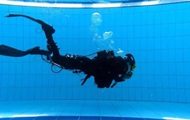
According to Korrespondent.net: Researchers from Peking University have introduced the world's first portable exoskeleton that enhances knee functionality during dives, significantly simplifying movement underwater. Interesting Engineering reports that the main goal of the device is to reduce the physical effort of divers and conserve oxygen, allowing for longer dive durations, improving safety levels, and reducing fatigue.
The human body is not perfectly adapted for effective movement in water. The sustained resistance of water significantly increases energy expenditure, limits endurance, and shortens the distances that divers can cover. While achievements in the development of exoskeletons on land have already been made, creating an effective underwater counterpart has proven to be quite a challenging task due to the specifics of the biomechanics of swimming movements and the additional efforts required under water conditions.
Photo: IEEE Transactions on RoboticsOverall Design of the Underwater ExoskeletonEffectiveness of the New Exoskeleton
This device is a bidirectional cable exoskeleton for knees that adds assistive torque during leg strokes in real time, synchronizing with the diver's natural movements thanks to special sensors. Trials with six experienced divers showed significant effectiveness: air consumption decreased by nearly a quarter, and the load on the quadriceps and calf muscles also diminished. Divers quickly adapted to the device's operation, and their movements remained natural.
Future Plans
In the future, the team plans to test this technology on other types of robots as well as develop a mechanism for predicting falls and an additional system to assist divers in rising after contacting the seabed. Researchers believe that their new development could serve not only as a useful tool for underwater work but also as an important means for studying human biomechanics in aquatic environments.
This innovation could significantly alter underwater sports and professional activities by simplifying the diving process and enhancing diver safety. Similar technologies are expected to find applications in other fields where innovative solutions are needed to optimize human movements in underwater conditions.
Read also
- Could Ukraine’s New Freyja Air Defense System Shift the European Balance of Power?
- Geely Unveils 16-in-1 Electric Drive Unit: 75 kg, 93.8% Efficiency, and 570 HP
- China Challenges US Dominance in AI: Xi Jinping Proposes a New Global Body
- Vertical Aerospace to Add Autonomous Flight Capabilities to Its Hybrid Valo Aircraft
- An Inflatable Drone from a French Startup Can Stay Airborne for 10 Hours and Carry 5 kg of Cargo
- Electricity-Powered Device Pulls CO₂ Straight from the Air